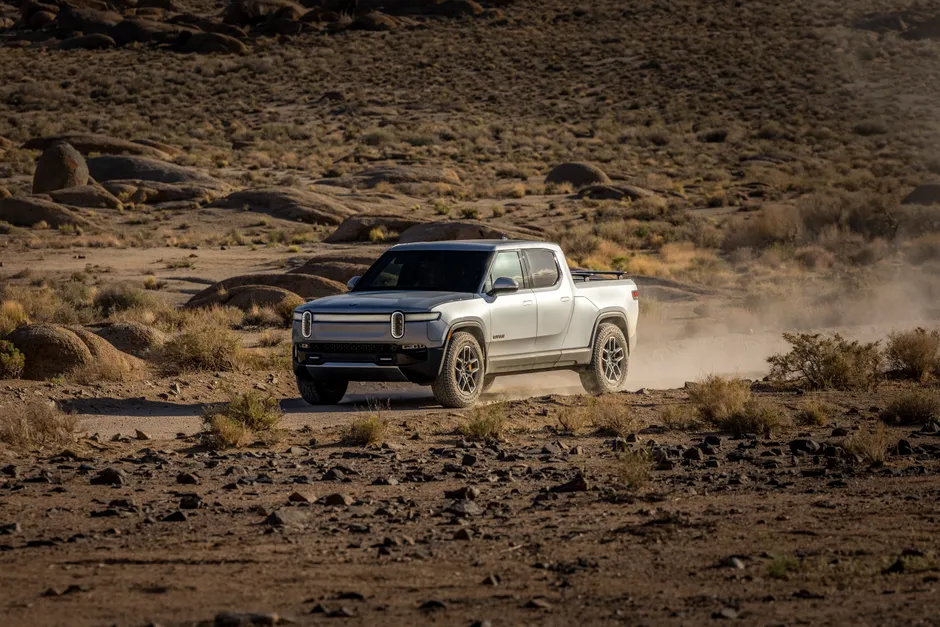
Rivian's Voice Assistant Opens the Door to Outside AI Agents

Rivian has released a voice assistant for its electric vehicles and plans to let outside AI agents run inside its cars.
CEO RJ Scaringe described the roadmap at TechCrunch Disrupt in October 2026. He named Anthropic as an example of an outside provider whose agents could eventually operate in Rivian vehicles. TechCrunch
Scaringe gave no timeline for third-party support. Rivian declined to give further details and pointed to its AI and Autonomy Day event in December for more information.
The approach is deliberately built in-house. Rivian wrote its own vehicle software instead of relying on Apple CarPlay or Android Auto. Sitting on top is what engineers call an agentic framework, software that interprets a spoken request and routes it to the right vehicle function or service.
That system can answer in two ways. Scaringe said it can use a small AI model running directly on the vehicle, or send more complex questions to the cloud, meaning larger computers accessed over the internet. The idea is straightforward. Tasks that need a fast response or must work without a signal stay on the car. Heavier reasoning goes online.
The assistant is called Rivian Assistant. Rivian says it is built to understand the driver, the vehicle, and the situation around them. Rivian The company spent two years building it ahead of a planned launch in its EVs in early 2026. TechCrunch As of May 2026, it could already connect outside the vehicle to external apps including Google Calendar.
There is a firm limit on what the AI can do. Scaringe said Rivian will not give an AI agent control of braking or steering. Voice control covers infotainment, navigation, cabin functions and looking up information. Low-level driving controls do not.
The work dates to Rivian's first Autonomy and AI Day, held in Palo Alto, California and livestreamed from its offices on December 11, 2025. CNBC There the company showed custom silicon, meaning its own chips, a next-generation autonomy platform and deeper AI integration across the vehicle. Rivian said that at launch its third-generation autonomy hardware will have a leading combination of vehicle sensors and inference, or onboard AI computing, available in North America. At the same event, it announced robotaxi ambitions.
The broader context here is the design choice behind the voice control. By owning the layer that understands intent and passes commands to the car, Rivian keeps outside AI models separate from the CAN bus, the internal network that carries safety-critical signals. Outside agents would likely work as add-ons behind Rivian's router, not as direct controllers.
In my view, that is a careful boundary, and one other carmakers will have to consider. Drivers want to use the AI assistant they already know. Automakers need systems they can test and keep safe. A mix of on-car and cloud help, with driving controls kept off limits, gives both sides room to proceed. It still leaves open questions about testing, data access and driver distraction that the December event may start to answer.