E Ink Kaleido 4 Brings Richer Color and Faster Refresh to E-Readers

E Ink has announced Kaleido 4, the next generation of its color e-paper screen technology. The announcement was detailed on Oct. 15, 2026. The Verge
Kaleido 3 is the display behind most color e-readers today. It is used in devices from Kobo, PocketBook, and Boox. Amazon's Kindle Colorsoft uses a customized version of Kaleido 3.
Kaleido and Gallery 3 take different paths to color. Kaleido 3 places a color filter over a panel that switches black and white pigments. Gallery 3 instead moves colored pigments to form the image.
E Ink says Kaleido 4 doubles the color gamut volume, the full range of colors a screen can show, compared with Kaleido 3. The palette stays capped at 4,096 colors, the same count as earlier Kaleido screens. Color images are still rendered at lower resolution than black-and-white text, because the filter divides each pixel into color subpixels.
Kaleido 4 raises white reflectance by 15 percent and contrast by 50 percent. These are reflective displays read under ambient light. Reflectance controls how white the page looks. Contrast controls how legible black text looks on it.
The change is a new oxide TFT backplane, the transistor layer that switches each pixel. Paired with refresh rates up to 18fps, or 18 updates per second, it allows video playback. That does not make e-paper a substitute for LCD or OLED for motion. It expands what a bistable, low-power panel can handle, from page turns and pen strokes to short clips and smoother menus.
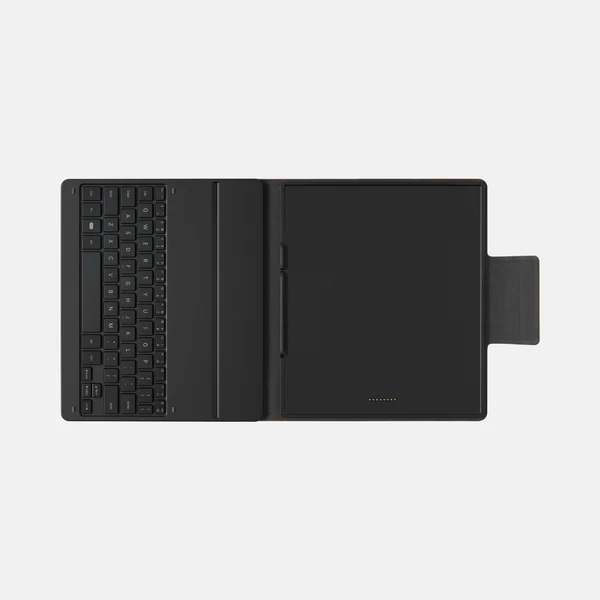
The first announced product is not from the large e-reader vendors. Hanvon Technology will adopt Kaleido 4 first in its upcoming M10C II tablet. That device will be available only in China. It combines the Kaleido 4 display with a micro-etched tempered-glass surface to reduce glare and give a paper-like feel for note-taking with a battery-free pen.
The broader context here is that color e-paper is advancing through small limits rather than one breakthrough. Doubling gamut volume while holding at 4,096 colors means richer saturation within a limited set, not photographic depth.
In my view, that is the trade to watch. For comics, textbooks, annotated PDFs, and retail signage, stronger saturation and contrast under office or daylight affect everyday use more than total color count.
Looking at product design, higher reflectance, higher contrast, and 18fps refresh address three common complaints about filter-based color e-paper: washed-out backgrounds, gray text, and sluggish response. An oxide backplane drives pixels faster without giving up the power advantage of electrophoretic media. Tablet makers still face the resolution split. Monochrome text will look sharper than color images on the same panel, so interfaces and content still need to treat the two differently.
On the long arc, if Hanvon ships on schedule in China, western e-reader and note-taking vendors will have a shipping stylus device to measure Kaleido 4 against. Color e-paper keeps moving toward a single low-power device for reading, markup, and light media without forcing a choice between paper comfort and color. Kaleido 4 does not finish that work, but it narrows the gap.