Nvidia Says RTX Spark Laptops Will Run All Windows Apps and Games

Nvidia claims its RTX Spark laptops will run the full Windows software stack without compromise.
Senior director of products Justin Walker told press that "all apps and games will run great on RTX Spark." He spoke at an Editor's Day in San Francisco to promote the machines, which run full Windows 11 and are scheduled to open for preorder Friday, Oct. 16. Configurations will include up to 128GB of RAM and will cost up to $7,000, according to The Verge.
The compatibility claim covers Adobe, Office, Blender, and games that use kernel-level anti-cheat, security software that runs deep in the operating system to block cheating. Older Windows apps and games run through Microsoft's Prism emulator on the Arm chip. Prism translates instructions written for Intel and AMD processors so the Arm processor can understand them, which can add overhead and slow performance. Kernel-level anti-cheat has been a hard blocker for Windows on Arm. Prism translation overhead has been the other concern.
Silicon and memory
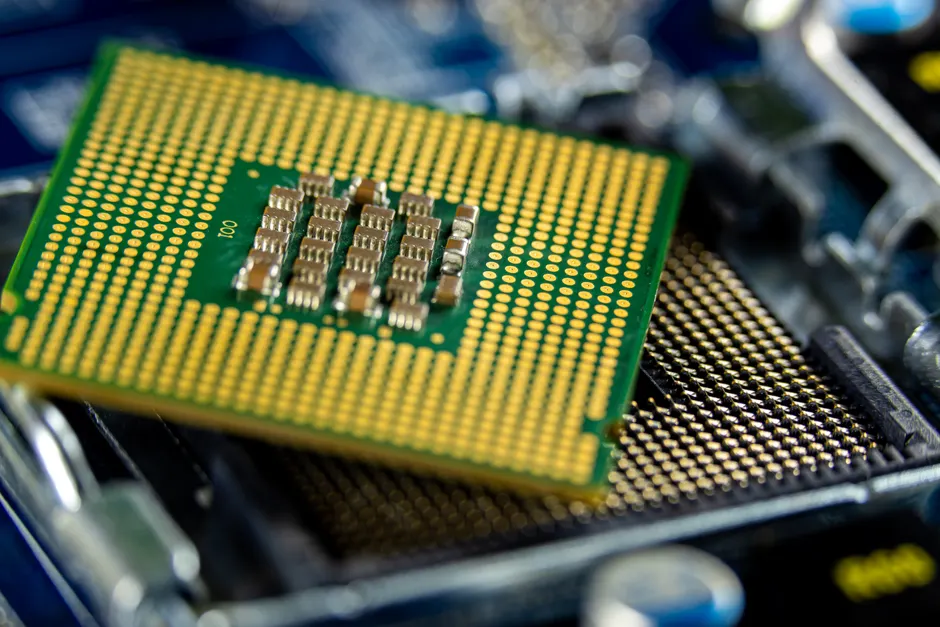
RTX Spark is an ARM-based System-on-Chip, a single chip that holds processor, graphics and other core functions and is designed for high-efficiency Windows laptops, as described in NVIDIA Docs. The superchip pairs an NVIDIA Blackwell RTX GPU with 6,144 CUDA cores, parallel units that handle graphics and compute work, and fifth-generation Tensor Cores with FP4 precision, a compact number format that speeds AI work, according to the NVIDIA Newsroom.
Memory is fixed at the top of the portable envelope. The platform supports up to 128 GB of LPDDR5 memory, fast low-power working memory. Nvidia positions that capacity for rendering ultralarge 90GB+ 3D scenes, editing 12K 4:2:2 video, a very high-resolution professional format, and generating 4K AI videos.
Nvidia positions RTX Spark for slim laptops and small desktops for creators, developers, and gamers. The company unveiled RTX Spark as a new superchip for Windows PCs for the era of personal AI agents, assistants that can run tasks on the device. The laptop chip is the same superchip Nvidia previously used in mini desktops for AI developers. Those mini desktops ran Linux. The laptops run full Windows 11.
From Surface RT to full Windows
The history here is specific. Microsoft's original Surface ran a stripped-down version of Windows on an Nvidia Tegra chip. Microsoft wrote off $900 million in inventory for the Surface RT.
The contrast with RTX Spark is architectural and commercial. The earlier device shipped a limited OS on Arm silicon. The new laptops ship full Windows 11 on Arm silicon with an emulation layer for legacy x86 binaries, older programs written for Intel-type chips. The price also inverts the old consumer-tablet logic. These are workstation-class portables priced to $7,000, not volume tablets.
Nvidia has built an editorial and developer program around that shift. The company published a newsroom release titled 'NVIDIA and Microsoft Reinvent Windows PCs for the Age ...' about RTX Spark, and a newsroom item titled 'All Systems Go: Global PC App Ecosystem Ready for NVIDIA RTX Spark.' A separate item, 'NVIDIA, Microsoft Kick Off a New Beginning for Windows PCs with RTX Spark and AI Agents,' is dated October 07, 2026. In parallel, Nvidia said DGX Station for Windows brings GB300 AI infrastructure to the enterprise desktop, according to the NVIDIA Blog.
Looking at this from a working engineer's perspective, the compatibility promise is the product. Raw throughput was never the gating question for Windows on Arm. Sustained behavior under translation was. Performance under Prism, driver coverage for creative hardware, and cooperation from anti-cheat vendors will decide whether Walker's statement holds in production fleets.
In my view, the memory configuration is the more durable part of the story. A 128GB LPDDR5 pool on a slim laptop changes local prototyping constraints. Large scenes and long-context local inference, where an AI model works with very long inputs on the machine itself, stop being cluster-only work. FP4 in fifth-generation Tensor Cores points in the same direction. Precision formats below FP8 trade numeric headroom for throughput and memory footprint, which is useful for on-device inference and generation when validation is handled carefully.
Worth flagging for buyers is the segmentation. A $7,000 ceiling and a creator, developer, and gamer target put RTX Spark laptops in the mobile-workstation tier at launch. That tier tolerates emulation risk if native toolchains arrive quickly. It does not tolerate broken plugins, capture devices, or competitive multiplayer bans. Adobe, Office, and Blender coverage addresses the first half. Kernel-level anti-cheat addresses the second. Independent testing across both will carry more weight than launch-event demonstrations.
The broader context here is encouraging without needing hype. The PC has absorbed instruction-set transitions, shifts from one processor language to another, when the software story was complete. It has stalled when it was not. Nvidia and Microsoft are arguing the software story is now complete, from emulation to native Arm builds to AI agents on device. If that proves true in daily use, Arm laptops move from a battery-life tradeoff to a throughput option for heavy local work.