Waymo Approved to Map Toronto and Test Self-Driving Cars
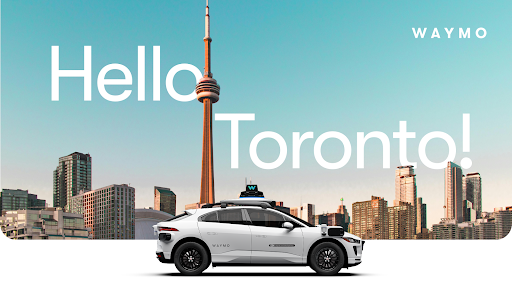
Waymo has approval to join Ontario's automated vehicle pilot program and start operating in Toronto, its entry point into Canada. TechCrunch
The work starts with people driving. Waymo vehicles with human drivers will travel Toronto streets to build high-definition maps, detailed digital records of lanes, curbs and signs that help self-driving software know exactly where it is.
After mapping, Waymo will test self-driving vehicles on public roads with a human safety operator on board to take over if needed. It later plans to remove the safety operator and then invite members of the public to take robotaxi rides, cars with no driver that can be hailed through an app. Each stage must be finished before the next begins.
This is not a commercial launch. On its Waypoint blog, Waymo describes the Toronto work as laying the groundwork for a fully autonomous ride-hailing service. Waypoint
For day-to-day operations, Waymo has partnered with Toronto-based Element Fleet Management. Waymo expects the Toronto operation to support hundreds of jobs in fleet maintenance, validation driving, customer service and operations.
Toronto adds to robotaxi service in 15 U.S. cities and testing in London and Tokyo. Waymo, formerly the Google self-driving car project, expanded in March 2025 to Austin, followed by Atlanta.
The plan requires large amounts of capital. Waymo aimed to raise about $16 billion at a valuation of nearly $110 billion, according to Reuters. Separately, it was in final-stage talks to raise more than $3 billion in debt for the first time, with Pimco and Blackstone involved, according to Bloomberg.
The broader context here is how self-driving programs enter new regulations. Approval in Ontario does not automatically accept miles driven elsewhere. Mapping, then supervised testing, then driverless operation gives regulators a clear sequence to review, and gives Waymo time to hire locally and set up maintenance and support.
In my view, the Element partnership and the focus on hundreds of operations jobs sit at the center of that process. Local fleet capacity sets how quickly supervised miles can build up, and those miles set when a request to go driverless becomes credible. For teams tracking deployment, Toronto is best read as capacity building rather than near-term ride volume, and that patient order is what can make driverless service repeatable in a new city over time.


