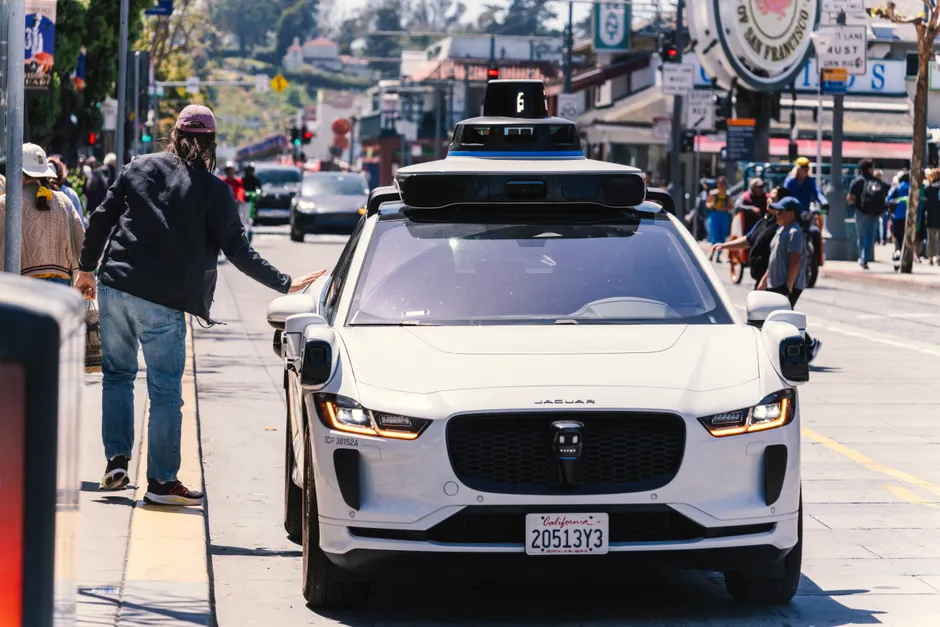
Waymo's Long Road: How 15 Years of Development Built the Autonomous Vehicle Leader

Waymo's Long Road: How 15 Years of Development Built the Autonomous Vehicle Leader
Waymo, an Alphabet subsidiary, has been building self-driving car technology since 2009—making it one of the oldest continuously operating autonomous vehicle programs in the industry. That's a fifteen-year head start on many competitors, spanning multiple technology shifts and changes in how regulators view self-driving cars.
Building and Scaling the Fleet
Waymo built its self-driving fleet around Chrysler Pacifica minivans. In January 2024, the company made a major deal to buy thousands more vehicles for expansion. These minivans carry sensor arrays—essentially arrays of cameras and detection equipment—that can see objects hundreds of yards away in all directions. This panoramic awareness is essential for the kind of autonomous driving Waymo targets, where the vehicle handles all driving tasks without human backup.
The core of those sensors is proprietary lidar technology. Lidar works by bouncing laser pulses off objects to build a 3D map of the surroundings—think of it as robotic sight more precise than human eyes. The value of this technology became clear when Waymo sued Uber, alleging that Uber had stolen confidential details about Waymo's lidar designs. The lawsuit underlined how competitive the field has become: sensor innovation has become a make-or-break advantage.
By 2018, Waymo was moving beyond its initial test cities, signaling confidence that the technology was ready for real-world use across different urban environments. That shift from the lab to multiple cities is a critical moment for any autonomous vehicle company—it's where theory meets the mess of actual roads.
What the Real-World Data Shows
San Francisco has become the high-stakes testing ground. Waymo and Cruise, a competing self-driving program, together logged about 6 million driverless miles in the city and reported 102 crashes. That's the factual record: crashes happen, even with autonomous systems.
San Francisco is a hard proving ground. Hills, fog, unpredictable traffic, and tight regulatory oversight make it unforgiving. The crash data tells us two things: the systems are accumulating real-world experience at scale, and they're still hitting edge cases—situations they weren't fully prepared for.
The Competitive Picture
Waymo's leadership has made public claims that their system would have handled situations better than competitors' systems. That's typical competitive posturing in an industry where safety claims matter. The underlying fact is simpler: Waymo's fifteen-year head start has given it vastly more data—billions of simulated miles plus millions of real ones—to train and test its software.
This long timeline has a trade-off. On one hand, more time means more refinement. On the other hand, it means Waymo built much of its core system architecture in an earlier era, before modern machine learning tools became as mature as they are today. Newer startups started with those tools already in hand.
Looking at how technology industries mature, we've seen this pattern before. When personal computers were emerging in the 1980s, the early movers accumulated expertise and data that newer entrants couldn't easily match, even if those new entrants had access to better chips. The difference was cumulative knowledge, not one breakthrough. Autonomous vehicles look like they're following a similar arc—from fragmented research into consolidated platforms that can actually work in the real world.
What It Takes to Scale Across Cities
Choosing the Pacifica minivan as the standard vehicle paid off in efficiency: the same sensor layout, the same maintenance schedules, the same training for human safety operators. Standardization cuts costs and speeds up learning.
But scaling to a second city, then a third, introduces practical problems beyond driving itself. Traffic laws vary by municipality. Road conditions differ. Emergency response procedures are local. A self-driving system that works in Phoenix may need tweaks in San Francisco. Building that flexibility—that ability to adapt to local rules and conditions—is harder than it sounds.
The sensor technology itself—the hundreds of yards of detection range—gives the system something humans don't have: time. A human driver reacts in a fraction of a second. An autonomous vehicle can "see" hazards far enough away to have seconds to plan. That temporal buffer is a genuine safety advantage, provided the system responds correctly to what it sees.
How the Technology Evolved Alongside Waymo
Waymo started in 2009, before modern cloud computing and machine learning frameworks existed. The company has rebuilt its underlying architecture multiple times, adapting to advances in computing power, faster networks, and better AI training methods. That's both a strength and a constraint.
The strength: fifteen years of continuous operation means fifteen years of diverse driving data—different weather, seasons, traffic patterns, and emergencies. That dataset is like a library of edge cases that newer competitors don't have. It feeds into training and safety validation.
The constraint: legacy systems can be harder to update. A codebase designed for 2012 computing assumptions may not map cleanly onto 2024 tools, even if those tools are demonstrably better.
The autonomous vehicle landscape today has arrived at the convergence of three separate technology maturation curves: sensors got smaller and cheaper, machine learning models got far more powerful, and cloud infrastructure made it feasible to process vast amounts of data in near real-time. Waymo's fifteen years have spanned almost all of that journey. That long view is useful. But it's also a reminder that staying ahead in a fast-moving field isn't automatic—it requires knowing when and how to evolve the foundation itself.