Why Turkey Has Become Essential to NATO's Future
Why Turkey Has Become Essential to NATO's Future
NATO's annual leaders' summit opened in Ankara on Tuesday, July 7, 2026, with Turkey holding more leverage than it has had in years. The timing matters: Secretary General Mark Rutte traveled to Washington around June 24 to persuade President Trump to stay committed to the alliance, according to the New York Times, and Trump was expected to attend the Ankara summit. His presence—and his attitude while there—is the main question hanging over the gathering.
Turkey's Growing Importance
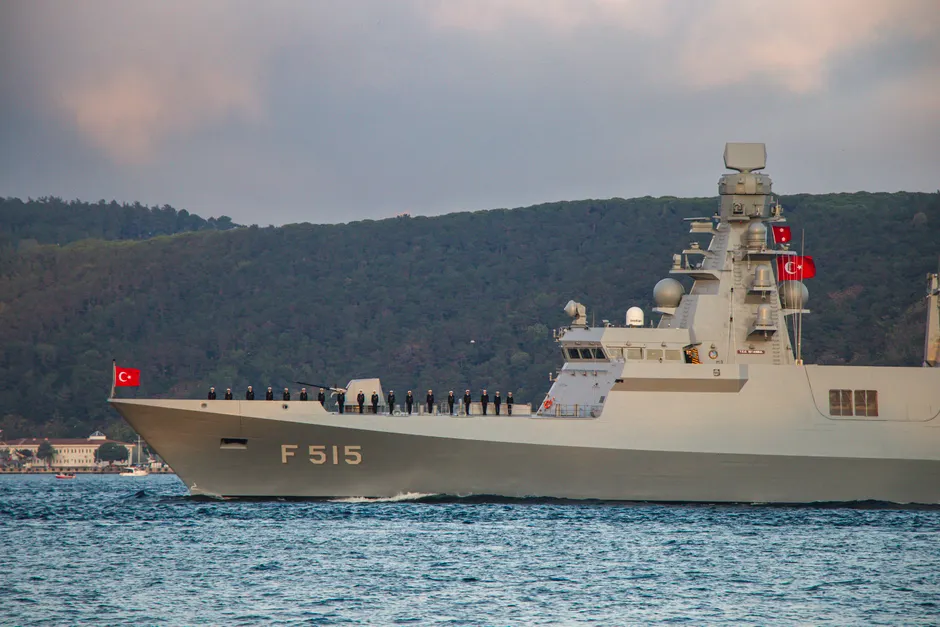
A New York Times report from July 6 captures the shift clearly: as President Trump has questioned America's commitment to NATO, other European members have begun paying more attention to Turkey's large standing military and its growing defense industry. Turkey's army, its homegrown drone programs, and its control of the Bosphorus and Dardanelles straits—the narrow passages connecting the Mediterranean to the Black Sea—give it geographic power that no other NATO member can match.
Historically, Turkey has been NATO's difficult member. It blocked Sweden and Finland from joining for extended periods, maintained economic ties with Russia after the 2022 invasion of Ukraine, and at times threatened to buy Russian weapons despite NATO objections. That record makes the current attention to Turkey significant. What's changed is not Turkey's behavior, but rather other members' desperation to maintain alliance unity as American support grows uncertain. As early as January 2026, Turkey's foreign minister publicly suggested that Trump's personal relationship with Turkish President Recep Tayyip Erdogan could actually stabilize the alliance, per reporting from that month.
NATO disputed some of the New York Times framing on July 6. Nikkei Asia, citing NATO sources, reported that the alliance said the coverage "does not reflect the truth." The denial is vague—NATO didn't specify which claims it objected to—leaving unclear whether it was pushing back on Turkey's rising influence, on characterizations of American detachment, or both.
The European members see Turkey differently now than they did a few years ago. They understand that a defense structure led by Europe alone cannot work without a strong partner controlling the straits and providing depth on NATO's eastern frontier. They may not fully trust Erdogan's motives, but they cannot ignore what Turkish geography provides.
The Sanctions Puzzle
The Ankara summit arrives with a practical item on the agenda. A July 3 opinion piece in the New York Times made the case directly that the meeting should address loopholes in sanctions against Russia—places where money still flows to Russia's war effort. The argument was that falling global oil prices create an opening: Western countries could tighten enforcement without triggering the energy-price spike that has previously made them reluctant to act.
Stopping sanctions from leaking has been a persistent weak point in the Western response to Ukraine. Third countries have continued to buy Russian oil and ship it in ways that avoid Western financial systems and insurance rules. The question going into Ankara is whether the alliance can build a concrete mechanism to plug these gaps—or whether the political tensions at the summit will overshadow the agenda entirely.
The Deeper European Shift
What's happening reflects a larger European rethink. A Carnegie Endowment analysis from July 1 found that European countries have largely stopped trying to convince Trump to stay fully committed to NATO. Instead, they are quietly planning for a Europe-led security structure that might operate independently. This is not a public break with NATO—no European capital has announced it would leave—but it signals that European leaders no longer assume America's security guarantees will always be there.
Turkey enters this calculus in a specific way. A security system run by Europeans alone has a geographic problem: it needs a strong anchor on the eastern frontier to work. Turkey, with its military strength and control of the straits, fills that role. European planners may not be entirely comfortable with Erdogan's unpredictability, but they cannot easily replace what Turkey provides.
The Ankara summit is, at its core, a test of whether an alliance built on the principle of mutual defense can function when its most powerful member is uncertain and its most geographically crucial member is negotiating from strength. These two pressures do not balance out easily—and one summit, no matter how successful, will not resolve them.