Putin's Inflated War Claims and the NATO Narrative Shift
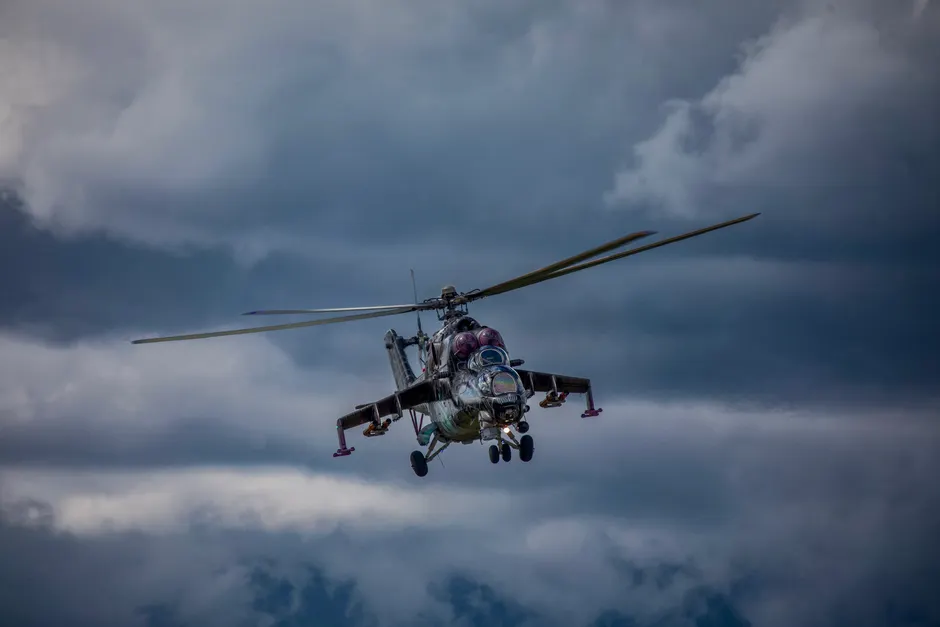
Vladimir Putin claimed in a televised broadcast before the US Independence Day weekend that Russian forces had "completely liberated" the eastern Ukrainian city of Kostiantynivka and seized more than 3,000 square kilometres of territory in 2026. The Institute for the Study of War, an independent research organization, documented actual Russian gains over the same seven-month period at just 97 square kilometers — roughly 37 square miles, or about 3 percent of the Kremlin's stated figure Al Jazeera.
In the same broadcast, Putin instructed General Valery Gerasimov, Russia's chief of staff, to continue analyzing "the involvement of each Western nation in the war," noting that "we'll need this analysis for the possible making of responsible decisions in the future" Al Jazeera. The Kremlin transcript archives confirm a Putin visit to a Joint Force command post on July 3, 2026 kremlin.ru.
Lt. Gen. Ihor Romanenko, former deputy head of Ukraine's general staff, told Al Jazeera that Moscow is working to explain to its own population why the five-year conflict persists, and to reshape how it is described — away from a "special military operation" against Ukraine and toward a confrontation with NATO itself Al Jazeera.
Reuters reported on July 4 that the Russian defence ministry claimed capture of Kostiantynivka — a narrower claim than Putin's "completely liberated" language. The distinction shows how framing can shift and intensify as information moves from ministry statement to presidential address.
This NATO framing did not emerge in isolation. Dmitry Polyanskiy, Russia's representative to the OSCE, described NATO on July 2 as "openly talking about preparing for a full-scale direct war with Russia," and on June 25 characterized a "genuine hybrid war unleashed by NATO and the EU against Russia and waged mainly through Ukrainian hands" OSCE Mission. On June 17, the Russian mission to the OSCE circulated a concept note for a discussion titled "Militarization of Europe," timed to mark the 85th anniversary of the Nazi invasion of the Soviet Union on June 22, 1941 OSCE Mission.
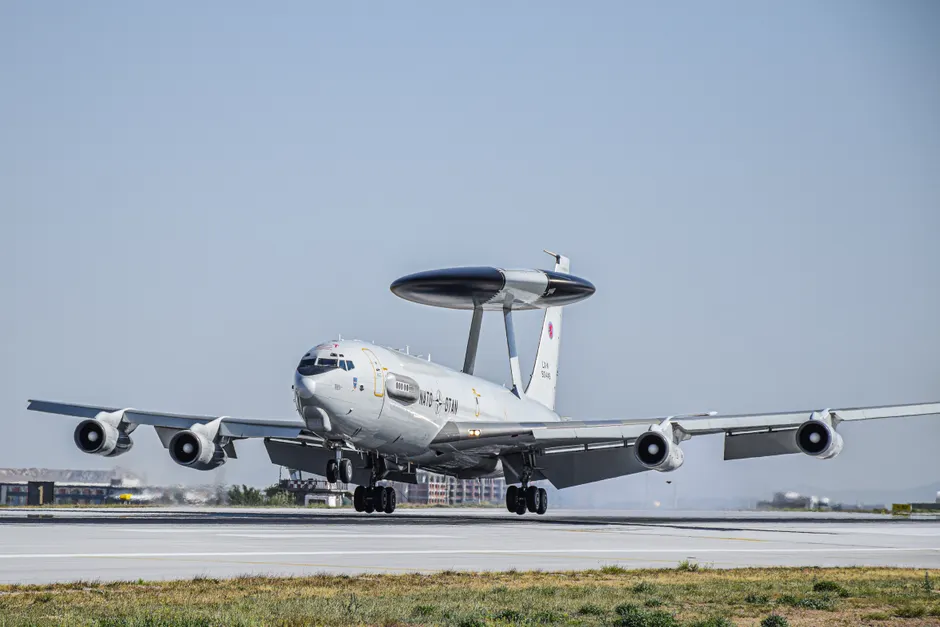
This messaging ran alongside active NATO military exercises. TASS reported the alliance's BALTOPS 2026 naval drills in the Baltic Sea and its Ramstein Flag 2026 air exercise across Finnish, Norwegian, Swedish and Danish airspace June 8-19, involving 19 member states TASS. TASS also noted that NATO's secretary-general confirmed a reduction in US troop levels in Poland and Germany would begin "immediately" TASS, and that a NATO summit in Ankara on July 7-8 was built around military confrontation scenarios with Russia, expanded arms supplies, and funding TASS. Reuters confirmed these NATO gatherings separately Reuters.
These two developments — a US drawdown of troops in Central Europe and Russian claims of NATO preparing for war — sit uneasily side by side. Reuters reported on June 29 that senior European officials believe Russia could rebuild its military to threaten NATO territory within years, a timeline driving changes in European military strategy Reuters. A US intelligence assessment from March acknowledged the possibility of direct Russia-NATO conflict without providing any timeline Russia Matters.
The gap between Putin's territorial claims and the Institute for the Study of War's figures carries weight beyond credibility. A Kremlin narrative built on modest, high-cost gains requires a larger adversary to justify continued sacrifice to the Russian public. Reframing the conflict from a "special military operation" confined to Ukraine to a broader clash with the Atlantic alliance serves that purpose — it recasts stalled battlefield progress as resistance against a superpower bloc rather than against Ukraine alone, and it builds rhetorical justification should Moscow need to announce a larger military mobilization.
Whether this pivot signals Russia actually preparing for NATO conflict, or narrating one primarily for domestic audiences, remains genuinely unclear by design. Polyanskiy's statements treat NATO aggression as an established fact; NATO's summit agenda, as characterized by TASS, treats confrontation with Russia as a planning scenario rather than an imminent threat. Both framings serve institutional purposes for their speakers. What remains verifiable is the exercise calendar, the announced troop reduction, and the arithmetic gap between Kremlin and independent figures — the rest unfolds as competing narratives running parallel to the fighting itself.