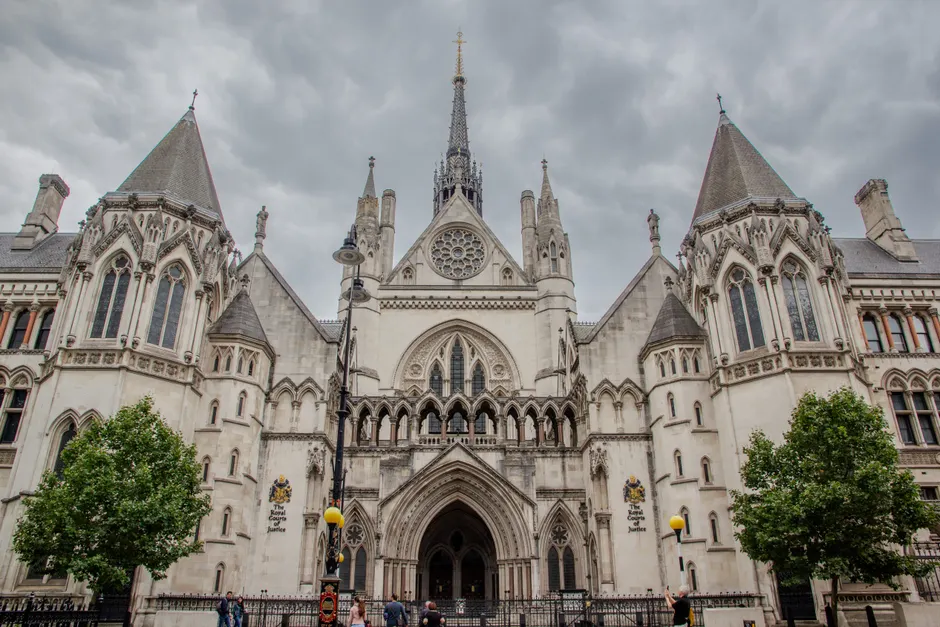
Prince Harry loses major lawsuit against Daily Mail over phone hacking

Prince Harry loses major lawsuit against Daily Mail over phone hacking
Prince Harry and six other claimants lost their case against Associated Newspapers Limited (ANL), the publisher of the Daily Mail, Mail on Sunday, and MailOnline, when the UK High Court dismissed all claims on July 7, 2026. Mr Justice Nicklin, the presiding judge, ended an 11-week trial into allegations that the newspaper unlawfully gathered information about the claimants The Guardian.
The case, formally recorded as Sussex and others v Associated Newspapers Limited, involved seven claimants: Prince Harry, Doreen Lawrence, Elton John, David Furnish, Elizabeth Hurley, Sadie Frost, and Simon Hughes. They alleged that the newspaper's journalists had hacked their phones, tapped their landlines, used bugs placed by private investigators, and made corrupt payments to police officers for private information. The claimants presented 55 published articles from 1997 to 2015 and three unpublished incidents as evidence of these practices The Guardian.
The judge's decision came down to a critical legal standard: a court cannot conclude a story was obtained illegally if a reasonable, lawful way to get that same information existed. For each article in dispute, the newspaper's lawyers showed plausible legal sources — tips from readers, on-the-record statements, or public appearances — that made the judge unwilling to infer hacking or bugging had taken place.
This evidentiary standard deserves attention. Phone-hacking cases typically rely on circumstantial evidence — the timing of a story matching a private conversation, the level of detail revealed, or the apparent impossibility of knowing something any other way. Direct proof of phone interception rarely survives years after the fact. By requiring that any realistic lawful explanation defeats an assumption of illegality, the judge effectively raised the bar for claimants who lacked documentary or witness proof of actual interception. The ruling turned not on whether tabloid culture in the 1990s and 2000s was problematic broadly, but on whether each specific article could be traced to unlawful conduct rather than a legitimate newsgathering source.
Prince Harry testified first among the claimants. The newspaper called dozens of editors and journalists, including former Daily Mail editor Paul Dacre, all of whom denied illegal activity The Guardian.
Associated Newspapers called the outcome "an overwhelming victory for the Daily Mail and its journalists, and for a free press generally." The publisher stated that no credible evidence was ever produced to support allegations that its journalists placed listening devices in claimants' cars and homes, intercepted calls, or unlawfully accessed bank accounts The Guardian.
The claimants now face a potential legal bill of up to £50 million, reflecting years of preparatory court proceedings before the trial began The Guardian. Earlier rulings in the case included one in January 2025 ([2025] EWHC 106) on procedural matters and another in October 2025 ([2025] EWHC 2573 (KB)). The court also issued several transmission direction orders throughout the proceedings as the lead claimant designation shifted — a normal practice in group lawsuits of this scale judiciary.uk.
This judgment arrives in the context of Prince Harry's broader legal battles with British media. In 2023, he won a partial victory against Mirror Group Newspapers over phone hacking, a success that had raised hopes — though perhaps unrealistically — that the ANL case might follow the same path. What this ruling shows instead is that outcomes in media law depend heavily on the evidence assembled against each particular publisher, rather than on any general judicial leaning toward claimants alleging tabloid misconduct during this period.
Around the same time as the judgment, a royal source told the BBC that Prince Harry was not permitted to stay at Buckingham Palace during his London visit connected to the case, because he had not confirmed his attendance promptly enough Reuters. The timing created a narrative linking his courtroom defeat to his strained relationship with the royal institution, though the two matters are legally and factually separate.
The next step depends on whether the claimants appeal. An appeal would be a long shot. The claimants would need to identify a legal mistake in how the judge applied the inference standard, not simply re-argue the facts that the trial judge has already decided against them. The size of the potential costs bill makes the decision to appeal an even heavier calculation.