Prince Harry's Day of Reckoning: A High Court Verdict on Tabloid Intrusion and Royal Estrangement

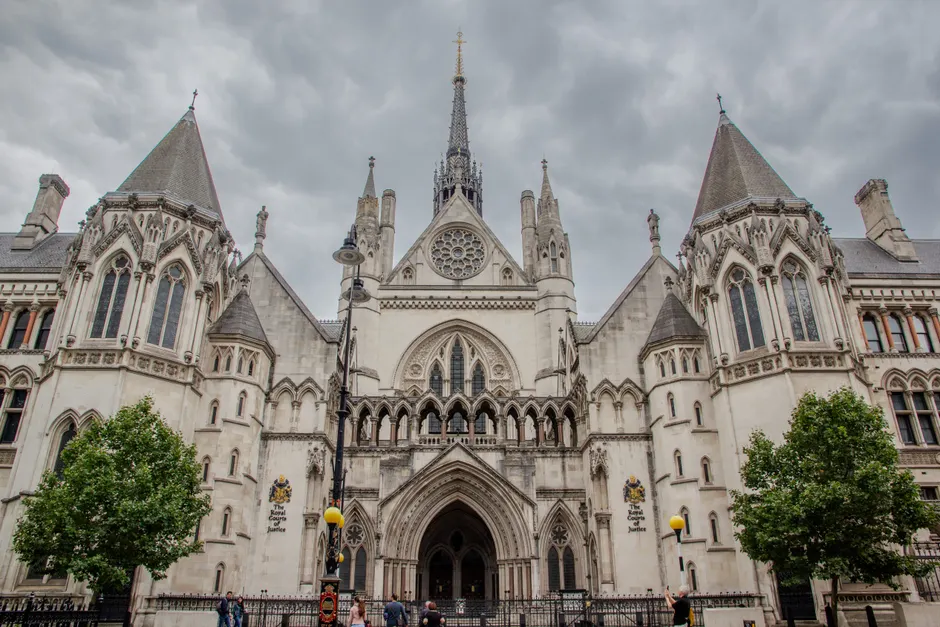
A High Court ruling in Prince Harry's lawsuit against Associated Newspapers Limited (ANL), the publisher of the Daily Mail, was expected on 7 July 2026 at approximately 2pm BST. The timing lands in the middle of a UK visit already tense with disputes over security arrangements and where royal family members can stay The Guardian.
The case, formally titled Lawrence, Sussex and others -v- Associated Newspapers, centres on allegations that ANL journalists and private investigators engaged in unlawful information-gathering: voicemail interception, phone tapping, and "blagging"—the practice of obtaining private information through deception judiciary.uk. Harry claims 14 ANL articles published between 2001 and 2013, most about his pre-Meghan relationships, were produced through these methods. ANL denies the allegations and continues defending the claim.
Harry is not the only claimant. Elton John, David Furnish, and Baroness Doreen Lawrence—whose son Stephen was murdered in a racist attack in 1993—are among the co-claimants, along with actress Sadie Frost judiciary.uk. The litigation has generated a long chain of court judgments: an Approved Judgment in October 2025 ([2025] EWHC 2573 (KB)), another in July 2025 ([2025] EWHC 1716 (KB)), and a January 2026 transmission direction order. It follows a separate, earlier case brought by Meghan herself, which produced a 2020 High Court judgment ([2020] EWHC 2160 (Ch)) in her favour on different facts. An earlier phase specific to Harry alone—The Duke of Sussex -v- Associated Newspapers Limited—saw a 2023 order dismiss his summary judgment application and require him to pay costs, a reminder that this litigation has not consistently favoured the claimants.
This ANL case is now Harry's only remaining active legal dispute in the UK People, closing out a chapter of tabloid litigation he has pursued since stepping back from royal duties six years ago.
Harry arrived in London alone on 6 July for a reported four-day visit timed partly to mark "One Year to Go" before the 2027 Invictus Games in Birmingham, where he serves as Founder and Patron Nine.com.au. Meghan and their children, Archie, 7, and Lilibet, 5, remained in California, citing security concerns. Buckingham Palace declined Harry's request to stay at a royal residence during the visit—a decision made amid an ongoing, unresolved dispute over his UK police protection.
Whether Harry will see his father at all this week remains uncertain. Charles, 77 and still undergoing cancer treatment, has a full schedule of audiences and engagements. Harry had reportedly hoped to reunite his children with the King for the first time in four years. The two last met in September 2025 at Clarence House—the first such meeting since February 2024, an eighteen-month gap that signals how strained the relationship has become since Harry's departure from royal duties.
That estrangement has been aired publicly and at length. Since moving to California, Harry has levelled accusations at Charles, Camilla, William, and Catherine through the Oprah Winfrey interview, a Netflix documentary, subsequent interviews, and his memoir Spare, framing his exit around what he calls the "toxicity" of royal life and alleged racism directed at Meghan. His relationship with William remains tense.
The convergence of these events is not peripheral to the story—it is the story itself. A legal verdict on a newspaper that has reported on his private life for two decades arrives in the same week as a visit meant to signal reconciliation with both the monarchy and a cause—wounded servicemen and women—that has shaped his public identity since 2014. Whatever the ANL judgment concludes, it addresses only one thread of a rift that spans family relations, press conduct, and state security arrangements simultaneously.
The security question carries significance beyond public relations. Publicly funded police protection for a former working royal living abroad sits at the junction of Home Office policy, royal household discretion, and the duke's personal risk profile—an area where courts, government, and palace have each taken positions in recent years without reaching full agreement. That the accommodation dispute resurfaced now, rather than being quietly resolved before the visit, suggests the underlying relationship has not warmed as much as the Invictus messaging might suggest.
What the ruling does resolve, provisionally at least, is a more specific legal question: whether ANL's journalism in the 2000s and early 2010s crossed from robust reporting into unlawful invasion of privacy. For Harry, Elton John, Furnish, and Lawrence, that answer carries independent weight—it speaks to how British tabloids operated during a period that Lord Justice Leveson's 2012 inquiry examined closely, and whether accountability for that era can still be reached in court more than a decade later.