Miles Plug Adds Tracking and AI Diagnostics to Your Car
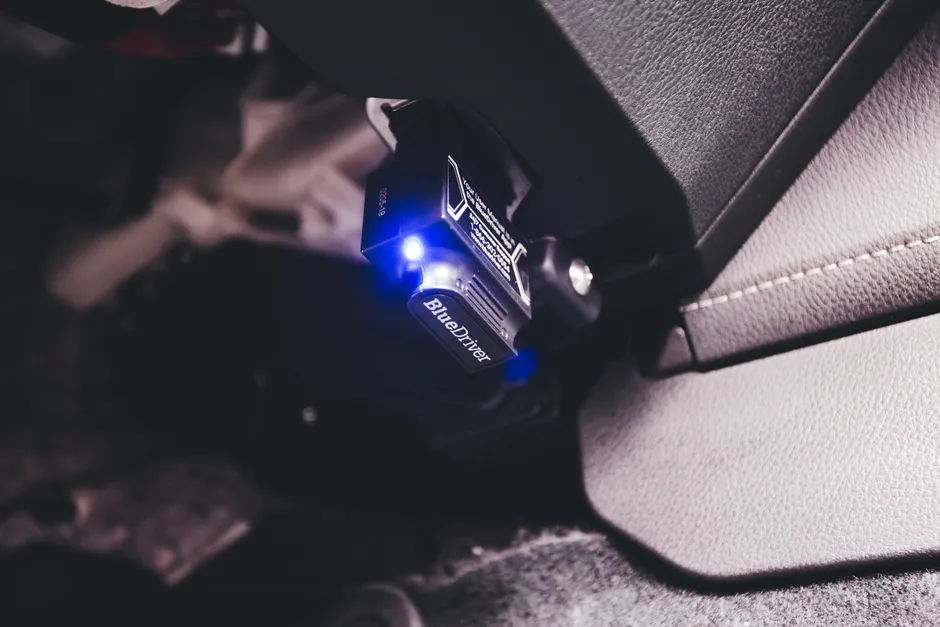
Miles has launched the Miles Plug, a cellular and GPS dongle that plugs into a car’s OBD-II port to track location, driving habits and vehicle health. The device was developed under cofounders Matt McGovren and Kit Klein and is listed as available now at mileslabs.com. The Verge
The hardware is minimal. There is no screen and no battery. Power and vehicle data come from the OBD-II connector, the standard diagnostic port under the dashboard. Cellular sends data back to Miles servers, what engineers call backhaul, while GPS fixes position. The result is a small in-car footprint and tracking that does not depend on a phone being present.
The companion app provides real-time location, alerts and driving insights. It records speeding events and hard braking and builds trip recaps. The app also provides emergency accident response and roadside assistance, so crash detection starts a service workflow rather than only sending a notification.
Diagnostics get an AI layer through a chatbot called Miles Mechanic. It decodes warning lights, states how urgent a fix is and estimates repair costs. In effect it is a plain-language interface over diagnostic trouble codes, the standard error codes cars generate, plus service logic. It does not replace a shop scan tool, but it lowers the effort needed to interpret an unfamiliar dash light.
Miles is pitching the system for teen drivers. Parents and teens see the same trips and the same alerts. That symmetry avoids one-sided surveillance where only the parent gets data, and frames it as shared visibility into speed, braking and routes.
Compatibility is broad but bounded. The device works with most gas and hybrid cars from 2008 onward and with some EVs. Pricing is subscription-based, paid upfront, with no auto-renewal. The entry setup is $99 for the Plug plus $180 for a year of membership, totaling $279, listed as $15 per month. A three-year plan is $396 with the Plug included, listed as $11 per month.
Privacy terms are central. Miles says it will never sell vehicle, trip or location data and that the app has no ads. The company says all vehicle and trip data is encrypted, with the most sensitive data under end-to-end encryption, which only the user can decrypt. Location is tied to the car, not the phone, and stops tracking when the user walks away. Users can download their data, stop location collection, and delete their account and all its data.
The broader context here is trust in aftermarket telematics. An always-connected OBD-II device sees where a car goes, how it is driven and when something breaks. That combination helps safety and maintenance. It is also the dataset that has drawn scrutiny when shared with data brokers or insurers. Miles answers that at the policy layer with no sale of data, no ads and user deletion, and at the architecture layer with car-bound location and end-to-end encryption for the most sensitive fields.
Looking at what could shape adoption, two choices stand out. The first is transparent teen monitoring, familiar to anyone who has coached a new driver, where rules and trust matter as much as sensors. Shared alerts do not settle that negotiation, but they make the facts visible to both sides. The second is upfront payment with no auto-renewal. In my view, that limits indefinite background collection because renewal takes an active choice. If the hardware proves reliable and the diagnostic estimates hold up, the practical payoff is fewer mystery lights, faster response after a crash and calmer conversations about driving habits.