Anthropic Is Running Out of Cloud Room, and Its Landlords Are Now Rivals

Anthropic cannot secure enough cloud capacity from AWS, Google and Microsoft to meet demand for Claude, according to details from its S-1 filing reported by The Wall Street Journal.
An S-1 is the disclosure a company files before an IPO. The filing adds pressure. All three hyperscalers, the large cloud providers, increasingly view Anthropic as a competitor rather than a customer. That puts its core computing supply in the hands of direct rivals. TechCrunch summarized the filing on Oct. 20, 2026.
Anthropic now believes it could spend more than $750 billion on cloud contracts, including deals still in negotiation. That updates earlier prospectus disclosures of at least $518 billion in AI infrastructure spending over a decade with six partners. Yahoo Finance reported the $518 billion plan in early October.
The capacity problem
The $518 billion buildout hinges largely on non-cancelable deals, according to Reuters. In plain terms, Anthropic agrees to long-term payments in exchange for guaranteed access to accelerators, the specialized chips for AI training and inference, plus power and data center floor space. Inference here means running models for users.
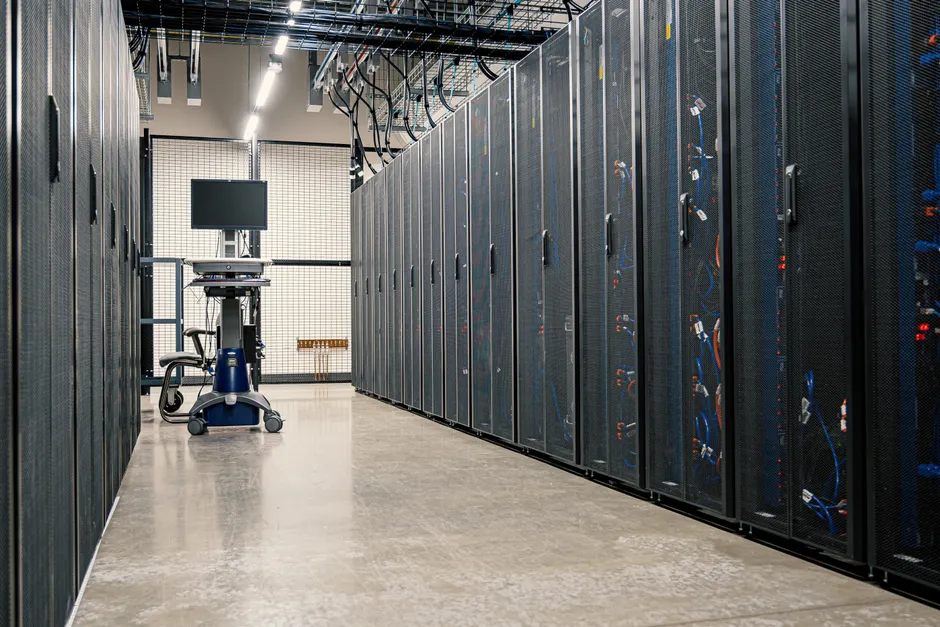
To supplement hyperscaler supply, Anthropic is leasing its own data centers and working with third-party operators. The filing warns those operators have a limited operating history, which could make them less reliable than hyperscalers.
That warning is practical. Hyperscalers bring mature power management, networking fabrics that link thousands of chips, failure handling and regional failover that shifts work if a site has trouble. Newer operators, often put together quickly for AI demand, may lack that depth at scale. Anthropic is flagging the gap to prospective public investors.
The company has been adding alternatives for months. In April, it expanded its compute partnership with Google and Broadcom and secured multiple gigawatts of next-generation TPU capacity starting in 2027. A TPU is Google's AI chip, and a gigawatt signals very large scale. Anthropic called it its largest compute commitment to date. Anthropic
In May, it agreed to a compute partnership with SpaceX to substantially increase capacity, and separately raised usage limits for Claude. Anthropic That same month, Anthropic raised $65 billion in Series H funding at a $965 billion valuation and said the funding would expand compute to meet growing demand for Claude. Anthropic
The financial picture
The filing puts first-half revenue at $16.3 billion and net loss at $80.7 billion. Two customers accounted for about a fifth of sales in the first half. That concentration will draw close attention in IPO diligence.
Growth remains steep. Anthropic told prospective investors third-quarter revenue alone reached $16.8 billion, up 45% from the previous quarter. A single quarter now exceeds the entire first-half total in the filing.
Anthropic is reportedly targeting a November IPO. Earlier reporting pointed to marketing beginning in mid-October at the earliest and a public debut as soon as mid-November at a valuation of up to $2 trillion. Yahoo Finance
Two other risk disclosures stand out. The filing warns Anthropic could be held liable for damages caused by harmful AI behavior in an amount exceeding available insurance coverage. In June, the company took its two newest AI models offline due to an export control order from the Trump administration. TechCrunch
Anthropic describes itself as an AI safety and research company working to build "reliable, interpretable, and steerable AI systems."
The broader context here is familiar to anyone who followed the PC and cloud buildouts. Platform owners rent infrastructure to future rivals, then revise the relationship once the renter gets large enough. We saw it with operating systems and applications, then with retail and marketplace sellers, then with cloud hosts and software companies that grew into platform threats.
In my view, the $750 billion figure reads less as a procurement forecast and more as a statement about leverage. Anthropic is telling public-market investors it needs large, durable compute, its current landlords cannot or will not supply enough of it, and it will therefore sign non-cancelable deals with less-proven operators while building direct accelerator programs.
Worth flagging for infrastructure planners, customer concentration, non-cancelable capacity and reliance on competitors for inference create linked risks. If demand growth slows, Anthropic still pays. If demand stays strong, allocation priority sits with providers that now compete with it. If a third-party site underperforms, there is no hyperscaler-grade cushion underneath. The 45% quarter-over-quarter growth and the Q3 $16.8 billion figure explain why the company accepts those tradeoffs. The $80.7 billion half-year loss explains why public investors will price them carefully.
The optimistic case here is the one that has carried technology through prior capacity crunches. Committed demand pulls new supply into existence. Multi-gigawatt TPU tranches, purpose-built leases and other builds do not appear overnight, but long-term contracts make them financeable. If Anthropic can turn leased shells and third-party halls into production-grade inference capacity, it loosens the link between model growth and hyperscaler goodwill.