Trump Wants Data Centers to Generate Their Own Power. The Binding Rules Don't Exist Yet.

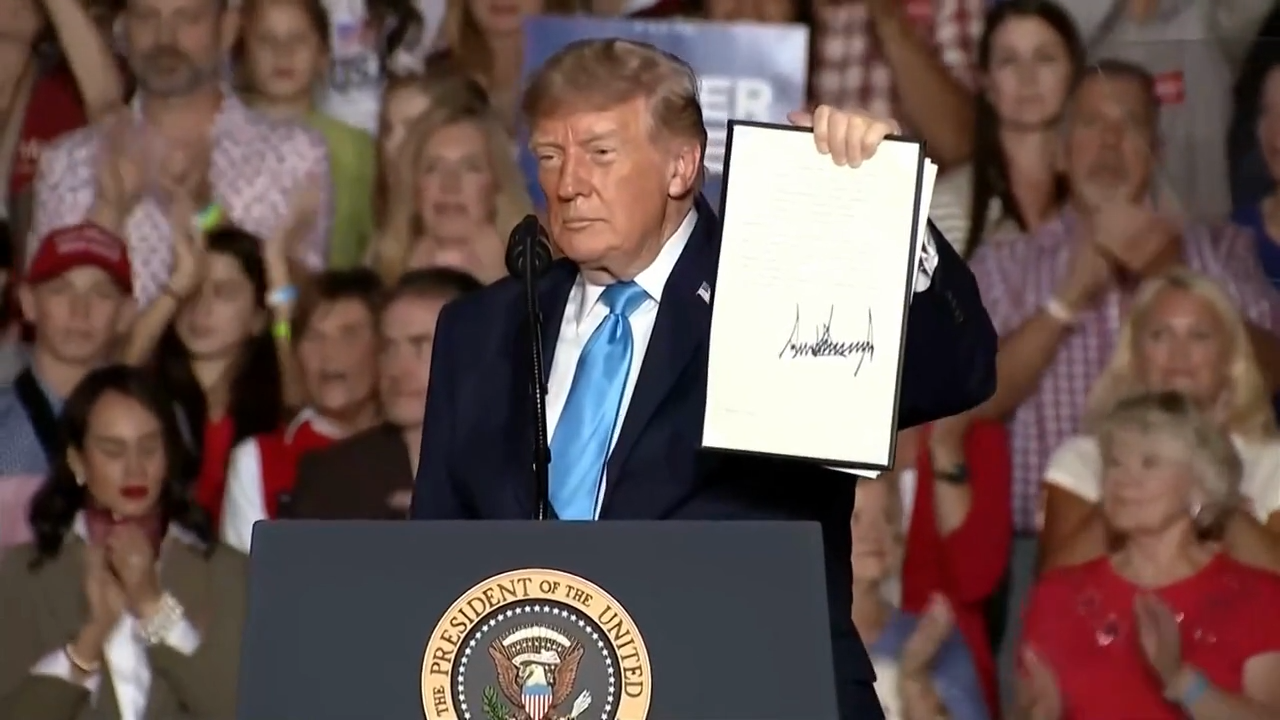
President Trump said on Wednesday, October 21, 2026, that he is requiring companies building large U.S. data centers to provide their own electricity. In a Truth Social post published at 1:30 a.m., he said new data centers must generate their own power and give or sell any excess to nearby grids. Reuters reported the same day that Trump also said companies should pay a "dividend" to the communities that host these facilities.
The stated goal is lower power costs for households. Trump said he had "come to a very strong conclusion" on the issue.
The announcement is a statement of intent. It is not a rule, and it has not been turned into a formal regulatory action. Whether a presidential statement can bind private operators is the central legal question, and it is not settled. MarketWatch reported that experts said only states, not the president, can mandate that data centers generate their own electricity. If that reading holds, any binding version would have to run through state utility commissions, legislatures, or grid operators. Those bodies regulate interconnection (the rules for connecting a facility to the grid), retail rates (what utilities charge end customers), and resource planning (decisions about which power plants get built).
The policy did not begin with this post. In February 2026, Reuters reported Trump saying he had told big technology companies they can build their own power plants and will produce their own electricity to secure their supply. In March, the White House published a Ratepayer Protection Pledge, in which Trump called on leading U.S. hyperscalers (the largest cloud and AI computing companies) to "build, bring, or buy" all of the energy their data centers need. A White House release from the same period says the commitment was first announced in Trump's State of the Union address. A July 2026 White House release stated that under the pledge, large data center operators, not ratepayers (the people who pay utility bills), fund the generation and infrastructure their projects require.
The pledge's scope was set to widen. Reuters reported in July that Trump was set to expand the power cost pledge to cover 80% of U.S. delivered electricity. The same outlet reported on July 24 that critics said the pledge pressured tech companies to power their data centers themselves rather than allowing clean energy onto the grid.
That critique is the one to weigh against the new grid-export language. In my view, a self-supply requirement can ease pressure on ratepayer-funded capacity, but it also shapes which resources get built and where. It can also limit how much new clean generation reaches the system through a shared grid.
The political pressure behind the move is local and electoral. MarketWatch reported that the announcement came as voter backlash against data centers intensifies ahead of the midterm elections. Fox Baltimore reported that data centers have become a midterm election issue, with candidates scrambling to respond to voter anger. Electricity bills are the most direct point of contact between that anger and ordinary households, which is why both the pledge and the new requirement frame the issue around cost.
The transmission side matters as much. Reuters reported on October 13 that the administration was seeking to address transmission constraints (limits on the high-voltage lines that move power between regions) alongside measures to preserve generation and improve resource adequacy (having enough supply to meet demand) as AI demand rises.
Think of the grid as a highway system. A plant with spare power is only useful if there are roads to carry it away and room on the local system to take it in. A grid-export mandate depends on both.
For lenders, underwriters, and investors in power and data center projects, the open questions are practical. Who pays for on-site or dedicated generation, and whether those costs are recovered through contracts or rate structures, determines project economics. Whether excess sales get priced, and by whom, decides whether self-generation becomes a revenue stream or a stranded cost. None of those answers is in the announcement. It sets a direction, but the rules that would give it force have yet to be written in a form that binds operators.