Iran's Missile Attack on Shipping and the U.S. Retaliation: What's at Stake in the Strait of Hormuz

Iran fired missiles at three commercial vessels in the Strait of Hormuz on July 7, 2026, damaging a Saudi crude tanker and putting a Qatari liquefied natural gas (LNG) carrier at risk. A Singapore-flagged cargo ship exiting the strait along the Omani coast was also targeted. The United States responded on two fronts within hours: the Treasury Department revoked a license that had permitted Iranian crude oil exports under a sanctions carve-out, and U.S. Central Command (CENTCOM) struck Iranian territory, hitting the port cities of Sirik, Qeshm, and Bandar Abbas.
The Strait of Hormuz handles roughly one-fifth of global oil consumption daily. Even a partial disruption ripples through energy markets. Shipping-security assessments rated the maritime risk at "severe" following the strikes, and both Brent and U.S. crude futures rose on the news.
Maritime Risk Was Already Rising
The July 7 attacks did not occur against a stable backdrop. The UK Maritime Trade Operations (UKMTO) Joint Maritime Information Center had assessed conditions as stable through July 5, rating an attack "possible but not likely" at a SUBSTANTIAL risk level. Yet by July 7—the same day of the missile strikes—UKMTO flagged that "navigation interference and residual kinetic risk persist," showing how quickly conditions in the strait can outpace formal risk assessments.
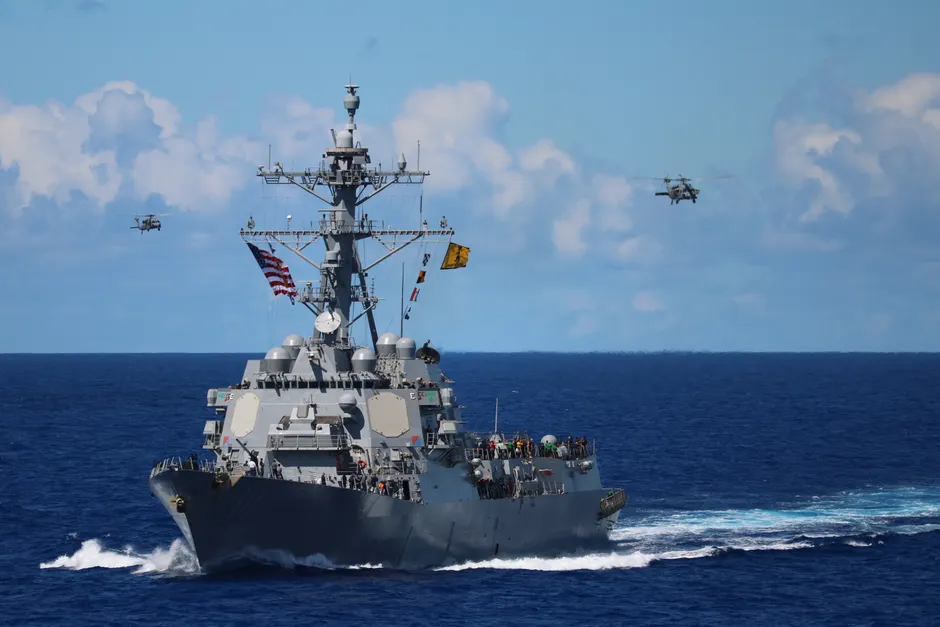
Earlier warnings traced back to June. A British military report around June 25 of a vessel hit in the strait prompted a UN agency to halt ship evacuations. On July 3, Iran's joint military command warned that tankers must use approved routes through the strait or face consequences. CENTCOM had separately described enforcing blockade measures against Iranian-flagged vessels while protecting U.S. warships transiting Hormuz—a naval posture already primed for confrontation before July 7.
The Diplomatic Channel Fractures
The timing cuts against a diplomatic track that had appeared to be functioning. The Associated Press reported on July 1 that Washington and Tehran had agreed to keep talking, with Qatar hosting and mediating the talks. Qatar's role now sits awkwardly beside reports that one of its own LNG tankers was targeted in the same waterway its diplomats were working to stabilize.
Reuters reported that Iran's supreme leader said no negotiations would proceed unless Trump halted military operations, even as Tehran organized mass demonstrations. That ultimatum signals a hardening stance from Tehran.
What This Escalation Means
The broader pattern at work here is a maritime chokepoint cycling between fragile recoveries and fresh escalation. Each side's declared "red lines"—Iran's required shipping routes, Washington's sanctions licenses—function less as stabilizers than as triggers for the next round. The New York Times noted that the July 7 strikes threatened what had been a tentative recovery in oil and gas shipments through Hormuz.
Whether the Treasury license revocation and the U.S. strikes on Iranian port cities will deter further Iranian action against shipping, or accelerate it, remains uncertain. Markets are pricing that risk in real time.