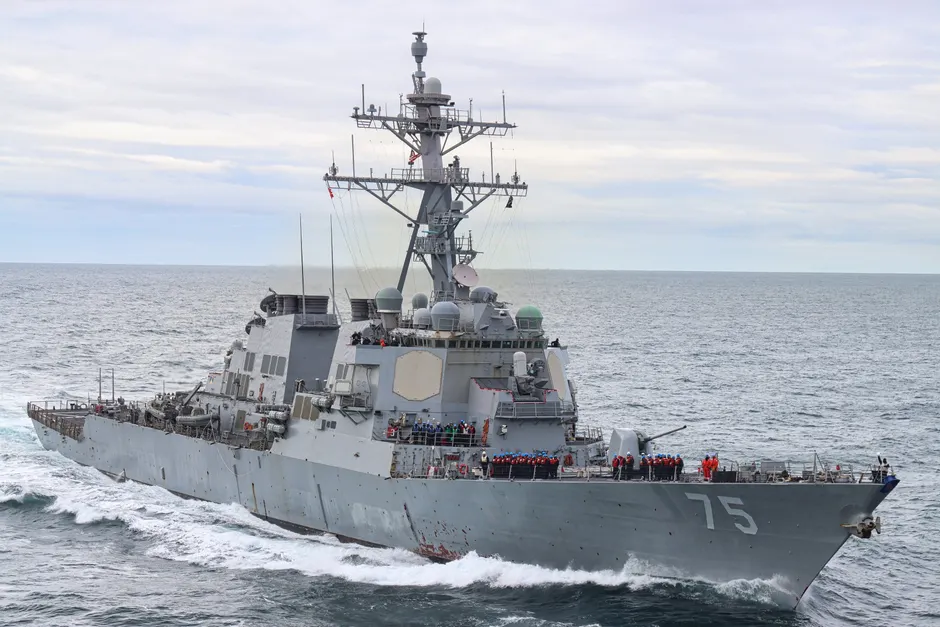
The U.S.-Iran Conflict Escalates: Strikes Expand North and the Strait of Hormuz Flashpoint
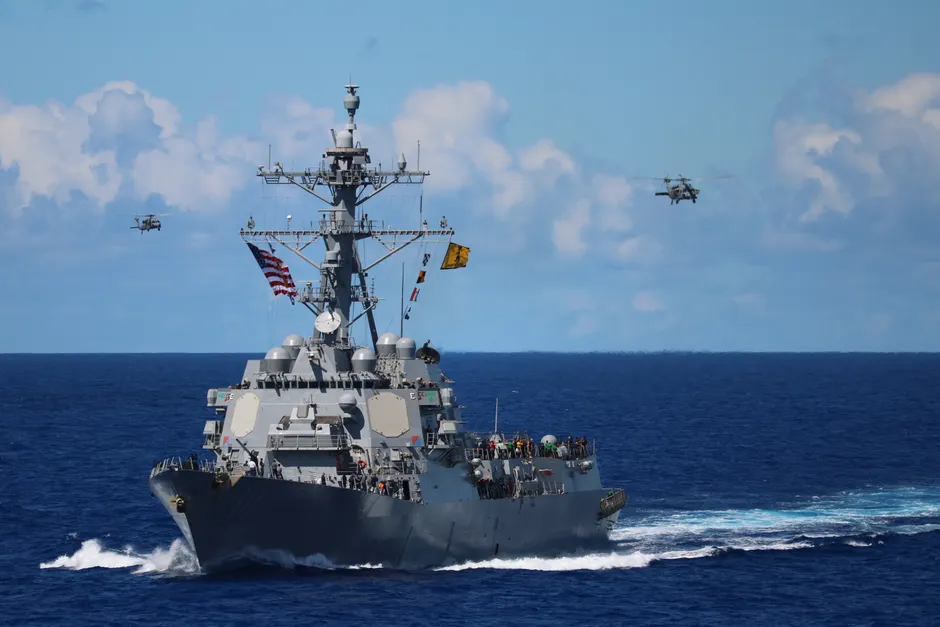
On July 16, 2026, the United States expanded its military campaign against Iran into northern Iran and disabled a vessel attempting to run a blockade in the Strait of Hormuz, according to Britannica. The escalation follows days of consecutive U.S. strikes and Iranian retaliatory actions across the region.
To understand how we got here, it helps to retrace the diplomatic timeline. In June 2026, the White House announced an Iran agreement stating that Iran will never obtain a nuclear weapon and that the accord reopens the Strait of Hormuz to free navigation, according to a White House release dated June 19. Secretary of State Marco Rubio stated in June that the U.S. waived oil sanctions — penalties that restrict trade and financial transactions — against Iran and that negotiations would take place between the GCC (the Gulf Cooperation Council, a bloc of six Gulf monarchies), Iran, and Iraq regarding the Strait of Hormuz. Rubio also stated at the time: "We're going to give diplomacy every chance to work."
That diplomatic track emerged from an earlier ceasefire. According to the U.S. State Department, following June 2025 strikes on Iran, the parties observed a ceasefire to allow diplomatic negotiations to address the Islamic Republic's nuclear program. The June 2025 strikes on Iran's Fordow Fuel Enrichment Plant used 30,000-pound GBU-57 massive ordnance penetrator bombs — specialized munitions designed to burrow deep underground before detonating. The Department of Defense described the operation as a "historically successful" strike 15 years in the making.
The ceasefire framework began unraveling in July 2026. On July 7, Iran submitted a letter to the UN Security Council complaining that U.S. Central Command conducted strikes on over 80 targets in Iran, according to IRNA. Reuters reported on July 14 that the U.S. military had carried out a third consecutive night of strikes. On July 15, the U.S. launched two waves of attacks on Iran's coastal defenses and missile sites. President Donald J. Trump provided an update on U.S. Forces retaliatory strikes against Iran on July 8.
The Strait of Hormuz — a narrow waterway between Iran and Oman through which roughly a fifth of the world's daily oil supply passes — has become the conflict's central flashpoint. On July 11, Iran declared the Strait closed to unauthorized vessels and expanded attacks on Gulf states after U.S. strikes, according to Reuters. On or around July 13, President Trump stated that the Strait of Hormuz is open and will remain open with or without Iran, and that the U.S. is reinstating "the Iranian blockade." Iran's government stated on July 9 that foreigners have no stake in the Strait of Hormuz and warned the U.S. over shipping interference. On July 14, an Iranian Army spokesperson stated that the Iranian Armed Forces would not compromise on Iran's rights in the Strait. On July 16, Iran warned that the Strait of Hormuz is an "unbreakable red line," according to CNN. Iran also warned it would target regional infrastructure if the U.S. carried out strikes, Reuters reported the same day.
Iranian military retaliation has accompanied the rhetoric. On July 14, Iranian Armed Forces conducted drone and missile attacks on U.S. bases in the region, according to IRNA. The IRGC — Iran's Islamic Revolutionary Guard Corps, an elite military branch that operates parallel to the conventional army — stated that a second vessel was hit in the Strait of Hormuz involving the U.S. on or around July 14. Iranian government spokesperson Fatemeh Mohajerani stated that U.S. attacks on Iran violate fundamental humanitarian values and international law.
Gulf states have been willing to overlook flaws in the U.S.-Iran Memorandum of Understanding ceasefire agreement as of July 16, according to CNN, as the immediate security threat from escalation in the Strait takes precedence. Meanwhile, the New York Times reported on July 16 that U.S.-Iran hostilities have created an uneasy limbo for Israel.
The broader context here involves a layered sanctions and tariff architecture that predates the June agreement. In February 2026, President Trump signed an Executive Order reaffirming the ongoing national emergency with respect to Iran. The White House issued a fact sheet stating that the Executive Order established a process to impose tariffs on countries engaging with Iran, a tool that remains available even as the June MOU attempted to pivot toward diplomatic management.
The current expansion of strikes into northern Iran suggests the U.S. is broadening its target set beyond coastal and nuclear infrastructure. The simultaneous collapse of the Strait of Hormuz arrangement places the burden on the GCC-Iran-Iraq negotiation track that Secretary Rubio outlined in June, a framework that now appears overtaken by kinetic exchanges — military actions involving active combat rather than diplomacy. With Iran threatening regional infrastructure and the U.S. reinstating a blockade posture, the gap between the June diplomatic architecture and the July operational reality continues to widen. The willingness of Gulf states to accept the MOU despite its flaws indicates their priority is de-escalation of the maritime threat, but Iran's military leadership has signaled no willingness to retreat on what it defines as its rights in the Strait.