Citrini Research and Anthropic Test Whether Claude Can Design a Scorpion Antivenom

Citrini Research and Anthropic tested whether an unreleased version of Claude could design a scorpion antivenom. The experiment did not produce a drug. It produced promising starting points: 17 of 211 Claude-designed proteins passed binding tests, collectively binding four of five targeted scorpion toxins, according to The Verge.
The goal was to use Claude to design proteins, the chains of amino acids that fold into three-dimensional shapes, that could attach to toxins in scorpion venom. These engineered proteins are called binders. Anthropic gave the Citrini team access to a more advanced, unreleased Claude model on the condition that they work from its offices. Anthropic also paid the compute and token bill, which came to just under $50,000.
Citrini's account, published on October 20, 2026 under the title "We Wanted to Use Claude to Create a New Drug. Here's What Happened.", describes a project that ran for three months alongside Anthropic's internal research model. Citrini Research's blog post also describes the team encountering Claude's biosecurity guardrails, the safety limits meant to keep the model from assisting with dangerous biology, while trying to research drug candidates. Anthropic agreed to lift those restrictions for the work.
The design campaign itself was large. The team used a 35-page prompt and deployed about 300 subagents, smaller AI workers that each handle one slice of a larger task, to search for suitable proteins. Claude generated nearly 320,000 candidates. The team discarded those resembling known toxins or existing proteins, which left 180 designs. The protein-design process took 64 hours. The team then added 31 designs made with Claude, bringing the total to 211.
Anthropic's own research page on the binder-design work states that the four toxins bound by the Claude-designed proteins are neurotoxins, poisons that act on the nervous system and are known to be dangerous to humans. Anthropic's accompanying technical document says Claude ran the binder-design campaign with considerable autonomy, beginning with the choice of epitope residues, the specific spots on each toxin where a binder grips.
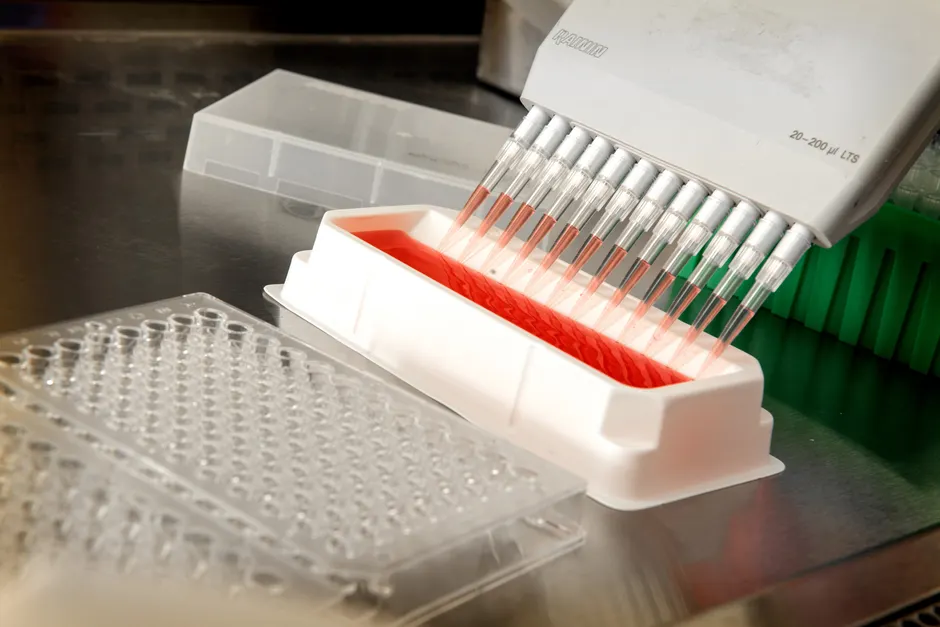
Computational design was only half the pipeline. Citrini sent the designs to Adaptyv Bio and Twist Biosciences to test whether the physical proteins could bind their intended targets in the lab. Outside laboratory testing cost about $150,000. Seventeen designs passed. Those binders collectively covered four of the five toxins the team targeted, so the fifth target had no passing binder in this round.
Quartz reported that Citrini Research is backing life sciences stocks following the project.
In my view, the cost structure is the most useful detail for practitioners. The model-driven stage, including compute and token spend, came to just under $50,000 and took 64 hours of processing. The wet-lab stage cost roughly three times as much and is where the candidates were actually tested. Generating and filtering hundreds of thousands of sequences has become cheap relative to validating a handful of them in the lab, and that shifts where the bottleneck sits. A binder that binds a toxin in an assay is still a long way from a therapeutic that neutralizes envenomation in a patient.
The broader context here is the dual-use question that the guardrail episode raises. The same capability that searched for binders against neurotoxins could in principle be pointed at other targets. Anthropic's decision to lift restrictions for this project, and to host the team in its offices, is the arrangement that made the work possible. Whether that model of supervised access can extend to other research groups is an open question.
The optimistic case is also the simpler one. Antivenoms are costly to produce, usually depend on immunizing animals, and vary in how many species they cover. A method that can propose and screen binders against a defined panel of toxins in days, with laboratory validation at the end, offers a different starting point for that problem. Whether it leads to a usable treatment will depend on the next stages of work.