Tesla in Full Self-Driving Mode Fatally Strikes Pedestrian on Interstate 80 in Vallejo
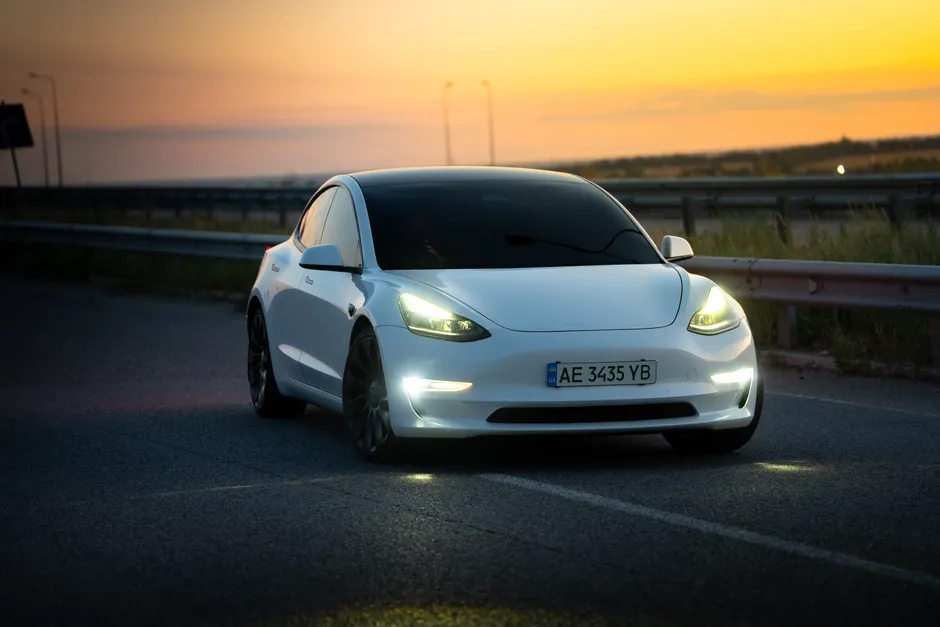
A 71-year-old man was fatally struck while crossing Interstate 80 in Vallejo, California, at about 2:30 a.m. Thursday. The vehicle involved was a Tesla operating in Full Self-Driving (FSD) mode, according to The Verge.
The California Highway Patrol has reviewed video from the Tesla's dashcam. The footage shows the brakes being applied as the vehicle steered left in an effort to avoid the pedestrian. Despite those evasive actions, the right front portion of the Tesla struck him. Authorities believe at least one other vehicle struck the pedestrian after the Tesla did, according to the San Francisco Chronicle.
The Tesla driver stopped and remained at the scene. No other drivers stopped, per The Verge's reporting. The driver handed the dashcam footage to officers on scene. The CHP's Solano Area office said the crash was captured in its entirety on that camera, and it is asking anyone who witnessed the collision, or who has information about it, to contact the office.
The CHP also issued a warning to drivers. In its statement, the agency said full self-driving is not fully autonomous and does not relieve drivers of their responsibility to operate their vehicles safely. The CHP's post on X carries the same message.
In my view, the agency's statement is the most important sentence in the public record so far, because it states plainly where the agency places responsibility. The product name describes a capability, while the legal and operational duty sits with the person in the driver's seat. A driver who has used the system for hours without incident may find those two things contradictory, and the CHP is making clear that the distinction is not a technicality.
The broader context here is familiar to anyone who has worked on driver-assistance systems. FSD is a Level 2 system, meaning the driver must supervise the car at all times, yet it is marketed under a name that suggests a higher level of autonomy. That gap between marketing language and supervisory obligation is where much of the public confusion begins. The footage also matters for a different reason. A complete, time-stamped record from the vehicle's own camera provides a sequence of braking and steering inputs that investigators can check against the scene, the lighting, and the positions of other vehicles. That kind of record allows a crash like this to be reconstructed rather than argued about from memory.
What remains open is the sequence of events between the pedestrian entering the roadway and the moment of impact, and the identity and actions of the vehicle that struck him afterward. The CHP's request for witnesses targets those gaps. The video establishes the Tesla's inputs in the final seconds. It does not, by itself, establish why the system reacted as it did, or what the driver was doing before the car began to steer.
For engineers and product teams, the case will likely be read against the questions every supervised automation incident raises: how the system detects a pedestrian at highway speed at night, how quickly it hands control back to the driver, and how driver attention is monitored. Those questions will be answered through the investigation, not through the news cycle. The optimistic reading is that a fully recorded event, with a cooperative driver and an agency publishing its findings as it goes, gives the industry more to learn from than most crashes do.


