Iran's Controlled Transition: Inside Khamenei's State Funeral and the Power Succession Ahead
Ayatollah Ali Khamenei's funeral and burial took place July 9, 2026, at the Imam Reza Shrine in Mashhad, concluding a six-day state ceremony that began across Iran and Iraq on July 4. Iran's official news agency IRNA consistently referred to Khamenei as the "martyred Leader"—language that signals Tehran's official position that his death was an assassination rather than from natural causes IRNA.
The procession began in Tehran, where Khamenei's body lay in state at the Grand Mosalla before moving through five cities in Iran and Iraq, including Qom and Mashhad CNBC. The New York Times reported that Khamenei's remains had been preserved for months before the public ceremonies—a detail that raises questions about when death actually occurred versus when it was announced New York Times.
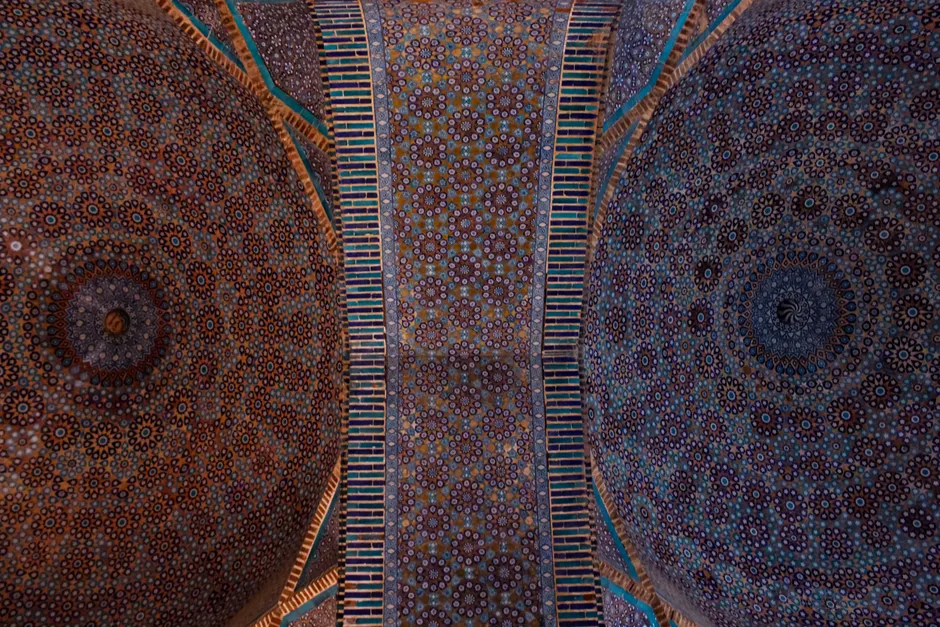
Hundreds of thousands attended the funeral ceremonies, concentrated in Tehran, Qom, and Mashhad along the procession route New York Times. Mashhad itself—a city of roughly three million people anchored by the gold-domed Imam Reza Shrine complex—became both the endpoint of the procession and Khamenei's burial site New York Times. This choice is significant: Khamenei's grave now sits inside one of Shia Islam's most visited pilgrimage complexes, alongside the eighth Imam, rather than at Tehran's Behesht-e Zahra cemetery where his predecessor Ruhollah Khomeini rests.
The Iranian state mobilized extensively for the final ceremonies. IRNA reported that the Army assisted the institutions overseeing the funeral, with the Vice President directly managing preparations IRNA. Over 200 foreign journalists registered to cover the Mashhad burial—a significant press presence that reflects Tehran's intention to broadcast the event internationally, not contain it domestically IRNA.
The funeral's extension into Iraq carries symbolic weight. Iraq hosts the largest concentration of Shia clergy and pilgrimage sites outside Iran. Cross-border ceremonies for an Iranian Supreme Leader reflect the transnational scope of the office Khamenei held for over three decades—a position that combined religious authority as marja (a source of Islamic guidance for believers) with constitutional command over Iran's armed forces and security apparatus. The Assembly of Experts, Iran's clerical body, will now select Khamenei's successor, who will inherit both roles simultaneously—religious and military authority fused together in a way that has no equivalent in Sunni-majority states.
What's worth examining here is the gap between Tehran's public language and its incomplete narrative. IRNA called Khamenei's death an assassination in coverage from mid-June through the funeral, yet Iranian authorities have not released a detailed public account of who was responsible or how it occurred. The months-long interval between death and burial—reported by the Times—is itself revealing. Regimes typically delay public confirmation of a leader's death to manage succession logistics. The scale of military mobilization, foreign press credentialing, and the elaborate multi-city procession all suggest those logistics were complex and required time to arrange.
For outside observers, the funeral's scale and cross-border choreography offer a window into how Iran's clerical establishment and regional allies intend to project institutional stability during a period of maximum vulnerability. The decision to bury Khamenei in Mashhad rather than Tehran, the months of preservation before public rites, and the deployment of the military into what nominally remained a religious ceremony all point to a transition being managed with deliberate precision. What remains unresolved is the public succession mechanism itself—a question the Assembly of Experts must now address without the ambiguity that surrounded the initial announcement of Khamenei's death.


