Global PC Shipments Fall 21 Percent in Q3 2026 as Memory Costs Climb
Global PC shipments fell 21 percent year-over-year in Q3 2026 to 57 million units, according to Counterpoint Research, which published its figures on 22 October. The firm linked the decline to higher prices for RAM, SSDs and chips. RAM is the working memory a machine uses while programs run, and SSDs are the solid-state drives that store files. Both have become more expensive.
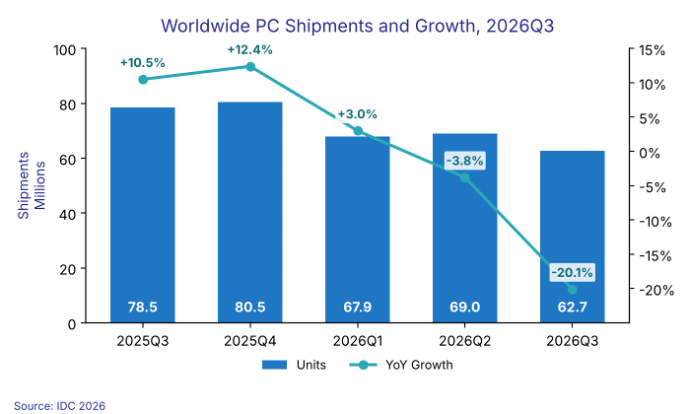
Other trackers placed the drop in the same range. IDC reported a 20.1 percent year-over-year decline to 62.7 million units, down 9.1 percent from the Q2 2026 total. Omdia reported a 21.2 percent fall. It attributed the drop to subsiding pull-forward demand, meaning purchases brought forward from later periods, and to rising upstream component costs, meaning higher prices for parts earlier in the supply chain.
The decline ends a run of growth. According to Counterpoint, PC shipments had increased for more than two years straight until Q2 2026. The year-ago comparison is also complicated. Counterpoint said Q3 2025 included purchases made ahead of the Windows 10 support deadline, along with tariff-related inventory adjustments. A quarter inflated by those factors makes a clean percentage hard to read, and the 21 percent figure partly reflects that base.
Looking ahead, Counterpoint expects global PC shipments to fall 27 percent in Q4 2026 and to remain broadly flat in 2027. IDC, in a forecast published in June, projected an 11.3 percent decline for 2026 as a persistent memory shortage continued.
The pressure is not confined to PCs. Reuters reported that global smartphone shipments in Q3 2026 were at their lowest third-quarter level since 2012, and cited soaring memory chip costs as a factor. Counterpoint Research said continued memory shortages contributed to the decline in the smartphone market.
The broader context here is that the two categories are being squeezed by overlapping forces. The PC figures combine a difficult year-over-year base, created by the purchases and inventory adjustments in Q3 2025, with a cost increase in RAM, SSDs and chips. The smartphone reporting points more directly at memory costs and shortages. These are different problems on different timelines, and a single headline percentage does not separate them.
In my view, the number to watch is not the projected Q4 drop, which Counterpoint has already put on the calendar. It is whether component prices ease quickly enough for the flat 2027 outlook to hold. If memory supply catches up with demand, the PC market has a credible path back to stability, and a flat year would be a floor rather than a warning. If the shortage persists, as IDC has described it, the flat forecast becomes the optimistic case, and PC makers will be pricing for a market that is smaller than it was two years ago.