NHTSA Proposes Optional Cyan Marker Lamps for Automated Vehicles

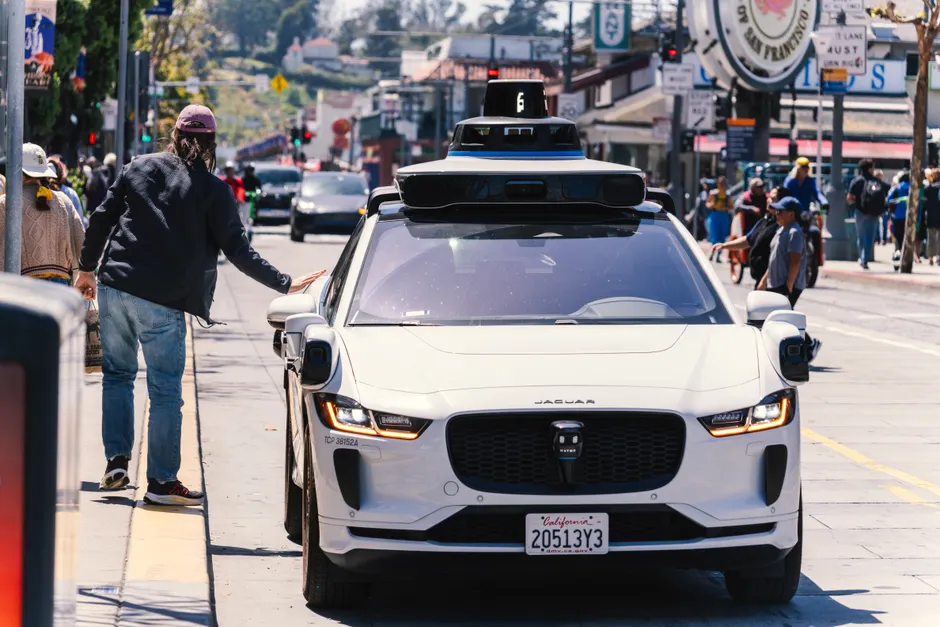
The National Highway Traffic Safety Administration (NHTSA) has proposed changes to Federal Motor Vehicle Safety Standard No. 108, the US rule governing vehicle lighting, that would give automated driving systems (ADS) their own visual signal. The agency is proposing cyan marker lamps that indicate when an ADS is operating the vehicle. The Verge reported the proposal on October 23, 2026.
Under the proposal, manufacturers would not be required to install the cyan lamps. The rule would be optional. For manufacturers that do fit them, the proposal would establish federal standards for the color, brightness, and location of the lamps, so that a cyan marker means the same thing on any compliant vehicle.
The proposal also removes several requirements that assume a human is in the driver's seat. NHTSA is proposing to drop mandates for physical hazard switches, manual beam shifters, and turn levers. These are the controls a driver uses to warn other road users, change the headlamp beam pattern, and signal a turn. A vehicle without a human operator has no use for them, and the rule as written would no longer require their presence.
FMVSS No. 108, titled "Lamps, reflective devices, and associated equipment," sets requirements for both new and replacement motor vehicle lighting equipment. One provision bears directly on the cyan proposal. NHTSA's interpretation of the standard states that auxiliary lamps must not impair the effectiveness of a vehicle's required lighting. Any new marker lamp must therefore coexist with the headlamps, taillamps, and signal lamps the standard already mandates. That makes the proposed brightness and placement specifications carry most of the engineering weight.
The lighting action is one thread in a longer NHTSA effort. In April 2020, the agency published Report No. DOT HS 812 796, FMVSS Considerations for Vehicles With Automated Driving Systems: Volume 1. In February 2022, NHTSA amended its lighting standard to permit certification of adaptive driving beam (ADB) headlamps, which shape their light around oncoming and preceding traffic. On October 6, 2026, the agency announced that its new vehicle lighting rules will examine reducing headlight glare, improving driver safety, and upgrading testing procedures. The cyan proposal therefore sits alongside broader modernization work rather than standing alone.
Other standards are moving in the same direction. NHTSA proposed modernizing FMVSS No. 102 on March 16, 2026, to remove a display requirement that serves no purpose in an ADS-equipped vehicle without manually operated driving controls. On June 26, 2026, the agency proposed amendments to FMVSS No. 135 to accommodate ADS-equipped vehicles that lack manually operated driving controls. Each proposal removes a human-centric assumption from a different standard.
The deployment side is also active. Reuters reported in late July that Amazon's Zoox had won the first US approval for paid robotaxis with no human controls. Under that approval, Zoox can deploy 2,500 vehicles annually for two years, and the company said it will soon charge for service in Las Vegas. NHTSA also has authority to grant petitions allowing up to 2,500 vehicles per manufacturer each year on US roads. Separately, Reuters reported on September 4, 2026 that the regulator had opened a probe into nearly 1,000 Tesla Cybercabs over self-certification, the process by which a manufacturer declares that its own vehicles meet the standards.
The broader context here is the gap between a vehicle that is designed around a driver and one that is not. Lamps and controls were built for a person who can read a turn signal from the car ahead and reach for a switch. Pedestrians and cyclists have long learned those cues without thinking about them. A signal that only some manufacturers fit creates a question for other road users: whether a cyan lamp will be consistently present and consistently meaningful across the fleet. The standardized color, brightness, and location the proposal sets are the parts that would answer that question, and the optional status is the part that leaves it open.
In my view, the removal of driver-centric mandates is the less contentious half of the proposal, because it simply stops requiring equipment that a vehicle with no manual controls cannot use. The marker lamp is the more consequential element, since its value depends on adoption and on the rule being specific enough that drivers, pedestrians, and first responders can interpret it the same way everywhere. Taken together, the changes point toward a standard that describes what a road user needs to perceive rather than what a human driver needs to operate. That is a constructive direction for the industry, and it leaves the practical details to the rulemaking process.