Ukraine's Largest Drone Maker Under Investigation for Price Inflation
Ukraine's State Bureau of Investigation (DBR) searched Vyriy Industries on Tuesday, July 7, along with properties belonging to the company's owner, Oleksiy Babenko. Investigators also searched homes of Babenko's brother and mother. Babenko also holds a stake in Babel, a Ukrainian news outlet known for critical coverage of wartime governance.
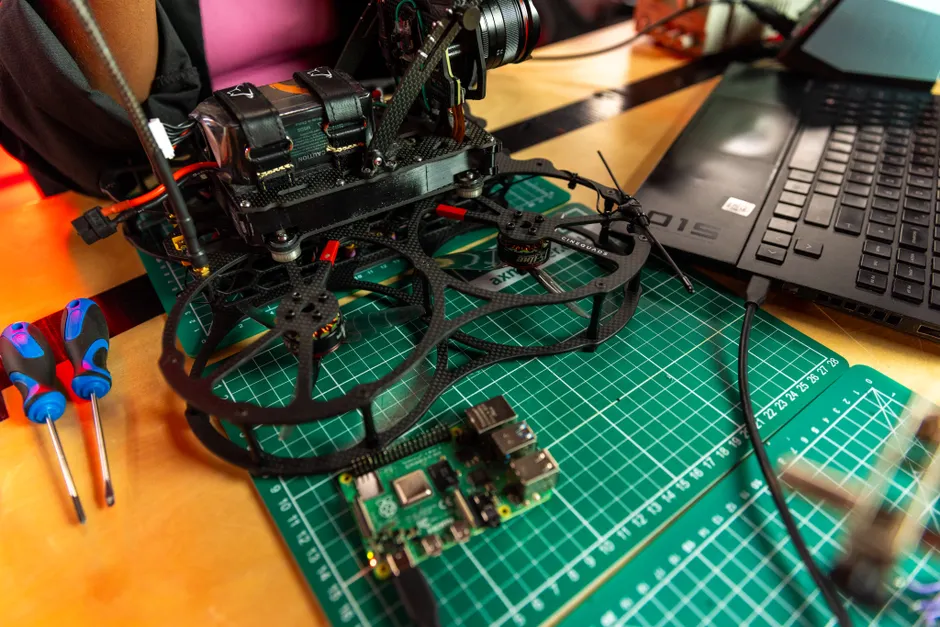
The DBR is investigating suspected price inflation on Vyriy's drones — specifically, FPV (first-person-view) drones, a type of loitering munition that has become central to Ukraine's tactical operations along the front. The alleged overcharge totals nearly 7 billion hryvnias. The investigation raises immediate questions: authorities have not publicly specified whether the suspected inflation involved state-level defense contracts or smaller unit-level purchases from brigades, a distinction that matters given how decentralized Ukraine's drone procurement has become since 2022.
Babenko has denied the price-gouging allegations. Vyriy Industries issued a statement calling the searches "informational pressure" and stated the company continues operating normally and fulfilling Defense Forces orders without interruption. Unnamed commentators quoted by Ukrainian outlets have called the searches "absurd," though no named official or independent auditor has attached their credibility to that assessment.
Two interconnected dynamics set the stage for this case. First, demand for FPV munitions exploded after 2023, outpacing the pricing benchmarks initially set by small workshops and volunteer-adjacent producers. Industrial manufacturers like Vyriy — now reportedly Ukraine's largest drone maker — have moved in to meet volume, but whether their margins reflect legitimate cost scaling or padding remains contested. Second, Ukraine's anti-corruption institutions, developed under IMF and EU conditions attached to aid, have increasingly focused on defense procurement — an area historically treated as off-limits on national-security grounds and therefore rarely scrutinized.
The gap between suspected fraud and legitimate cost pass-through is significant. Ukrainian defense contracts for drones involve layered subcontracting, component sourcing complicated by Western sanctions on Russian-origin electronics, and price swings tied to hryvnia exchange rates and battlefield attrition. These factors can inflate per-unit costs without indicating wrongdoing. Determining whether the 7-billion-hryvnia figure reflects actual overcharging or acceptable wartime margins would require access to component invoices, contract terms, and comparable pricing — materials not yet disclosed in public sources.
The involvement of Babenko's family members in the search and his ownership of a media outlet create an added layer of scrutiny. Babel has published investigative and critical coverage of wartime governance. Ukrainian commentators are likely to weigh whether a media-connected businessman is being disproportionately targeted — or whether his media presence shielded his defense-sector dealings from earlier review — independent of the legal facts.
For Western governments and multilateral lenders supporting Ukraine, this case arrives amid recurring pressure on Kyiv to demonstrate that wartime procurement — increasingly paid for in dollars and euros through direct arms sales and reimbursement schemes — is not being funneled through inflated intermediary markups. Whether the DBR ultimately prosecutes or dismisses these allegations involving Ukraine's largest drone producer will be read as a signal of how seriously that transparency commitment is being enforced, regardless of the outcome for Babenko himself.
The next steps remain unreported: whether charges are formally filed, whether Vyriy's production and delivery schedules are disrupted despite the company's reassurances, and whether the DBR reveals the evidentiary basis for the 7-billion-hryvnia figure. As of July 8, no court appearance date or formal charge sheet has been announced.