Eni's 2 Tcf Egypt Gas Find: A Big Number, But Not Yet Supply

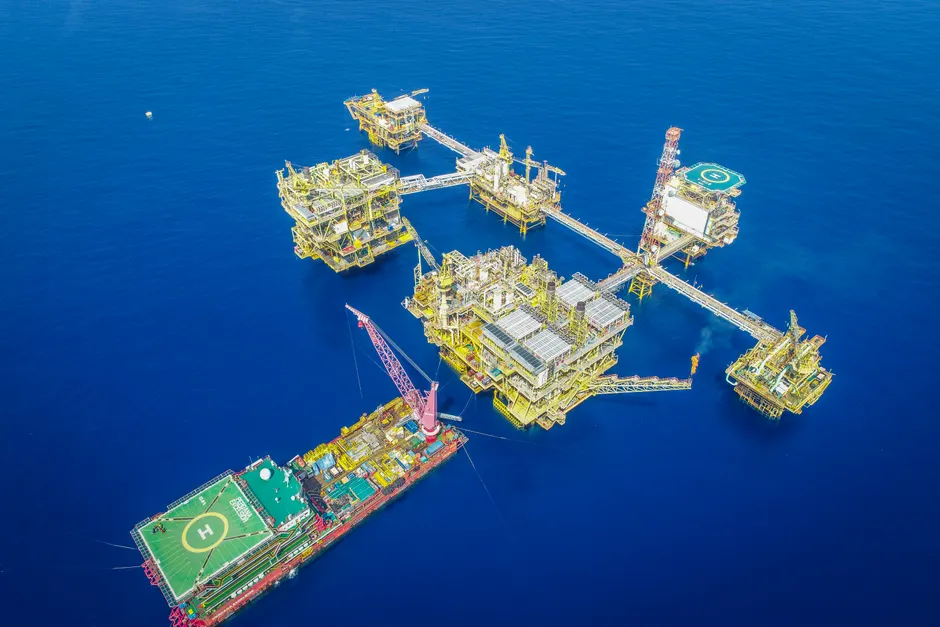
Eni said on April 7, 2026 that its Denise W-1 well, drilled offshore Egypt, had found 2 Tcf (trillion cubic feet) of gas. The company framed the result in a press release that pointed to possible fast-track development.
The well sits within the Temsah Concession, the licence that lets a company work a defined area. In July 2025, Eni signed a binding agreement with the Egyptian state entities EGPC and EGAS to renew that concession for 20 years, and the Denise W-1 drilling followed from that deal. Settling the contract first removes one layer of uncertainty. But a renewed licence says nothing about how much gas lies underground.
This is where experts should slow down. A discovery volume is a resource estimate: the gas believed to be in place and potentially recoverable. Reserves are a narrower category. They require appraisal drilling (extra wells that measure the reservoir), a credible development plan, and commercial terms that make production economic. Turning 2 Tcf into reserves typically takes time and more data, and the figure will move as appraisal proceeds. Nothing in the announcement turns this find into supply.
Eni's other recent awards follow the same logic. On February 11, 2026, Eni announced it had been awarded a new offshore exploration licence in Libya. The company said the licence includes wide areas without 3D seismic coverage, meaning areas not yet imaged by the sound-wave surveys that build detailed pictures of underground rock. It said those areas could host additional hydrocarbon accumulations.
That is a notable admission in both directions. Acreage without 3D seismic is less well imaged, so the geological picture is thinner and the range of outcomes wider. Eni's language points to upside, but a licence on under-imaged ground is a bet on structures nobody has mapped yet, and the seismic work that would narrow the uncertainty is still ahead.
In October 2025, Eni signed an exploration contract for the CI-707 offshore block. Eni's annual report describes CI-707 as geologically continuous with the nearby CI-205 block.
Geological continuity is a useful argument, since explorers can carry what they learn from one block to the other. But continuity on a map does not guarantee that the same reservoirs, seals (the rock that traps gas), or traps exist on both sides of a licence boundary.
Taken together, the three moves put Eni's offshore gas exposure across North Africa's eastern and central Mediterranean margin and West Africa's offshore. The Egyptian find is the only one that has reached a reported volume. The more useful question is how quickly appraisal and commercial terms can turn that volume into something that can be priced as production. The announcement does not answer that.
For ordinary savers and borrowers, the practical effect is nil for now. Gas discoveries affect prices, energy security, and project economics only once they become production with a buyer, and none of the facts here establish that path or its timing. Anyone tracking Eni's exploration programme should watch for appraisal results and a development decision. Those would give the 2 Tcf figure its commercial meaning.