Why the Fed's June Minutes Arrived Late—and What That Means for Interest Rates
Why the Fed's June Minutes Arrived Late—and What That Means for Interest Rates
The Federal Reserve released the minutes of its June 16–17 meeting on July 8 at 2:00 p.m. ET, three weeks after the decision, following the Fed's standard schedule Federal Reserve. The timing matters more than usual this cycle, and here's why: the Middle East situation the Fed was thinking about in mid-June has already shifted twice since then.
When Fed officials gathered on June 16–17, US-Iran tensions were a known worry but hadn't yet turned into direct military strikes. That changed on June 27, when the United States carried out strikes against Iran following an attack on a tanker in the Strait of Hormuz Reuters. Almost immediately after, Iran and the US agreed to halt hostilities and resume talks over the Strait dispute, according to a US official cited by Reuters. The broader 2026 conflict disrupted global travel and trade, grounded flights in and out of the Middle East, and forced shipping to take longer, costlier routes Britannica. None of this had fully unfolded when the Fed was meeting, so the committee was working with incomplete information about how energy prices and shipping costs might move.
At the same time, renewed Israel-Hamas ceasefire talks in Egypt during June left major sticking points unresolved — Hamas disarmament and Israeli troop withdrawal among them ACLED. For the Fed, which is trying to figure out whether price spikes from geopolitical risk are temporary or here to stay, an unresolved regional conflict is harder to forecast than a settled one.
Gold Prices Show How Markets Are Reading the Risk
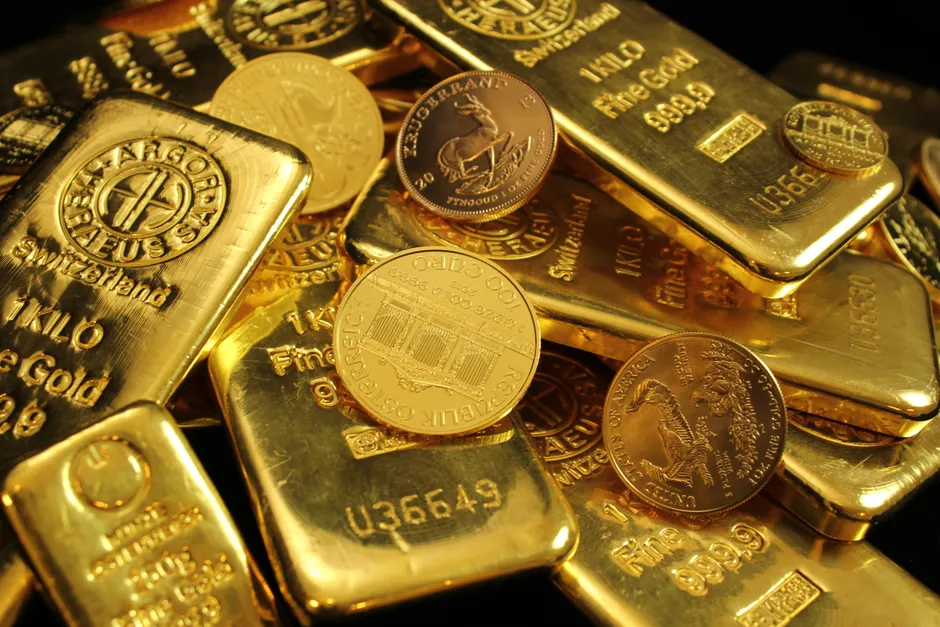
Here's where this connects to your wallet. Gold prices reflect how nervous markets are about geopolitical instability and inflation. Spot gold traded at $4,979.18 an ounce on February 19, moving little as investors balanced US-Iran tensions against new inflation numbers Reuters. By early July, Indian gold demand had fallen even as prices there rebounded to as much as 148,046 rupees per 10 grams — roughly $1,553 — after dipping to 140,450 rupees, the lowest point since March 27 Reuters. Chinese buying was reported picking up over the same stretch. Singapore announced plans in March to become an Asian gold-trading hub, adding a longer-term structural shift to the regional demand picture Reuters.
The Fed doesn't control gold prices and doesn't target them. But these moves show the same uncertainty the Fed is wrestling with: how much of the Strait of Hormuz risk premium flows through to energy costs and freight, and eventually to the prices you pay at the pump and on your credit card bills, versus how much gets absorbed as a one-time shock that fades once things calm down.
Why Timing Matters for the Next Decision
The Fed holds eight regularly scheduled meetings a year, releases minutes three weeks after each decision, and rotates committee membership once a year Federal Reserve. The next meeting is July 28–29 — just three weeks after the July 8 minutes release and close enough to the ceasefire that the Fed will have much better information about whether the June 27 pause in fighting is holding.
That compressed timeline is the real story here. The minutes released on July 8 describe what the Fed was thinking on June 17 — before the strikes, before the tanker attack, before the ceasefire announcement. If you're tracking Fed policy or what it means for interest rates, treat these minutes as a historical document from a different geopolitical moment. The committee's updated thinking on the energy disruption and any cost spikes flowing from it will show up in the policy statement from the July 28–29 meeting, not this one.
The full text of the minutes is available in HTML at the Fed's official release page and as a PDF.


