A Mosque Effigy at a Northern Ireland Bonfire Raises Questions About Hate and Free Speech
A Mosque Effigy at a Northern Ireland Bonfire Raises Questions About Hate and Free Speech
A bonfire planned in Moygashel, County Tyrone, topped with an effigy of a mosque and set to burn on Friday night during the Twelfth of July celebrations has triggered a police arrest and condemnation across Northern Ireland's political spectrum. A 56-year-old man was arrested on suspicion of displaying material intended to stir up religious hatred; he remained in custody as of Thursday The Guardian. The effigy was built atop a wooden pallet tower with placards reading "secure our borders" and "end the threat of radical Islam."
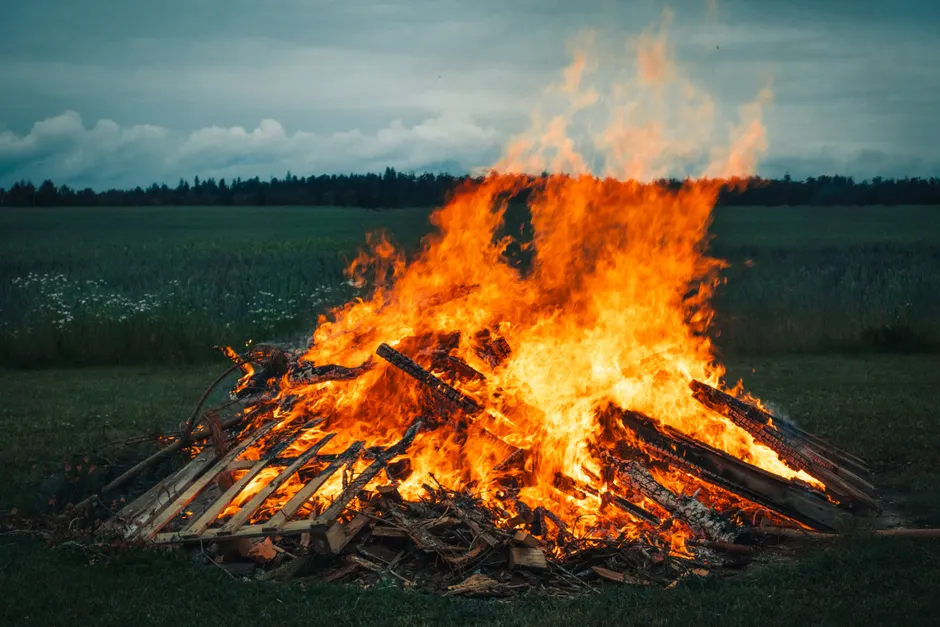
The Twelfth of July marks a historical event: King William III's 1690 victory at the Battle of the Boyne. Each year, roughly 300 bonfires light up across Northern Ireland to commemorate it. These bonfires have become stages for political messages. Organisers place flags, effigies, and slogans on the pallet towers before they burn, creating displays that often spark complaints under hate crime and public order laws — even as those who build them claim the right to free expression.
The Moygashel Bonfire Association posted a statement on Facebook describing the mosque effigy as a "political protest" against "uncontrolled illegal mass immigration" and the failure to deport foreign nationals convicted of crimes. The association cited Article 10 of the European Convention on Human Rights, which protects freedom of expression, as its legal justification. The same association burned a different effigy the year before: life-sized dark-skinned mannequins wearing lifejackets, arranged as if in a boat — an image widely understood as depicting migrants arriving by sea.
This bonfire follows another incident in Moygashel just weeks earlier. In June, police removed a banner reading "Muslims not welcome" from a children's playground; similar banners appeared at other local sites. Taken together, the playground banner and the mosque effigy form a concentrated pattern of anti-Muslim messages in this single village over consecutive weeks — distinct from the broader range of contentious bonfire displays that appear elsewhere across the region.
Political reaction has been swift and largely unified. Colm Gildernew, a Sinn Féin representative (Sinn Féin is an Irish nationalist party), called the effigy a hate crime. Eóin Tennyson of the Alliance Party, a cross-community party, wrote on social media that the bonfire was "an annual shrine to racism and hate" Eóin Tennyson. The Democratic Unionist Party, a unionist group, also issued a public statement. Amnesty International's Northern Ireland director, Patrick Corrigan, condemned the display and urged police to investigate it as a potential crime. The alignment of nationalist, cross-community, and unionist voices — usually at odds — signals the gravity of the moment.
The Moygashel case appears alongside a parallel development in the Republic of Ireland. Three men admitted in court to involvement in a plot to set fire to a mosque in County Galway in 2025; they face sentencing in October 2026, according to the Guardian. The Galway case involved an alleged attempt at actual arson against an active place of worship — materially different from a symbolic effigy burned as part of a cultural tradition. Both cases, however, landed in the same news cycle, and both concern targeting of Muslim communities on the island of Ireland, shaping a broader conversation about anti-Muslim sentiment across the country.
The legal question at the heart of the Moygashel case turns on a fundamental tension: where does protected political speech end and incitement to religious hatred begin? Article 10 of the European Convention on Human Rights does protect freedom of expression, but that protection is not absolute. It allows restrictions necessary in a democratic society to prevent disorder or protect others' rights. In the UK separately, law criminalises material intended to stir up religious hatred. The bonfire association's invocation of Article 10 signals the defence that may emerge if charges proceed. How police investigators and prosecutors weigh a symbolic effigy against that legal threshold has been a recurring puzzle in Northern Ireland's bonfire disputes for years.
What sets this year's Moygashel display apart from past controversies is its specificity. Earlier bonfires and banners in the area gestured broadly at migration. This one pairs a mosque replica with slogans explicitly naming "radical Islam," narrowing the target to a religious community rather than immigration policy alone. This distinction matters legally and politically. It is precisely why Gildernew, Corrigan, and others have framed it as a hate crime targeting Muslims rather than as a generic immigration protest. Whether the Public Prosecution Service pursues charges and on what grounds will be the next measure of how this story develops — though these disputes, in some form, tend to recur each July.