How a Stabbing in Belfast Ignited Riots — and What It Reveals About a Spreading Pattern

A Sudanese asylum seeker was charged with attempted murder following a stabbing that left a man blinded, triggering days of rioting across Belfast. Hundreds of masked protesters torched cars, a bus, and buildings — burning families out of their homes — after video of the attack circulated widely online. Far-right networks used the incident as a rallying point against immigration, according to Reuters and Al Jazeera.
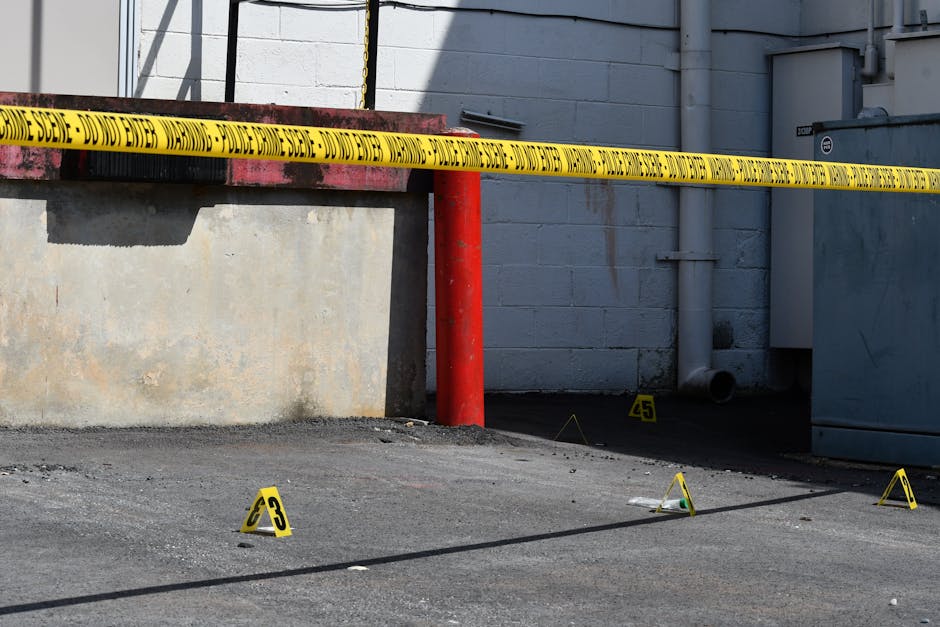
The Police Service of Northern Ireland received reports of the stabbing on June 10, 2026. The suspect appeared in Belfast court shortly after, facing attempted murder charges. By June 11, the PSNI had issued formal warnings to rioters as unrest spread across the city. Bus and rail services were suspended, and burning vehicles lined the streets, per ABC News. The transport shutdown marked a visible breakdown in civic order.
Belfast's Recent History of Riots
Northern Ireland has faced this before — and not long ago. A hate-motivated riot struck Belfast in August 2024. The Northern Ireland Assembly's Justice Committee was still working through legislation related to that episode into early 2026, with hearings on a Justice Bill held as recently as January 15. The Assembly's Executive Office received a briefing in March 2026 on a report titled Why Riot? The 'whys' beneath youth violence, a document that now appears hauntingly relevant. Yet institutional awareness did not prevent another cycle. This suggests deeper structural problems — housing pressure, integration failures, and the speed at which inflammatory videos spread online — that policy machinery cannot address fast enough.
The 2024 riots were themselves part of a broader pattern across the UK. A stabbing in Southport that summer became the catalyst for coordinated anti-immigration violence in cities from Liverpool to Leeds. The 2026 Belfast riots follow a similar sequence: an incident involving someone with asylum-seeker status, rapid video spread, quick mobilisation through social media, and street violence before the courts have even begun examining the charges. The consistency of this pattern across incidents is striking.
Southampton: A Similar Crisis Unfolding Nearby
Belfast was not alone in navigating this dynamic in early June 2026. In Southampton, protests over the killing of Henry Nowak turned violent on or around June 2–3. Rioters attacked police with bottles, bricks, and wheelie bins, injuring eleven police officers and one police dog, according to The Telegraph and The Guardian. Notable far-right figures Tommy Robinson and Laurence Fox were identified among those present in Southampton — both described as outsiders who traveled to the city to join the unrest. Prime Minister Keir Starmer condemned the Southampton riots.
Counter-protesters also mobilised in Southampton, reflecting the broader social division that now characterises each cycle of unrest.
The Southampton and Belfast episodes are legally and geographically separate — different courts, different triggering incidents — but their operational shape is identical. A local crime becomes reframed by far-right networks as proof of immigration system failure. National-profile agitators travel to the scene before community sentiment has had time to settle. Policing in Northern Ireland operates under the PSNI and a distinct legal framework from England and Wales, which makes coordinated national responses more difficult.
What Happens Now
The suspect's court appearance introduces a formal legal process into what had been purely street-level chaos. Court proceedings typically slow the intensity of public anger — but they also extend the timeframe during which a case can be used again and again as a mobilisation tool, particularly if trials become drawn out.
The PSNI's public warnings on June 11 signal a shift toward enforcement after the initial phase of managing the crisis. Whether that posture is sustained depends heavily on whether prominent far-right figures keep attention on Belfast or move on to the next incident. In Southampton, Robinson and Fox's presence suggests a level of coordination that local police forces are not primarily equipped to handle.
For the Starmer government, managing two simultaneous outbreaks of anti-immigration violence — one in a devolved territory with its own complex political history, one in a major English port city — strains both central message control and operational capacity. Northern Ireland adds a particular dimension: any perception that the state is not protecting residents carries weight that extends far beyond immigration issues into the broader political settlement.
The underlying structural problem is not new. What changes with each cycle is the speed at which these events ignite and how rapidly they spread geographically.