Kevin Bates's Digital Candle Generates Its Flame With a Neural Network
Kevin Bates has built a Digital Candle, a 10-inch desk object whose flame is generated by a custom AI model rather than played back from stored frames. The Verge reported the project on October 29, 2026.
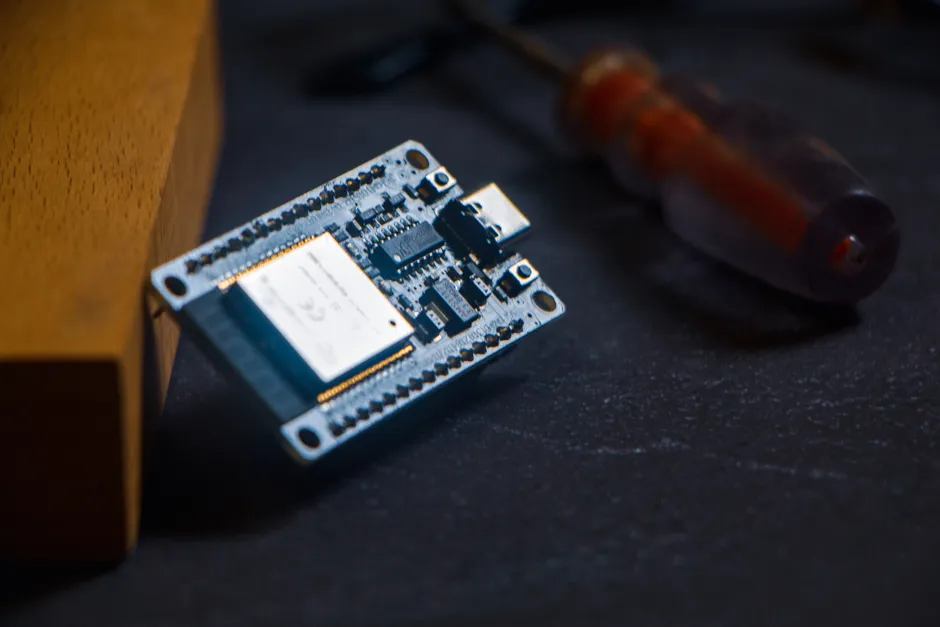
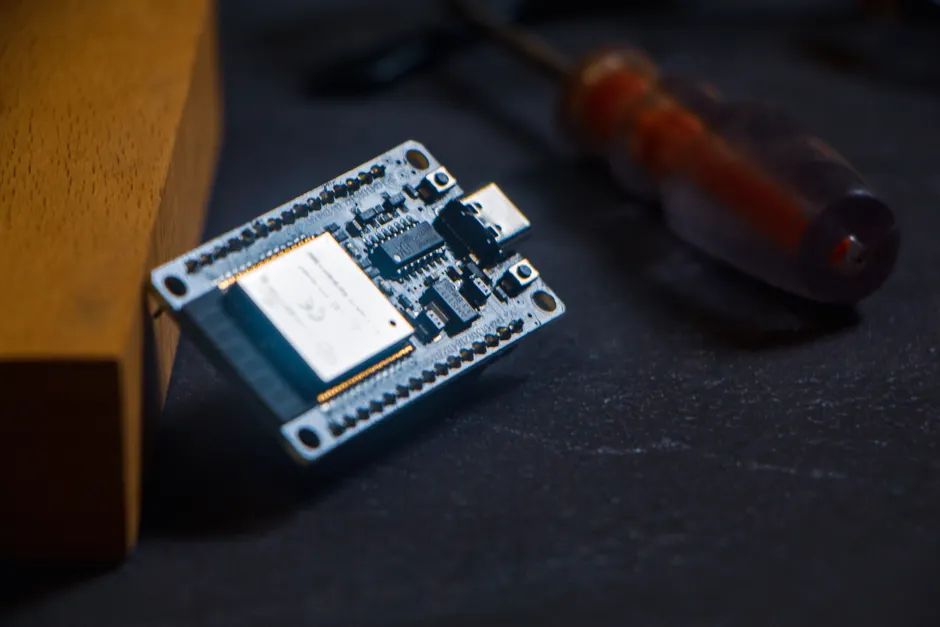
The flame is drawn on a grid of 144 amber LEDs arranged 9 by 16, with adjustable brightness. The controller is an Espressif ESP32-S3, a microcontroller, meaning a low-power chip with limited memory and no full operating system of the kind a laptop runs. It runs a small neural network trained on footage of a real flickering candle. Each frame is computed on the fly. According to the report, the result never repeats and is not a pre-programmed looping animation.
The hardware is modest. The device draws power through a USB-C port and has no rechargeable battery, so it works only while connected to a power source. It is priced at $149. The project is open source, and the report notes that the same hardware can be repurposed as a clock, a notification screen, or a platform for Conway's Game of Life, a cellular automaton in which simple rules update each cell of a grid over time.
In my view, the most instructive choice here is where the computation happens. Most decorative flames, from tea lights to LED pillar candles, cycle through a fixed sequence or a randomized pattern generator with hand-tuned parameters. Bates has instead trained a model on real footage and runs inference, the step of applying a trained model to new input, directly on the microcontroller. The trade is a fixed, cheap animation loop for a generative one, where the behavior comes from training data rather than from a programmer's keyframes. For a practitioner, the open questions are how the network is quantized, meaning its weights are stored at lower numerical precision to fit the chip, and how much of the flicker's temporal structure survives at 9 by 16 pixels. Those details would decide whether the approach carries over to other ambient lighting or remains a novelty.
The broader context is that small on-device models are becoming practical for work that once needed a general-purpose processor or a network connection. A flame has a forgiving error budget. Nobody inspects a candle frame by frame, so a statistically plausible result is good enough, and the failure modes are benign. That makes it a low-stakes testbed for embedded inference, much as early machine vision projects often began with problems where a wrong answer cost little.
The open-source angle may matter more to readers of this publication than the candle itself. A device that can serve as a clock, a notification panel, or a cellular automaton display gives hobbyists a shared hardware target and a working example of a trained model running within microcontroller limits. Projects like this tend to be copied, forked, and retrained, and the lasting output is often the toolchain and techniques that travel through those forks rather than the finished object.
The Digital Candle is a small product with a narrow purpose. The report describes it as a demonstration of what a tiny model can do when given a clear, bounded task. Its appeal lies in pairing a familiar object with a process that is never the same twice, and in a design that leaves the hardware open for other uses.