HP's OmniBook Ultra 14: A New Take on the Thin, Tough Laptop
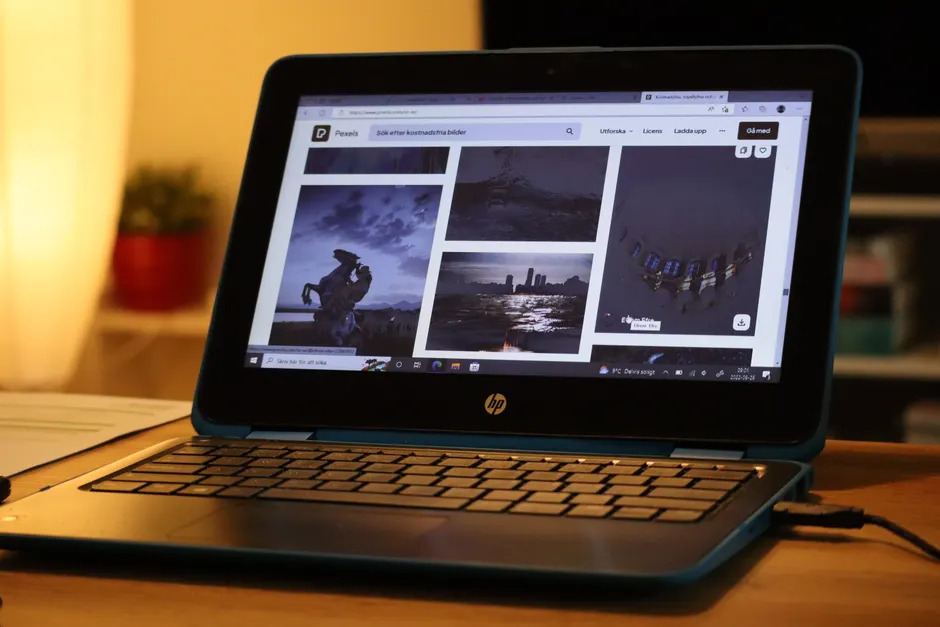
Engadget gave the HP OmniBook Ultra 14 a score of 9 out of 10, citing its durability and thinness as standout features Engadget. At 2.8 pounds and 0.42 inches thick, it's noticeably lighter and thinner than a 14-inch MacBook Pro, which weighs 3.4 pounds and measures 0.6 inches thick.
The way HP built the chassis is technically interesting. Most premium laptop makers — including Apple — now machine their metal bodies from a single solid block of aluminum. HP took a different route with the OmniBook Ultra 14, using forged stamped aluminum instead. The laptop comes in eclipse gray or silk sand and survived 20 separate military durability tests (MIL-STD 810H) covering shock, extreme temperatures, and humidity Engadget. HP is marketing it as "the world's most durably slim consumer notebook," built on that combination of everyday thinness and military-grade toughness.
One practical advantage that impressed reviewers: you can actually get inside the machine. Four screws—one at each corner—give access to the internals, a rarity in ultraportables that increasingly use adhesive or proprietary fasteners to stay thin. HP includes a vapor chamber (a heat-dissipation component) for the first time in an ultraportable, and the chassis supports up to 64GB of RAM Engadget.
The port selection reflects a familiar tension in thin-and-light design. You get three USB-C ports with Thunderbolt 4, DisplayPort 2.1, and fast charging support, plus a 3.5mm audio jack, Wi-Fi 7, and Bluetooth 6. There's no USB-A, HDMI, or SD card slot — a configuration that looks normal to anyone tracking how the industry has moved away from older connection types, but one that still requires adapters if you rely on older peripherals or projectors.
The keyboard features trapezoidal keycaps and a haptic (vibrating) touchpad above an OLED display. One durability note: the matte finish scratches easily from metal objects like keys or coins carried in the same bag, a separate issue from the military testing mentioned above. The price is steep, particularly for higher-spec versions, though Engadget's review didn't break down exact pricing tiers.
HP is also restructuring how it names its consumer laptops. The company has consolidated its Spectre, Envy, and Pavilion lines into the OmniBook family, replacing what had been a confusing lineup with a simpler tier structure Engadget. Dell and Lenovo have made similar moves recently, folding older sub-brands as their thin, business-focused laptops start using similar chips and chassis designs.
The processor options have expanded since the OmniBook Ultra 14 first launched in mid-2024 as an AMD-powered machine Engadget. By CES 2026, HP offered Intel and Qualcomm versions alongside AMD Engadget. The Qualcomm variant reviewed by Windows Central in June 2026 uses the Snapdragon X2 Elite Windows Central. HP positions the 2026 model as the first consumer notebook with an NPU (a specialized processor for AI tasks) rated up to 85 TOPS, a measure of processing power for running AI workloads locally on the device HP Newsroom.
This multi-processor approach is a shift in how HP has traditionally managed a single model line. Offering AMD, Intel, and Qualcomm variants under one chassis and one brand name gives HP flexibility to adapt to whichever chip partner offers the best performance or battery life in any given quarter. The tradeoff: "OmniBook Ultra 14" now functions more like a platform label than a fixed specification sheet. Buyers need to check the processor tier carefully to understand what performance they're actually getting.
The machine is identified under model series 14-fd0000 in HP's support documentation and is sold through HP's online store HP Support. Set against the way Windows OEMs have chased Apple's model of controlling both the processor and the chassis design over several product cycles, the OmniBook Ultra 14 stands as one of the more direct challenges to the idea that thinness and military-level durability can't coexist in a mainstream laptop. Whether the price justifies that positioning—especially at the top configurations—is what buyers will be deciding this cycle.