More U.S. Parents Choose Earlier Second Measles Shot as Cases Climb
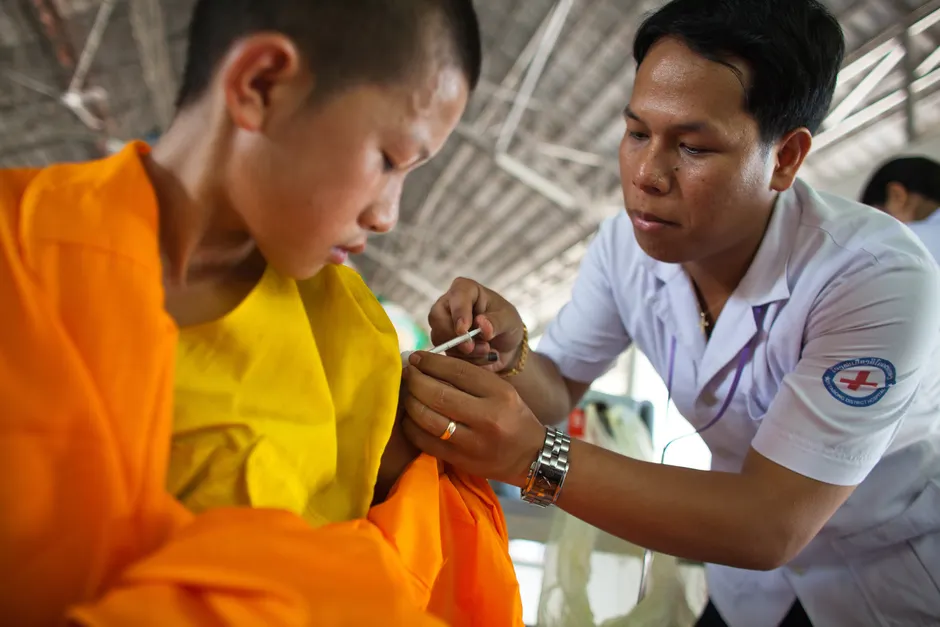
More U.S. parents are opting to give their children an early second dose of the measles vaccine, The Guardian reported on October 30, 2026, as measles cases in the country accelerate. The United States has recorded twice as many confirmed cases as it did last year.
The shot in question is MMR, a combined vaccine against measles, mumps and rubella. Measles vaccine is also included in MMRV, a combined shot that adds varicella (chickenpox) protection. A measles-only vaccine is not available in the United States. The U.S. Centers for Disease Control and Prevention (CDC) routinely recommends the first MMR dose at 12 to 15 months and the second at 4 to 6 years, before school entry. According to the CDC, two doses are 97% effective at preventing measles, with a range of 67% to 100%, while one dose is 93% effective, with a range of 39% to 100%.
The schedule is more flexible than those routine ages suggest. The second dose can be given as soon as four weeks after the first, and the CDC says giving it soon after the first is an option. The later age was set, according to The Guardian, largely for logistical reasons: making sure children have both shots before kindergarten and reducing the number of doctor visits. Evidence shows MMR vaccines still work well when given at earlier ages.
Other countries have moved in that direction. Germany, the United Kingdom and France recommend giving the second measles shot soon after the first. Germany's recommendations once resembled those in the U.S., but after an outbreak in 2001 it advised the first dose at 11 to 14 months and the second at 18 to 23 months. In 2020 it moved the second dose to four weeks after the first. In the UK, under NHS (National Health Service) vaccination reform, children can have their second MMR dose sooner starting in January.
Parents and clinicians describe the change in personal terms. Elias Kass, a naturopathic physician in Seattle, began recommending the MMRV shot at 15 months when measles cases started rising a few years ago, and says more parents are now accepting that advice. In Chicago, Margot Taylor has had all three of her children vaccinated on accelerated MMR schedules. Her child born in 2023 received a second dose at age two, during the city's measles outbreak. Her child born in 2025 received a second dose three months after the first, in June.
The CDC says a second MMRV dose can be given three months after the first, up to 12 years of age. For a first dose between 12 and 47 months, it recommends separate MMR and varicella shots, though MMRV may be used if parents or caregivers prefer it.
The wider picture is one of spreading outbreaks. The CDC reported 43 measles outbreaks in 2026 as of October 23, and said 4,404 of the 4,588 confirmed cases this year, or 96%, were linked to outbreaks. In New York, the state reported 108 cases through October 3, and Reuters reported that Governor Kathy Hochul had declared a disaster emergency over the outbreak. Reuters also reported that more than 1,000 MMR doses had been given in rural areas since July 15, 2026. Globally, the CDC estimates that 10.3 million people were infected with measles in 2023, and outbreaks are occurring in every region of the world.