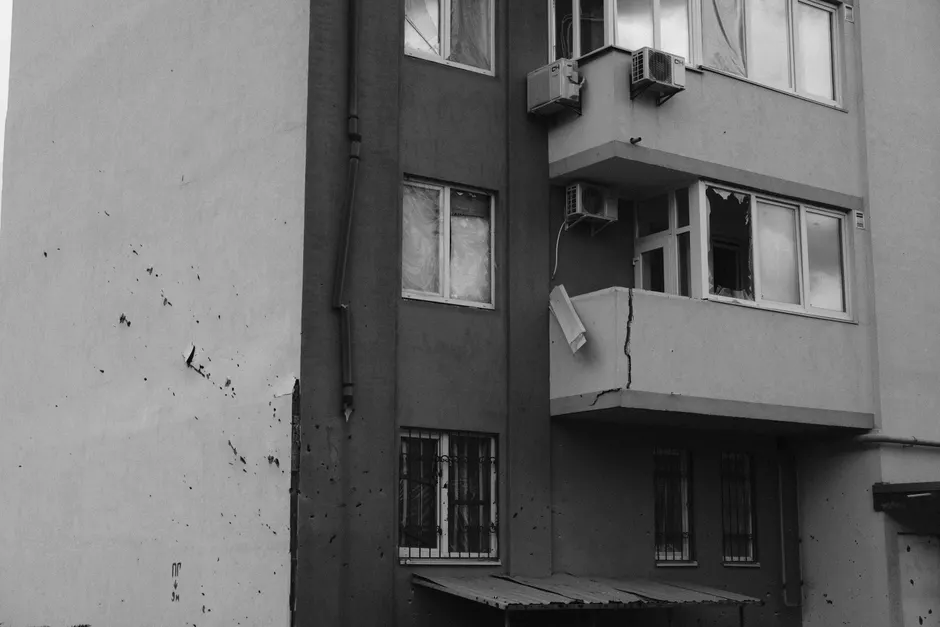
Drone Strike at Gaza Hospital Raises Questions About Ceasefire and Medical Protection

A drone strike on Kamal Adwan Hospital in Gaza on July 10, 2026 wounded at least six people, according to medical sources cited by Al Jazeera. Three were hurt in the hospital courtyard and three others struck nearby, the outlet reported. The Palestinian news agency WAFA identified the courtyard casualties as civilians and the other three as maintenance workers. No deaths were reported from this particular strike, distinguishing it from earlier incidents at the same facility.
The strike hit an area Gaza's population and humanitarian organizations call the Green Zone—territory under Israeli military control. The significance lies in location: a drone attack inside an ostensibly secured zone, much less on hospital grounds, suggests safety assumptions about these areas may not hold. Strikes in contested or Hamas-controlled areas carry different weight than strikes in zones nominally protected by the occupying force.
The Palestinian Ministry of Health characterized this as part of a broader pattern of deliberate targeting of health facilities and called on the United Nations and humanitarian groups to condemn attacks on Gaza's healthcare infrastructure. That framing is the Ministry's own interpretation—not independently verified—and should be read as one party to the conflict advancing a particular analysis of events.
Kamal Adwan's documented history makes this characterization worth understanding in context. WAFA reported in December 2023 that an Israeli drone strike at the hospital's northern gate killed at least four people and wounded nine. In January 2026, a separate strike nearby killed two children. The Israeli military, for its part, has repeatedly offered an operational justification: a July 10, 2025 IDF press release stated the military had completed a targeted operation against what it described as a Hamas command center inside the hospital. A December 2024 release similarly asserted the presence of terrorist infrastructure and operatives in the hospital area.
What stands out, however, is the absence of an IDF statement about the July 10, 2026 strike itself. A search of official Israeli military sources returned no claim, denial, or acknowledgment of this incident. That silence leaves the record for this strike resting on Palestinian and medical sources alone. The caveat applies broadly: claims from any single party in an active conflict warrant independent verification where possible.
WAFA reported that at least a dozen people were wounded across Gaza on July 10, indicating the hospital strike was not an isolated incident that day. Broader casualty counts place the war's total toll at at least 73,110 Palestinians killed since October 7, 2023, with at least 1,084 deaths recorded since the ceasefire began in October 2025.
That 1,084 post-ceasefire figure invites scrutiny. A ceasefire conventionally means a halt to armed hostilities while peace terms are negotiated—it is not designed to accommodate thousands of deaths nine months into its existence. Whether that toll reflects sporadic violations, disagreement over what the ceasefire actually prohibits, or something closer to continued warfare at lower intensity remains unclear from the available reporting. What is evident is that Kamal Adwan has been struck repeatedly over more than two years, with multiple claims from Israeli and Palestinian sources. This pattern has transformed the hospital into a central point in an unresolved argument: whether medical facilities retain their protected status once armed actors—confirmed or alleged—are said to be operating in or near them. That dispute predates the current ceasefire and will almost certainly persist beyond it.