Meta Reportedly Builds a Humanoid Household Robot Prototype Called Max
Meta has built a prototype humanoid robot, codenamed Max, intended to help with household chores, according to a report from The Information. Engadget carried the report on 1 November 2026. The prototype was built with the help of Fourier, a Chinese robotics company, in roughly three months. Reuters, also citing The Information, reported the Fourier collaboration on 31 October.
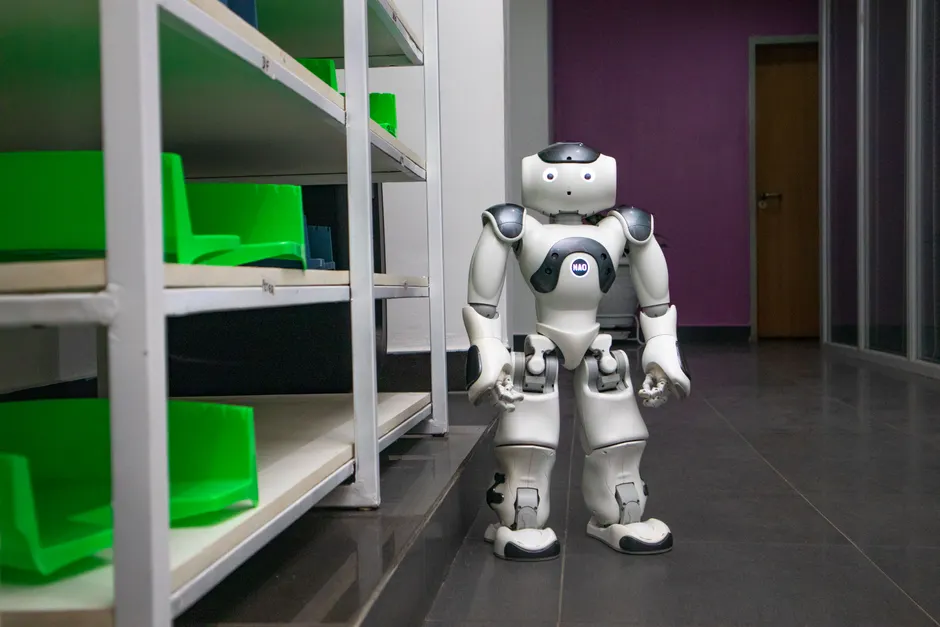
Max weighs roughly 106 pounds and stands about 1.5 meters, or approximately five feet, tall. Its head carries a display capable of showing facial expressions, and it includes a built-in speaker. The hands are designed to pick up small objects. According to the report, the prototype is powered by NVIDIA's Jetson Thor chips, a compute module that runs AI models on the robot itself rather than over a network connection.
No launch date has been set for a mass-market version of Max.
Meta has also been working on a second prototype, codenamed Max 2, since September. According to the report, Max 2 includes updates to the torso and hand design, along with a projector and additional sensors intended to help the robot handle stairs better. Reuters, citing The Information, reported that Meta is working on a second version of the humanoid robot.
The display and speaker face people, while the hands handle objects. The hands are the component most directly tied to chores, and they are the part the reported Max 2 changes target. Stairs are a demanding case for a two-legged platform, because the robot must perceive edges and step geometry while keeping its balance under load. The projector and extra sensors in Max 2 point to work on how the robot perceives its surroundings.
In my view, the distance between a working prototype and a household product is where most humanoid programs have run into trouble. A robot picking up an object in a controlled setting is one thing. Reliable performance across cluttered kitchens, varied lighting, pets and children, and years of wear is another.
The broader context here is that Max is one of several efforts to put general-purpose machines into homes. The choice of a Chinese robotics partner for a US platform company's prototype is part of the story in its own right.
What is confirmed so far is a prototype, a second iteration in development, and a compute platform that makes on-robot inference feasible.
In my view, the path from there to a product on a shelf is still long. If the hand dexterity and stair navigation work progresses, household use could become one of the more practical testbeds for embodied AI, meaning AI systems that act through a physical body.