Casio's CT-FS1 Keyboard Uses Software to Stop Wrong Notes
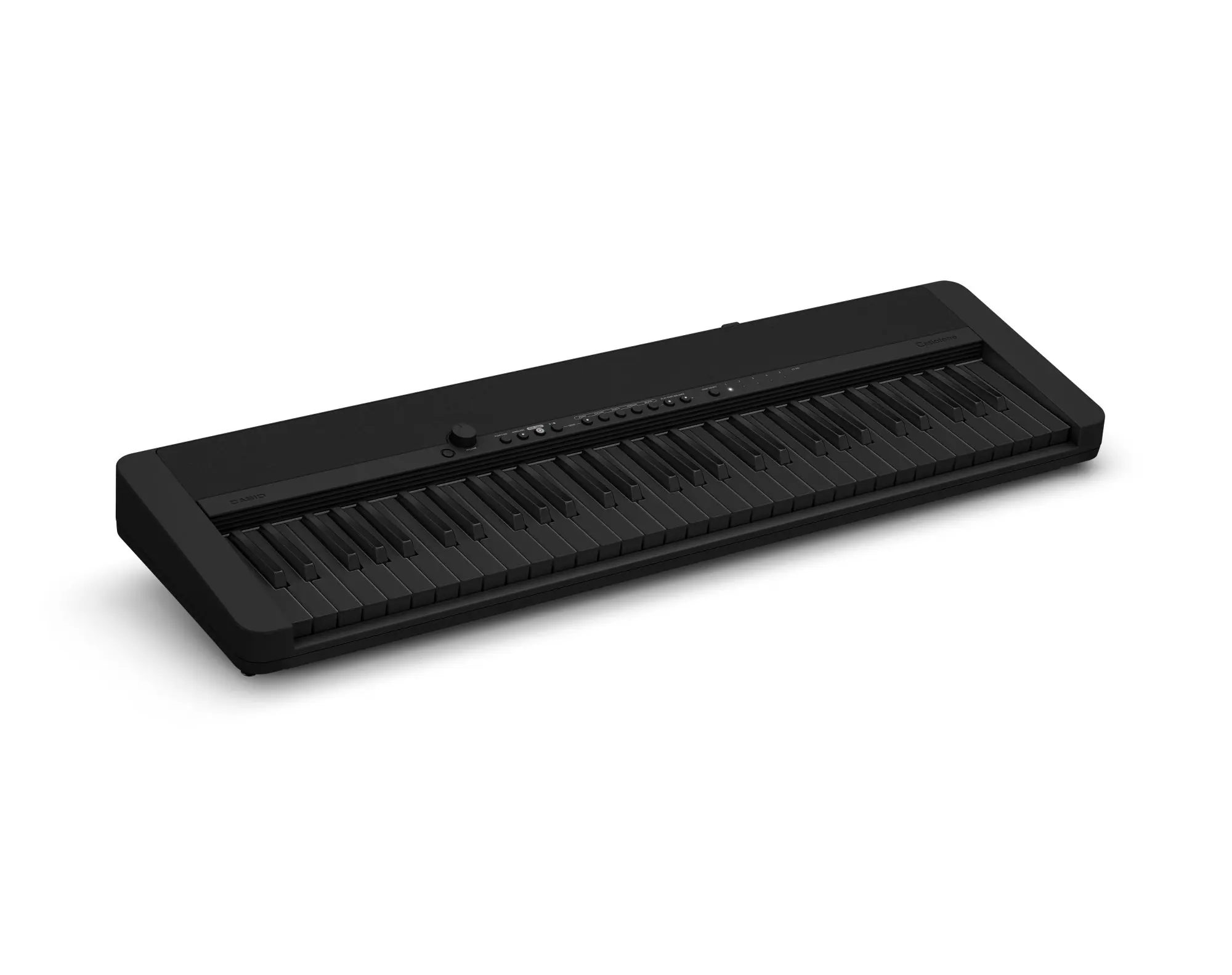
Casio has unveiled the CT-FS1, a 61-key Casiotone keyboard built around a technology it calls Feel Sync, which adapts the instrument to any song so the player cannot hit a wrong note. Engadget reports that the keyboard costs $400 and is available now.
The mechanism runs through a proprietary Feel Sync app, meaning software that Casio owns and controls rather than an open standard. Users upload a song into the app, and an algorithm analyses the track to keep the keyboard in key, restricting playable notes to those that fit the song's harmony during playback. The Feel Sync portion of the keys can be split into two zones for separate playing, so two players can work the same song on one instrument. The CT-FS1 can also be played as a conventional keyboard without the feature engaged. MusicRadar covered the launch with the same core description.
On the hardware side, the keyboard has touch-responsive keys, which change the volume and tone according to how hard each key is struck. It also has a built-in stereo speaker with a surround effect, a headphone output and Bluetooth integration. It runs on AA batteries or an AC adapter and weighs just under ten pounds. Casio offers it in two monochrome versions with matching keys, model CT-FS1BK in black and CT-FS1WE in white, according to the company's product pages.
Casio's own announcement, dated 29 October 2026, describes Feel Sync as the latest evolution in musical immersion and says the function and its app invite non-musicians to start making music. The company states that Feel Sync continuously adapts the keyboard to the song, allowing a smooth playing experience without formal musical training. The announcement says the CT-FS1 will be available throughout Europe from November 2026, and that the Feel Sync App will launch in Europe on 11 November 2026.
The timing split matters for anyone planning a purchase in Europe. Engadget's report describes the unit as available now, while Casio's regional release gives November 2026 as the European window and 11 November as the app's European launch date. Buyers outside the US should check local stock and the app's regional rollout against each other before counting on either date.
In my view, the more interesting question is where the musical logic sits. A keyboard that refuses wrong notes is a constraint delivered through software, not a teaching method on its own, so the Feel Sync app is part of the instrument rather than an accessory. Anyone evaluating the CT-FS1 should ask how the algorithm handles uploaded material, how the app is updated and supported over the life of the hardware, and whether the keyboard stays useful to a player who outgrows the constraint. Those are product-engineering and software-lifecycle questions.
The broader context here is familiar to anyone who has watched consumer electronics move into music. Each generation of tools that lowers the entry barrier has drawn the same reaction from musicians, who ask whether the instrument still asks enough of the player. The CT-FS1 takes that trade-off further than most. Its clearest appeal is to someone who has always wanted to play along with a favourite record without first spending years on scales, and for that listener the practical gain is immediate. Whether the same constraint helps or hinders someone learning to play in the conventional sense is a question the product leaves open.