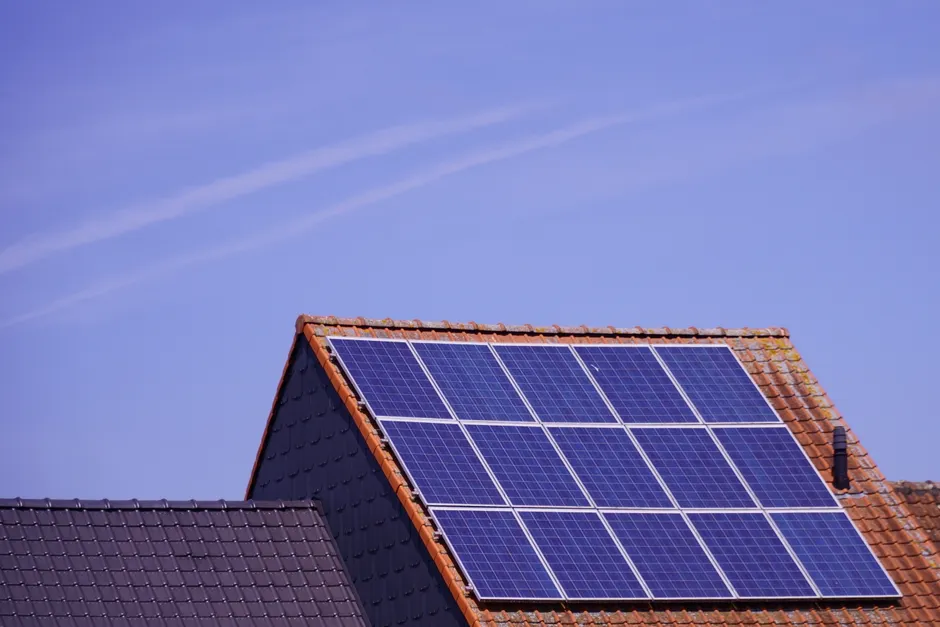
RadianX Says Its Perovskite Solar Material Matches Conventional Panels Outdoors and Doubles Indoors
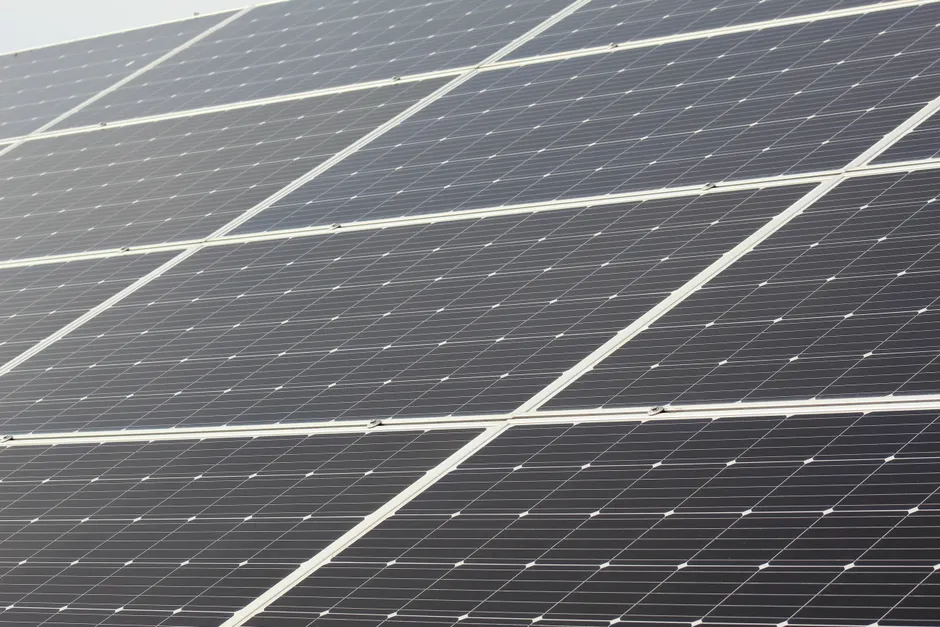
RadianX says its perovskite solar material performs as well as conventional solar panels outdoors and twice as well when harvesting indoor light. The company made the claims on November 5, 2026, according to TechCrunch, which reported the company's plans alongside a $5 million seed round.
The seed round was led by SOSV and Twynam and is intended to fund a commercial-volume production line, meaning a factory line sized for steady mass output rather than lab batches. Other participants were One Small Planet, Sachsen Ventures, Avila VC, California Innovation Fund, quantumEDGE, Riceberg Ventures and Alumni Ventures. Separately, Pacific Union Technology Precision Manufacturing is providing $4 million of non-dilutive investment, meaning funding that does not require giving up equity, to build a dedicated production line for RadianX. The company's co-founders are CEO Vivian Qu and COO Josh Douglas.
On the hardware side, RadianX says a 1.2-meter by 0.6-meter panel harvests light at 22.33 percent efficiency, which the company describes as the best on record. Efficiency here is the share of incoming light converted into electrical output. The company says its panels can be as thin as 0.7 millimeters and can be sized to fit a given device. It also says it has met a key industry standard for durability.
RadianX is not positioning itself as a panel maker in the conventional sense. It plans to sell packaged power solutions to device makers rather than bare panels, and it is developing power electronics tailored to perovskites. The design choice matters for integration. A perovskite cell's voltage and current characteristics differ from those of silicon modules, so the regulation, storage and conversion stages have to be matched to the material before the system can deliver usable power to a load. Packaging the harvester with its electronics moves that engineering burden from the device maker to the supplier.
The target concept, which RadianX calls "edge energy," includes e-readers that never need charging and IoT sensors that never need a battery swap. These are low-power, indoor-lit, long-lived deployments, the segment where a material that is weaker outdoors but strong under artificial light would have the most room to operate. The indoor claim is therefore the one most directly tied to the stated use cases.
Other companies are working on perovskite photovoltaics too. Bloomberg has reported that Tandem PV developed a prototype of thin-film solar cells built on perovskite technology, a different product path aimed at a different market. Earlier coverage by Reuters framed perovskite solar as a possible route to lower solar costs, provided early deployment risks are controlled.
In my view, the number that will carry the most weight with engineers is not the 22.33 percent figure but the durability result. Efficiency on a spec sheet has to survive heat, humidity and light exposure over a product's life. RadianX says it meets a durability standard, and the question for buyers is which standard and under what test conditions. Those details will determine whether the indoor advantage holds in a shipping product.
The broader context here is that the commercial case for perovskites rests on manufacturing as much as on materials. A production line funded at commercial volume is the step that turns a lab result into a part that can be specified, qualified and warranted. If the packaged power approach works, the payoff is a device that simply stays powered, such as a wall sensor that no longer needs a technician to swap a coin cell. The benefit looks modest on its own, but it applies across a large installed base, and that is the outcome RadianX is betting on.