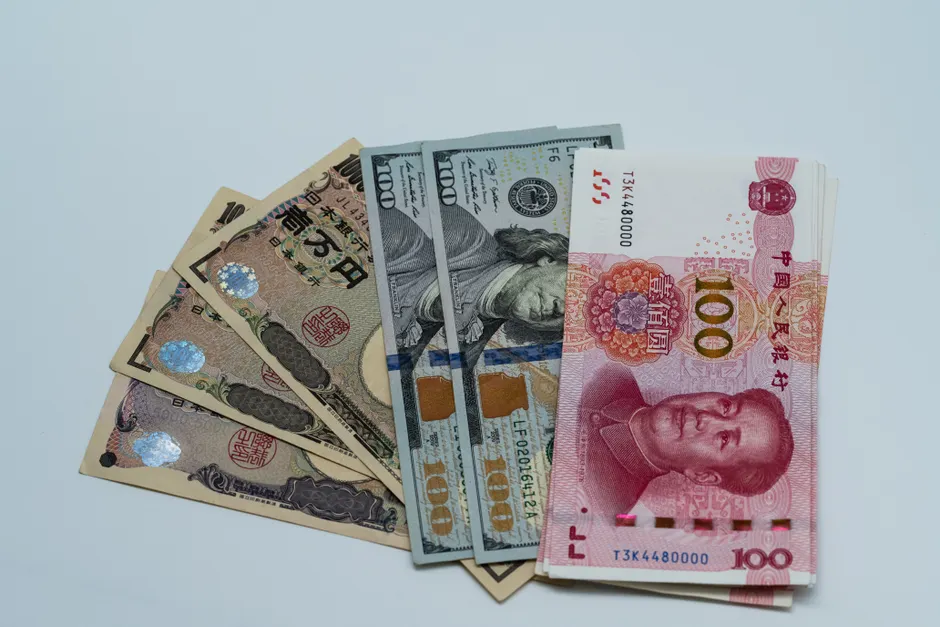
China Tightens Its Grip on Dollar Deposits as the Yuan Hits a Post-2022 High

China will raise its forex deposit reserve ratio to 6% starting November 15, 2026, Reuters reported on November 3. By the time of the report, the yuan had gained more than 5% against the dollar so far in 2026 and had reached its strongest level since 2022.
The forex deposit reserve ratio is the share of foreign-currency deposits that commercial banks must hold back as reserves instead of lending or investing them. Think of it as a required cash float on dollar accounts. Raising it pulls dollars out of the onshore banking system. Because the requirement applies to dollar balances, it raises the effective cost of holding and lending dollars for domestic banks. Policymakers have generally used this kind of tool to temper pressure on the currency in either direction, and the November 15 effective date gives the market a short window to price the change.
For anyone new to currency policy, the mechanics are straightforward. A bank with more dollars locked in reserve has fewer dollars free to lend or to sell into the market. Whether that slows the yuan's climb depends on how much dollar demand sits onshore and how much flows through offshore channels.
The 5% gain is backward-looking. It tells us where the currency has been in 2026, not where it goes next.
The regional currency picture is uneven. In July, the Indian rupee closed at 95.3950 per dollar, down 0.2% on the day, according to Reuters. It touched an intraday low of 95.4750 that session, its weakest level since June 12. Those were the rupee's levels in July.
The dollar's broader trend has been mild. The WSJ Dollar Index fell 0.09% to 97.09 on October 29, marking four consecutive trading-day declines, according to the Wall Street Journal. For context, the index had fallen 1.5% to 97.64 in April 2025, when higher reciprocal U.S. tariffs for most countries were delayed, as the Wall Street Journal reported at the time.
In my view, a move of under a tenth of a percent is noise on any given day, and a four-session run is more interesting but still short. The April 2025 level came from a different tariff backdrop. It is a useful reminder of how quickly the index has moved on policy headlines before.
On November 4, Bloomberg reported that Singapore stocks clawed back losses, tracking a broader recovery in risk appetite across the region as Treasury yields eased amid the ongoing US midterm election. Treasury yields, the interest rates the US government pays on its debt, serve as the benchmark for borrowing costs worldwide. When they fall, pressure on dollar-funded carry trades and on risk assets tends to ease.
One session of recovery does not establish a trend.
The useful way to hold these facts together is to separate the reported from the priced, meaning what the market has already built into prices. Reported: a higher reserve requirement is coming, the yuan is at a multi-year high, the dollar index has slipped four sessions running, and regional stocks rebounded as yields eased. Not reported: how far the yuan will move after November 15, whether the rupee's July weakness persisted, or how the midterm outcome will affect yields. Those are open questions.