The Lincoln Memorial Reflecting Pool Is Drained and Gray — What Went Wrong With Trump's July 4 Project
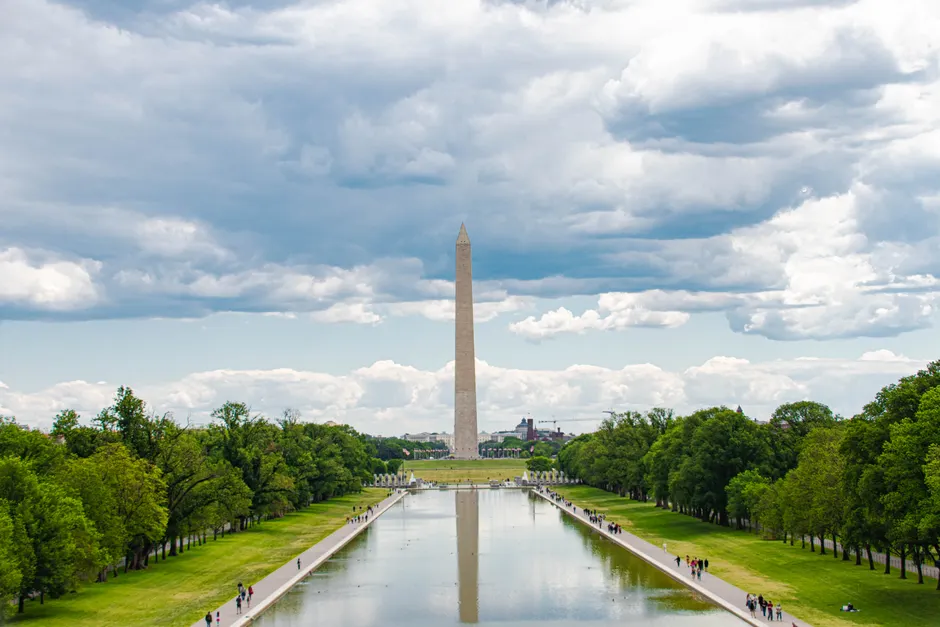
The Lincoln Memorial Reflecting Pool has been drained, and its liner — which Donald Trump said was colored "American flag blue" — has faded to gray as of July 15, 2026, according to an Associated Press report co-authored by reporter Matthew Daly. An AP reporter and photographer viewed the drained pool from the top of the Washington Monument on Wednesday.
The reflecting pool had been repainted and refilled in early June 2026 as part of a Trump-directed renovation aimed at having the landmark ready for July 4, 2026, the nation's 250th birthday. Trump's initial cost estimate for the project was $1.5 million. By June 2026, the total bill had exceeded $16 million.
Within days of the pool's completion, problems emerged. An algae bloom darkened the water, and pieces of the new coating appeared to be peeling off the bottom. The subsequent repair effort split into two major contracts: Virginia-based Atlantic Industrial Coatings was awarded $14.7 million to repaint and waterproof the concrete floor, while Ohio-based Green Water Solutions received $1.7 million to install a water-purification system.
Trump has claimed, without citing evidence, that vandals made a "350-foot gash" in the reflecting pool liner. The National Park Service reported to US Park Police a June 9, 2026 incident in which a sharp knife or razor was said to have cut the pool's new liner. No large slash marks were immediately visible from the Washington Monument vantage point on July 15.
At least four people now face criminal charges connected to the pool. Former Olympic canoe racer David Hearn pleaded not guilty in DC Superior Court to deliberately damaging the reflecting pool. At least three other individuals have been charged with misdemeanors (lesser criminal offenses) for allegedly removing pieces of paint from the pool; all pleaded not guilty.
Interior Secretary Doug Burgum outlined the administration's plan in brief terms: "Repair the vandalism that was done. Fill it back up again."
The broader context here is one of cost escalation and compressed timelines. The tenfold increase from Trump's $1.5 million estimate to the $16 million-plus actual outlay, occurring within a compressed schedule tied to the semiquincentennial (the 250th anniversary), left little margin for the kind of testing and curing periods that waterproofing systems typically require. Curing refers to the time needed for coatings to chemically bond and harden before they are exposed to water. The rapid onset of algae and coating failure within days of completion is consistent with inadequate surface preparation, insufficient cure time before refilling, or both.
The vandalism narrative adds another layer worth examining. The June 9 liner-cutting report and the subsequent charges suggest some physical damage did occur. But Trump's specific claim of a 350-foot gash remains unsupported by publicly available visual evidence, and the AP's own observation from the Washington Monument found no immediately visible large slash marks. Burgum's directive to "repair the vandalism" and refill the pool sidesteps the question of whether the coating failure and algae bloom — the project's most visible problems — are attributable to sabotage or to the renovation work itself.
For those who follow federal procurement (the government's process of awarding contracts to private companies), the contract split between Atlantic Industrial Coatings and Green Water Solutions is notable. The larger award, $14.7 million for repainting and waterproofing, went to the scope of work most visibly failing. Whether the coating failures trigger warranty claims, change orders (contract modifications), or litigation will depend on the specific performance clauses embedded in those contracts — details that have not been publicly disclosed.
The 250th anniversary has now passed. The pool that was to be its centerpiece sits empty and gray.


