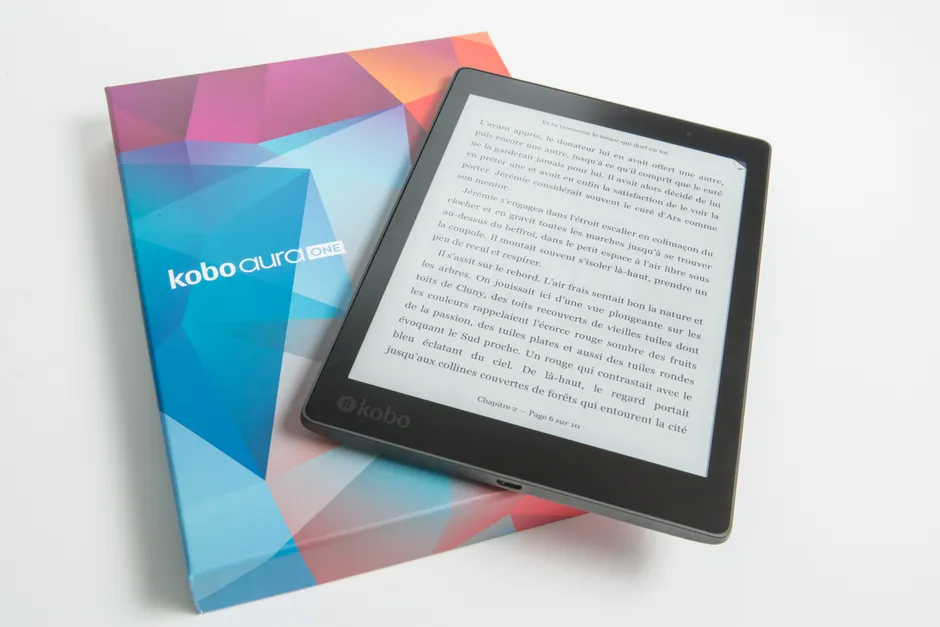
Kobo Stack Puts Your Own Files in the Cloud, Synced Across Devices

Kobo is launching Stack, a monthly subscription that lets users upload their own ebooks and documents to Kobo's servers and sync them across devices and apps. The service was reported on November 6, 2026, and Kobo's own Stack product page carries the title "Kobo Stack: Unify Your Digital Library & Notes."
The subscription costs $3.99 per month in Canada and £2.99 per month in the UK. Kobo is offering a 90-day free trial. The initial rollout covers Canada, Ireland, Australia, New Zealand, the UK and Spain. The United States is excluded.
Stack accepts EPUB (an open, reflowable ebook format) and PDF files up to 200MB. Users can add files in two ways. The first is a drag-and-drop interface on Kobo's website. The second is emailing a file to a custom address provided at sign-up. On kobo.com, the upload path is My Account, then Books, then Upload, and Kobo refers to the storage layer as Kobo Cloud, meaning the company's own hosted servers rather than the device. Uploaded documents are available in Kobo's iOS and Android apps, on the website, and on Kobo e-readers signed in to the same account.
Stack syncs reading progress, highlights and annotations across those devices. The point of the service is less the file transfer than the state that travels with it. A PDF marked up on a tablet should open at the same page, with the same notes, on an e-ink reader, the paper-like display used in most dedicated e-readers. At launch, e-reader support is limited to the Clara BW, Clara Colour, Libra Colour and Elipsa 2E.
The feature is being introduced as part of Kobo's 6.0 e-reader software update, which is available in beta as an optional upgrade. Kobo has said Stack and the related features are rolling out in phases and reach devices through eReader sync, so owners of supported hardware may not see the service on the same day.
Kobo states that the subscription can be cancelled at any time. After cancellation, users receive a 60-day grace period to download their files and export notes before permanent deletion. That window matters most to anyone who treats the service as a home for personal documents rather than a convenience layer, because the files now sit on a vendor's infrastructure and the exit terms determine how cleanly they can be recovered.
In my view, the most useful way to read Stack is as a sync service with a storage contract attached, not as a bookstore. Kobo's existing model has been built around titles a reader buys or borrows. Stack moves the subscription toward a reader's own files, which makes the questions that matter about custody and portability: where the files live, how they are encrypted and retained, and what leaves with the user if they stop paying.
The broader context here is more encouraging. For people who read across a phone, a tablet and an e-ink device, and who keep research PDFs, manuals and personal documents in several places, a single sync layer for progress and annotations removes a set of small, recurring frictions. The rollout is staged and narrow, both in geography and in hardware, so the practical test will come once the service reaches more devices and more markets. For now, Stack is a monthly offer with a 90-day trial, a 200MB per-file limit, and a defined list of supported formats and devices.