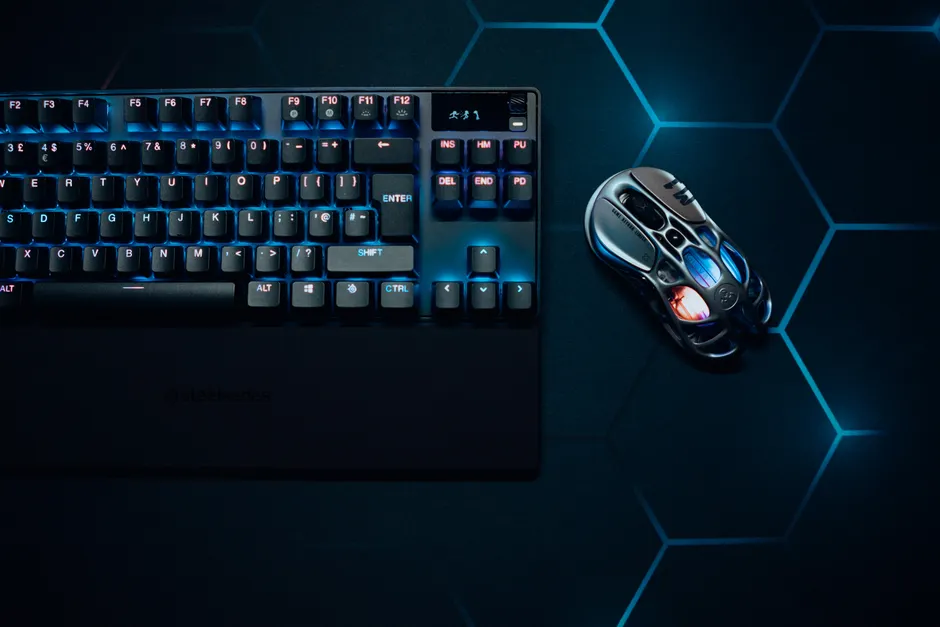
SteelSeries Rival Pro Earns 9/10 from Engadget for Wireless Speed and Battery Design

Engadget has published a review of the SteelSeries Rival Pro that awards the mouse 9 out of 10. The review, written by Sam Rutherford and dated 10 November 2026, carries the headline "Rock solid connectivity, speed and a nifty battery system." Engadget
The Rival Pro is priced at $180 and weighs 53 grams. According to the review, it uses UWB connectivity, supports 8K polling, and features a 42K sensor. Its button layout is four buttons: left and right clicks, plus two programmable side buttons. The underside carries 100% PTFE non-stick pads.
The headline points to three areas of emphasis: connection stability, responsiveness, and the battery arrangement. These are the attributes the reviewer chose to lead with, and they are the ones a buyer evaluating a wireless mouse at this price tends to test first.
For readers who work with input hardware, the specification list reads as a set of deliberate trade-offs. UWB, or ultra-wideband, is a radio technology better known for precise ranging and positioning than for peripheral links. Its appearance in a mouse suggests SteelSeries has looked beyond the 2.4 GHz dongle and Bluetooth combinations that dominate the category. Whether that choice delivers the latency and interference resistance the reviewer praises is a question the review answers in its favour.
The 8K polling figure is the spec most likely to draw scrutiny. An 8000 Hz report rate, meaning the mouse sends its position to the host 8,000 times per second, shortens the interval between updates to 0.125 ms. That matters for high-refresh displays and for competitive play that depends on consistent sub-millisecond cursor tracking. Polling rate, however, is only as useful as the host system, the USB or radio path, and the sensor's tracking behaviour allow it to be. The reviewer's endorsement of speed is therefore a statement about the whole chain, not the number alone.
The 42K sensor belongs to the same category of headline figures. Sensor resolution, measured in DPI (dots per inch), and tracking accuracy are distinct properties. The review's emphasis on speed suggests the sensor performed well in practice, but readers who want to compare it against rival sensors will need the reviewer's measured results.
The four-button layout is conventional. Two programmable side buttons on a mouse of this class are standard, and they make the Rival Pro a candidate for FPS and MOBA setups where a thumb button handles bindings. The 100% PTFE feet are a familiar choice for glide, the same slick polymer used in non-stick cookware, and they will wear as the surface and the user's grip dictate. Glide quality is a matter of surface and personal preference.
In my view, the review's most useful signal for a professional audience is the pairing of wireless connectivity with a battery system the reviewer singled out. A mouse that competes on latency and battery life at once has to manage radio power, sensor power and polling within the same thermal and power envelope. That is a harder engineering problem than either goal alone, which is why the headline's combination of terms is worth reading closely.
The broader context here is a category in which premium wireless mice are judged on the same few axes: latency, sensor fidelity, weight, and endurance between charges. The Rival Pro's review frames its case around connection stability and speed, the points where a mouse either earns or loses the trust of a competitive user. At $180, the mouse is priced for buyers who already know what those axes mean and will check the reviewer's claims against their own setups.