Inside the Trump Administration's International Ministerial on Leftist Violence
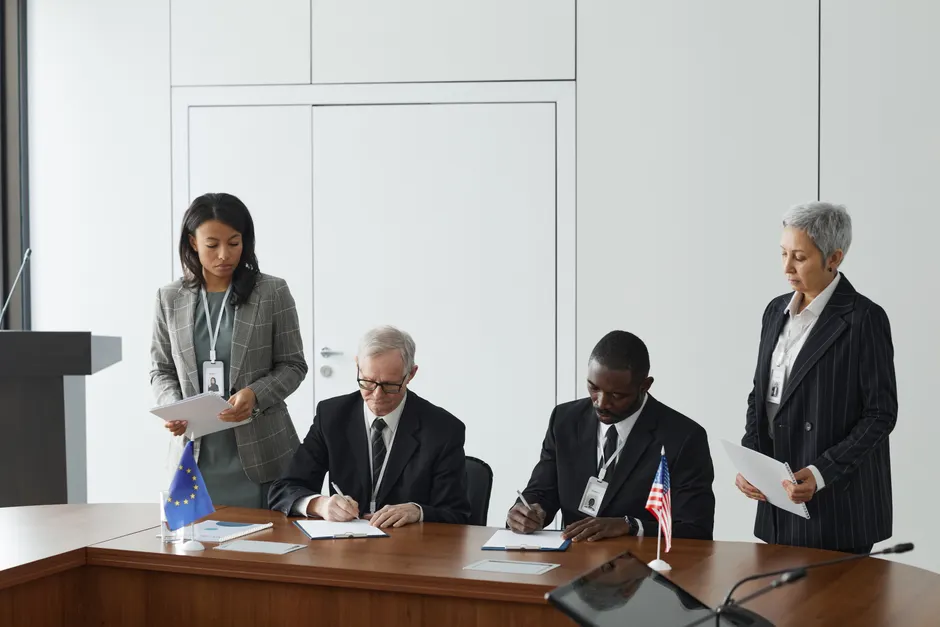
On July 16, 2026, top Trump administration officials hosted 66 nations for a ministerial — a high-level diplomatic meeting — to address what the State Department called the resurgence of political terrorism. Secretary of State Marco Rubio convened the gathering, which was publicly billed as a ministerial on the resurgence of political violence. But an internal discrepancy surfaced: while the public-facing invitation used the phrase "political violence," the State Department's official web address for the published remarks used "political terrorism" (The Guardian; U.S. State Department).
The ministerial focused exclusively on leftist violence and made no mention of rightwing attacks, including the January 6, 2021 Capitol riot. Rubio delivered the keynote framing, calling leftists "an encroaching darkness" and "the enemies of civilization." He pledged a systematic dismantling effort: "We will dismantle these networks brick by brick." He argued that the post-9/11 terrorism threat was "severely diminished" and that the administration was now shifting its primary operational focus to leftist violence (The Guardian).
Stephen Miller, a top Trump adviser, and Scott Bessent, the treasury secretary, attended alongside the 66 participating nations. Miller offered an ideological diagnosis of the threat: "The leftist is fundamentally motivated by envy, by hatred, by jealousy," before dismissing civil liberties concerns about the designation as pretextual — meaning he considered them excuses rather than genuine arguments. Rubio linked the operational landscape to broader geopolitical adversaries, stating that Iranian proxy networks and leftist militant groups are "increasingly intimately tied." He framed international cooperation as existentially necessary, stating, "We have no choice but to confront this menace together" (The Guardian).
The administration's prior designation of antifa as a domestic terrorist organization provides the operational scaffolding for the directives announced at the ministerial. A White House fact sheet published in September 2025 formalized the designation, framing it as "dismantling Antifa's use of political violence" and stating that the group "engages in coordinated efforts to obstruct enforcement of Federal laws." That designation unlocked new intelligence, financial, and law enforcement tools against antifascist protesters, enabling the cross-border cooperation architecture discussed at the July 16 event (The White House; The Guardian).
The broader context here involves the deliberate merging of counterterrorism frameworks with domestic political categorization. By convening a multilateral ministerial under the terrorism banner rather than a standard criminal justice framework, the administration is internationalizing its approach to what it defines as domestic political actors. Think of it this way: a terrorism label is like upgrading from a local police toolkit to a global one. Terrorism designations unlock sanctions — government-imposed economic penalties — intelligence-sharing protocols under existing international agreements, and financial tracking tools that ordinary criminal enforcement does not provide.
Rubio's linkage of Iranian proxy networks to leftist militant groups introduces a transnational nexus — a cross-border connection — that would justify applying counterterrorism resources typically reserved for foreign threats. If the administration formally codifies this linkage in subsequent intelligence assessments, it could trigger the use of foreign intelligence surveillance authorities against entities previously categorized as domestic political actors, provided they meet the statutory nexus requirements.
The exclusion of rightwing violence from the ministerial's agenda narrows the scope of what qualifies as "political terrorism" under the administration's operational framework. Civil liberties organizations have historically challenged such designations on First Amendment grounds, arguing that the term "terrorism" applied to protest movements chills protected speech. Miller's dismissal of these concerns as pretextual indicates the administration's posture toward such challenges is one of procedural dismissal rather than substantive engagement.
For the 66 participating nations, the ministerial establishes an expectation of alignment on intelligence sharing and law enforcement coordination against the specific threat category defined by the U.S. hosting party. Whether those nations adopt the "political terrorism" framing in their own domestic statutes and bilateral agreements will determine the operational reach of the architecture proposed at the event.