Canadian Wildfire Smoke Triggers Air-Quality Alert Across New York City

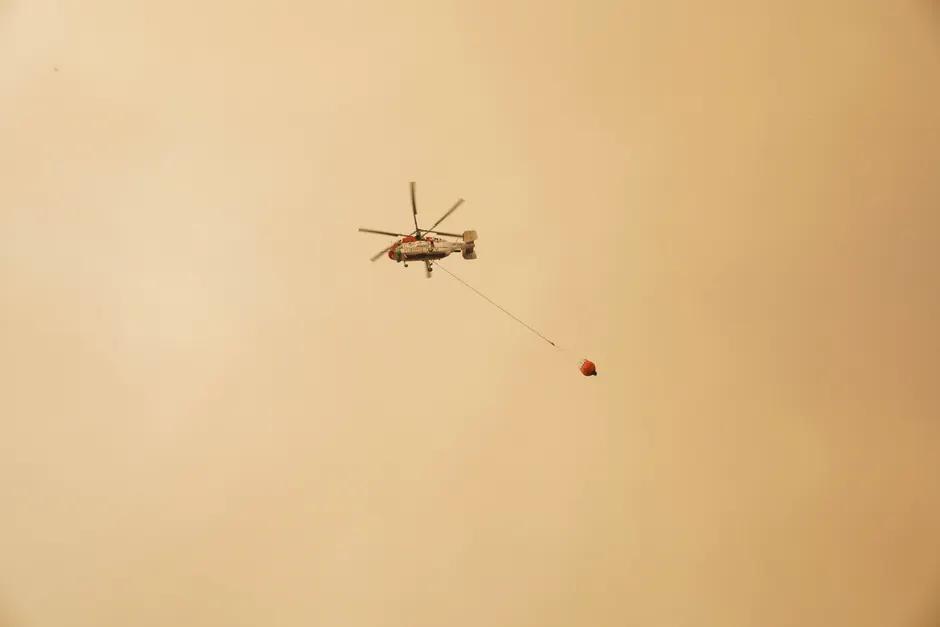
Smoke from Canadian wildfires drifted south on July 17, 2026, blanketing the New York City metro area in hazardous fine particulate matter and pushing Mayor Zohran Mamdani to urge residents to stay indoors. The National Weather Service issued the alert, which originated from the New York State Department of Environmental Conservation (NYSDEC), as temperatures climbed above 90°F (32.2°C) and a heat dome trapped smoky air across parts of the eastern United States (The Guardian).
A heat dome is a persistent ridge of high atmospheric pressure that traps warm air at the surface, much like a lid on a pot. When that lid also traps wildfire smoke, the result is a compounding public-health hazard: heat stress and respiratory exposure reinforce each other.
Mamdani urged New Yorkers to limit outdoor time and avoid strenuous activity. The city distributed free KN95 masks at hundreds of locations, including libraries, police stations, and firehouses. National Guard soldiers handed masks to commuters at Grand Central Terminal in Manhattan. NYC Emergency Management posted on X advising residents to avoid being outdoors for more than an hour and to reduce activity if experiencing watery eyes, scratchy throat, or difficulty breathing (The Guardian).
The smoke plume stretched across a large portion of the United States, reaching New York City and extending over the Atlantic Ocean. Detroit registered the worst air quality in the world on or around July 16, given its proximity to the burning Canadian forests (The Guardian). The combination of a stationary heat dome and sustained wildfire emissions created a multi-day pollution episode that regional air-quality forecasting systems had been tracking for nearly two weeks.
New York State's air-quality response apparatus activated early. The NYSDEC issued an Air Quality Health Advisory for the New York City Metro region on July 5, followed by advisories for the Eastern Lake Ontario, Central New York, and Western New York regions on July 14, and a statewide advisory for fine particulate matter on July 15. James McDonald was a named issuer of the July 15 statewide advisory (NYSDEC). The NWS OKX forecast office in Upton, New York, disseminated an air quality alert effective July 14, and subsequent alerts covered the night of July 16 into July 17. New York State uses eight Air Quality Health Advisory regions for its air-quality forecasting (NYSDEC).
The AQI forecast for Long Island on July 16 was 195 for fine particulate matter (PM2.5), placing it in the "Unhealthy" band of the Air Quality Index (NYSDEC AQI). PM2.5 refers to particles smaller than 2.5 micrometers, small enough to penetrate deep into the lungs. At an AQI of 195, the general population, not merely sensitive groups, can experience health effects from prolonged exposure.
The broader context here is one of institutional repetition. The sequence of advisories from July 5 through July 17 reveals a monitoring infrastructure that escalated geographically as the smoke plume tracked south and east. The state's regional advisory structure allowed targeted alerts before the plume reached the NYC metro region. But the public-facing response on July 17, mask distribution at scale, National Guard deployment, and the mayor's direct indoor-sheltering appeal, suggests a threshold was crossed when PM2.5 concentrations intersected with extreme heat.
For a city that experienced a comparable wildfire-smoke episode in June 2023, the institutional muscle memory is visible. The KN95 mask distribution network, the coordinated messaging between City Hall, NYC Emergency Management, and the National Weather Service, and the deployment of National Guard personnel all point to protocols refined since that earlier event. The question for public-health officials is whether these measures are sufficient to reduce exposure during an episode where going outdoors for even an hour carries documented risk, and where temperatures make indoor spaces without air conditioning dangerous in their own right.