Germany Joins French Nuclear Exercise for the First Time
Chancellor Friedrich Merz announced on July 17, 2026, that German conventional forces will take part in a French nuclear exercise before the end of the year — a first for the Bundeswehr, Germany's armed forces. Speaking at a joint press conference with French President Emmanuel Macron near Cologne, Merz described the move as a new phase in Franco-German nuclear deterrence cooperation (Al Jazeera).
Nuclear deterrence is the idea that possessing nuclear weapons discourages other nations from attacking you. Until now, Germany has relied on NATO's nuclear sharing arrangement, under which U.S. nuclear bombs are stored on German soil and German warplanes are certified to carry them in a crisis. The new cooperation with France adds a parallel layer rather than replacing that setup.
The announcement followed a Franco-German Defense and Security Council (DFVSR) meeting in Nörvenich. A joint declaration stated that both countries are prepared to contribute to robust security guarantees for Ukraine (bundesregierung.de). The French Élysée Palace clarified that the bilateral nuclear cooperation complements, but does not replace, NATO's nuclear deterrence (elysee.fr).
Merz reinforced that point himself. He said Germany remains committed to NATO's nuclear sharing and deterrence arrangements, under which U.S. nuclear bombs are stored in Germany and German warplanes are certified to potentially carry those weapons in an emergency (Al Jazeera).
The July 17 talks between Merz and Macron covered deepening cooperation on nuclear deterrence, missile defence, and long-range strike capabilities. The discussions took place against a backdrop of strain in Franco-German defence cooperation, as Reuters reported on July 16 (Reuters).
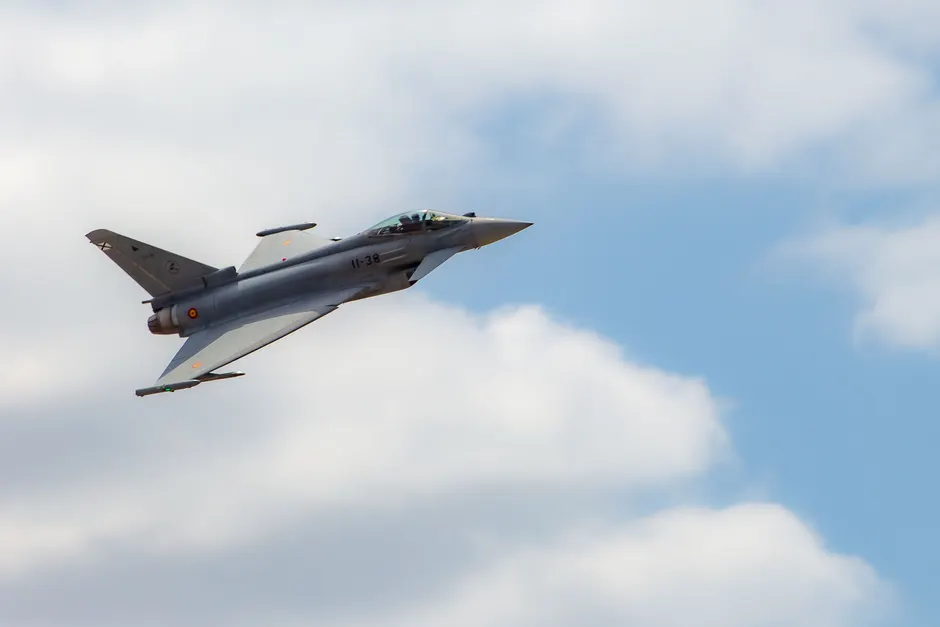
As a symbolic kickoff, French Rafale and German Eurofighter jets held a joint in-flight refuelling exercise on July 16. Merz said the nuclear cooperation with France could eventually produce a new 'doctrine' but called it far too early to say. He also noted that previous German leaders had declined French offers of nuclear cooperation (Al Jazeera).
Macron said Germany would play a 'vanguard role' in deterrence. He clarified that the enhanced cooperation would not involve German financing of the French nuclear arsenal (Al Jazeera).
The July 2026 announcement builds on a trajectory established earlier in the year. In March 2026, Macron announced an increase in the French nuclear arsenal and invited European partners to strengthen cooperation on nuclear deterrence. A March 2 joint declaration by Macron and Merz stated that France and Germany had decided to strengthen their deterrence cooperation in response to evolving threats (elysee.fr). On the same day, Macron visited the Île Longue submarine base, France's nuclear submarine facility, six years after his previous speech there (elysee.fr). The French Ministry for Europe and Foreign Affairs confirmed that France and Germany agreed to take first concrete steps on deterrence cooperation beginning in 2026 (French Ministry for Europe and Foreign Affairs).
Germany had described its initial talks with France on nuclear deterrence as being at an early stage in February 2026 (Reuters). At the Munich Security Conference, Merz confirmed he had begun initial talks with Macron on European nuclear deterrence (bundesregierung.de).
Several other European nations have signaled interest in the French nuclear deterrence initiative. The UK, Germany, Poland, the Netherlands, Belgium, Greece, Sweden, Denmark, and Norway have all expressed interest in the framework (Al Jazeera).
At a July 3, 2026, press conference with the leaders of the three Baltic states in Berlin, Merz said the U.S.-led nuclear deterrence apparatus within NATO must be strengthened (bundesregierung.de). Germany is simultaneously carrying out a major rearmament plan aimed at building Europe's strongest conventional military by 2039 (Al Jazeera).
The July 17 developments clarify how European states are navigating between existing NATO commitments and the French initiative. The DFVSR conclusions build on a September 2025 statement that nuclear deterrence remains a cornerstone of the Alliance's security (elysee.fr). The joint declaration emphasizes that France's independent strategic nuclear forces contribute to the Alliance's security (bundesregierung.de).
The broader context here is one of careful balancing. Germany is keeping its commitments to NATO's nuclear sharing — the U.S. bombs on its soil and the German planes certified to carry them — while folding its conventional forces into a parallel French-led framework. That arrangement lets Berlin deepen bilateral defence ties without paying directly into the French arsenal. The interest from other European states suggests the French framework may grow into a broader multilateral consultation mechanism, though whether that materializes and in what form is an open question.


