Russia Unleashes Largest Ballistic Missile Attack on Kyiv Since the War Began

Russia launched a massive overnight missile and drone attack on Kyiv early Sunday, July 19, 2026, killing at least one person and wounding at least 16 others. According to the Ukrainian Air Force, the assault involved 11 ballistic missiles, 48 cruise missiles, and 352 Shahed kamikaze drones — unmanned aerial vehicles packed with explosives that fly to a target and detonate on impact. Ukrainian air defenses managed to shoot down 34 of the 48 cruise missiles. Al Jazeera described the assault as the largest ballistic missile attack on Kyiv since the start of the war Al Jazeera.
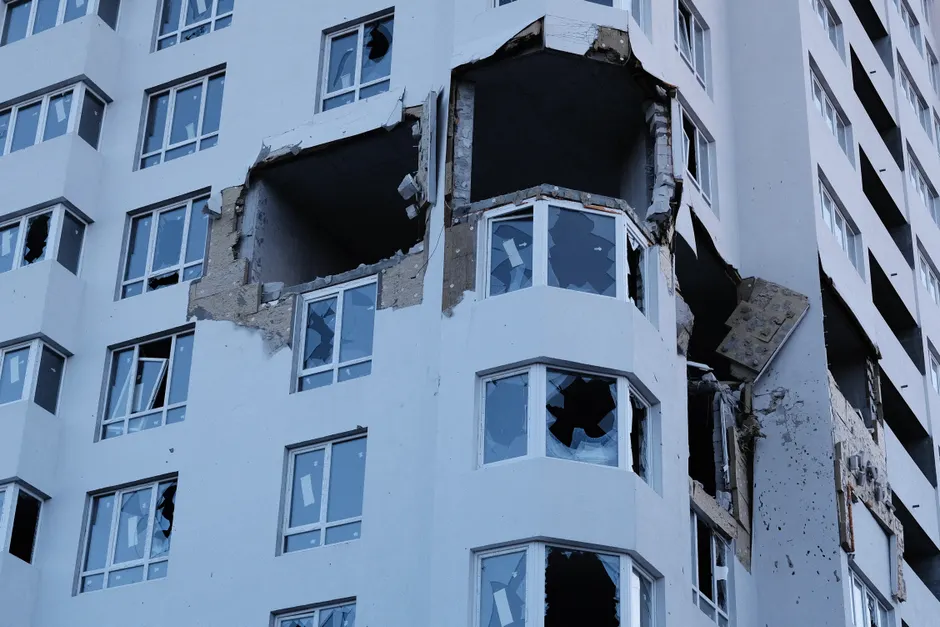
The strike ignited fires across the city and damaged residential buildings, offices, and industrial sites. The Kyiv City Military Administration reported that a station in Kyiv was also damaged by the missile strike NV.ua. The broader Kyiv region, known as the oblast (the administrative area surrounding the capital), reported additional casualties, damage, and fires from the attack Rubryka. Reuters reported one person killed and 13 wounded in the attack, headline 'Russian missiles strike Kyiv killing one, wounding 13' Reuters. The Associated Press and Ukrainian Ministry of Foreign Affairs figures, published the same day, put the wounded count at 16 AP News United24 Media.
The July 19 attack follows a pattern of escalating strikes on the Ukrainian capital this month. On July 2, 2026, Russia attacked Kyiv, and cleanup operations were still underway days later Kyiv City Government. On July 8, 2026, another Russian attack on Kyiv killed three people and wounded 14 others, including a missile strike on the Desnianskyi district Kyiv City Government.
The broader context here is the scale and composition of the July 19 assault. Firing 11 ballistic missiles, 48 cruise missiles, and 352 Shahed drones in a single overnight attack reflects a notable increase in the tempo and intensity of Russian strikes on Kyiv. The sheer volume of munitions — particularly the simultaneous use of ballistic and cruise missiles alongside a massive drone swarm — tests the layered air defense systems protecting the capital. Think of it as trying to block a flood with multiple barriers: each layer of defense can stop some incoming threats, but enough projectiles launched at once can overwhelm the system and let some through.
For those tracking the conflict, the shift from periodic strikes to sustained, high-volume combined-arms attacks on Kyiv raises questions about Russia's munition stockpiles and production capacity. The damage to a station and multiple industrial sites suggests a continued Russian focus on degrading Ukrainian infrastructure alongside civilian pressure. The casualty figures, while contested across sources, indicate that even with active air defenses, interceptions do not prevent all impacts.
Looking ahead, the July 19 attack may signal a new phase in Russia's aerial campaign against Ukrainian cities. The tactic of sending drone swarms to overwhelm defenses before following with ballistic missile strikes has been refined throughout the conflict. The damage to the Kyiv region beyond the city itself also suggests an effort to stretch Ukrainian air defense coverage across a wider geographic area.