A Moderate Quake, a Heavy Toll: Why Peru's Andes Are So Vulnerable to Earthquakes

A 5.5-magnitude earthquake struck the Andes region of Peru on Saturday, July 19, killing at least five people, injuring more than 20, and displacing 300 residents, according to The Guardian.
The US Geological Survey recorded the event at 9:24 PM local time (02:24:36 UTC), with an epicenter 2 km west-southwest of Sicaya in Huancayo province. The quake occurred at a shallow depth of 10 km, a factor that typically intensifies surface ground motion and structural damage in nearby communities. The USGS catalog entry for the event is titled "M 5.5 - 2 km WSW of Sicaya, Peru" (USGS).
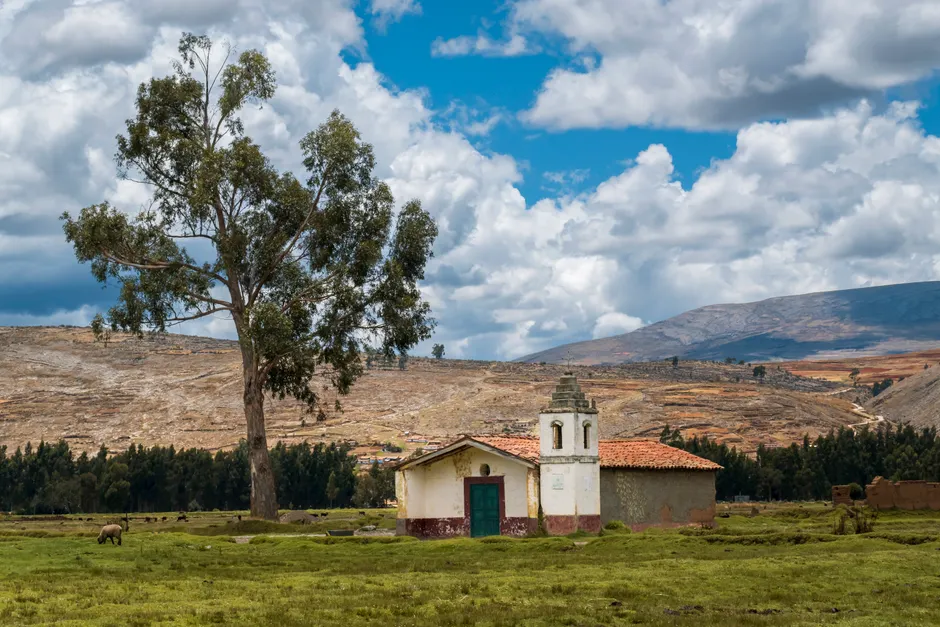
Several buildings collapsed or suffered structural damage, including a local church and convent. Chongo Bajo was among the hardest-hit areas; residents were seen huddled under blankets outside severely damaged homes. Peru's National Civil Defence Institute (INDECI) stated that the total number of missing people remains unknown.
Luis Vásquez, head of the local civil defence office, attributed the severity of the damage to rustic adobe construction materials common in the affected communities. Adobe is a sun-dried clay brick traditional to Andean highland architecture. It performs poorly under seismic loading because it has low tensile strength, meaning it cannot absorb much stretching or bending force, and it is heavy. When adobe walls fail, they tend to collapse outward in large, solid sections, producing a disproportionate share of earthquake casualties relative to the shaking intensity. A 5.5-magnitude event is moderate by global standards, but shallow focal depth combined with vulnerable building stock can produce casualty figures more typical of significantly larger quakes in better-engineered environments.
The broader context here matters for understanding why a moderate-magnitude event in Peru carries consequences that would be unusual elsewhere. Peru sits on the Pacific Ring of Fire, a zone of intense seismic and volcanic activity around the edges of the Pacific Ocean. There, the Nazca Plate, an oceanic tectonic plate, subducts, or slides beneath, the South American Plate. This convergence makes Peru one of the most seismically active countries in the world. Earthquake-resistant building codes are well established in larger urban centers like Lima. Rural Andean communities, however, often rely on traditional construction methods that predate and fall outside the reach of modern seismic codes. The gap between regulatory frameworks and the built reality in remote highland districts means that even moderate seismic events can be disproportionately destructive, and the recurring pattern of adobe-related damage in Peru's earthquake history points to a structural vulnerability that engineering and policy have not yet closed.
The earthquake's timing, late on a Saturday evening, likely meant many residents were indoors, increasing exposure to collapsing structures. The remote highland terrain of Huancayo province complicates rapid damage assessment and emergency response; INDECI's inability to confirm a missing persons count more than 12 hours after the event suggests that access to the most affected areas remains constrained.
Seismological data from the USGS shows the event was a crustal earthquake at shallow depth rather than a megathrust event along the subduction interface. A crustal earthquake originates within the continental plate itself, not at the boundary where one plate slides beneath another. Crustal earthquakes at this depth and magnitude can still produce strong localized shaking, but they do not typically generate tsunami risk, which is a concern with larger subduction-zone ruptures off Peru's coast. The inland location, roughly 200 km from the Pacific coast, further reduces any tsunami relevance.
The casualty and displacement figures should be treated as preliminary. In past Andean earthquakes, INDECI has revised fatality and displacement counts upward in the days following the initial event as search teams reach cut-off communities. The number of collapsed buildings, the severity of damage to the church and convent, which may serve as community shelters or assembly points, and the full geographic extent of the impact have not yet been reported in detail. Peru's civil defence authorities are conducting ongoing assessments.