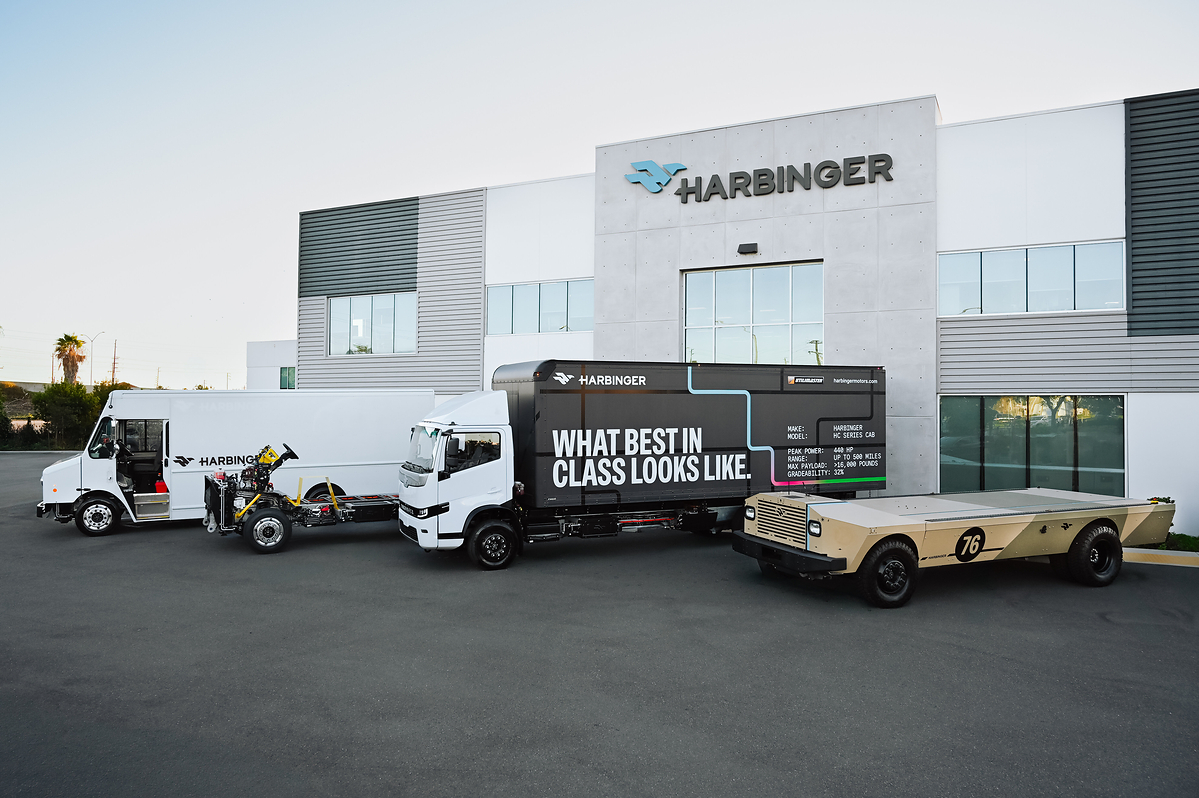
Harbinger Raises $240 Million and Wins a 2,000-Truck FedEx Order

Harbinger has raised $240 million in a Series D funding round, and FedEx has placed a $300 million order for 2,000 of its electric trucks. The company also secured a defense contract with the U.S. military, according to The Verge.
Harbinger is not targeting the passenger-car market. It builds Class 4-6 delivery vans and box trucks, the U.S. weight classes that cover the medium-duty segment. These vehicles move parcels and freight between distribution hubs and final delivery points. The Verge described the company's products as unglamorous workhorses that keep the economy running, a description that fits a fleet business more than a consumer one.
The company was founded in 2021 by veterans of Canoo, QuantumScape and Faraday Future. Its CEO is John Harris. Its CTO, Phillip Weicker, co-founded Canoo, which filed for bankruptcy in 2025. Many observers in the sector will read the Harbinger story against the recent record of the companies its founders came from.
Harbinger assembles its own battery packs and drive units, the motors and power electronics that convert stored energy into motion. This is a vertically integrated approach, meaning the company makes the core components rather than buying them from outside suppliers. The company's website describes its vehicle platform as fully electric and says it is engineered for reliability, flexibility and lower operating costs, and that it is proven in real-world conditions. Those are the company's own characterizations.
The broader context here is the economics of medium-duty fleet electrification. Fleet operators buy on total cost of ownership, uptime and serviceability. They usually commit capital in large batches only after a vehicle has run its duty cycle for some time. A single 2,000-unit order from one parcel carrier puts those criteria to a visible test, and it gives Harbinger a volume anchor that most startups in this segment must build over several years.
Vertical integration carries a trade-off. Building battery packs and drive units in-house gives a manufacturer control over cost, thermal management and iteration speed, and it reduces reliance on outside suppliers for the parts that set a truck's range and service life. It also concentrates engineering, qualification and production risk in one company. The $240 million raise provides runway for that scope, but the money has to turn into validated production volume. The defense contract adds a second customer type, with its own qualification and procurement timelines.
In my view, the most useful thing to watch over the coming quarters is not the funding headline. It is the delivery schedule against the FedEx order and the pace at which the defense work moves from contract to fielded hardware. Those two measures will show whether the vertically integrated model scales at the cost and reliability the company describes.
The round also shows that capital is still available for commercial electrification when the buyer is a logistics operator with a clear route-level cost case. For a sector that has spent years trying to match vehicle specifications to operator economics, a firm order and a defense customer are a different kind of evidence than a launch event.