SpaceX's Round Trip: From $2.6 Trillion Peak Back Below Its IPO Price
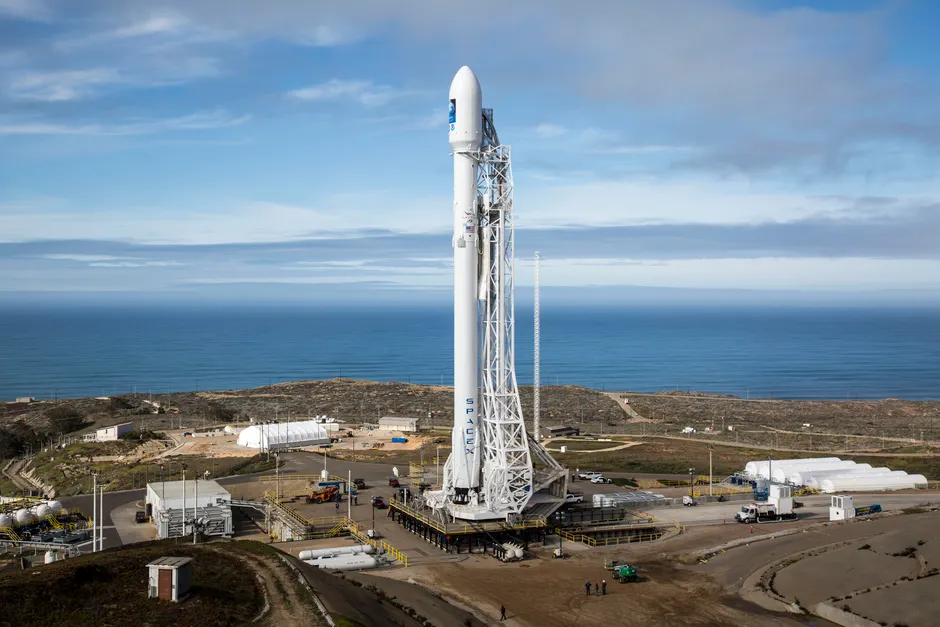
SpaceX stock dropped below its $135 IPO price for the first time on July 15, 2026, finishing a five-week swing that took the company from a peak market capitalization above $2.6 trillion down roughly 34% to about $1.75 trillion (QZ).
Market capitalization, or "market cap," is the total value of a company's shares — what the stock market says the whole company is worth at any given moment. A 34% decline means investors who bought near the top lost about a third of their money on paper.
The IPO Itself
The IPO priced at $135 per share, raising at least $75 billion in an all-primary offering — meaning all the shares sold were newly created by the company, so the $75 billion went onto SpaceX's balance sheet rather than into the pockets of existing shareholders. No insiders sold. A greenshoe option was included, which gives the underwriting banks the right to buy additional shares to help stabilize the price if it falls after listing. As of June 2, SpaceX was targeting a $1.75 trillion valuation inclusive of that option (Reuters). The offering size had been reported at $75 billion by Bloomberg in late May (Bloomberg).
A Moving Valuation Target
The $135 price was the endpoint of a target that shifted repeatedly. In January 2026, the Financial Times reported SpaceX was weighing a mid-June IPO at roughly $1.5 trillion, aiming to raise as much as $50 billion (Reuters). By April, Bloomberg reported the company was aiming above $2 trillion. By late May, after consultations, that target was lowered to at least $1.8 trillion (Bloomberg). SpaceX's private market valuation — what investors paid for shares before the company went public — was about $1.25 trillion, according to a June Bloomberg opinion piece (Bloomberg).
An April 8 Reuters analysis assumed cash flow and revenue would need to double in 2026 from reported 2025 levels to justify the $1.75 trillion valuation (Reuters). SpaceX reported $18.67 billion in revenue for 2025 (Reuters).
First-Day Rally and the Climb to $2.6 Trillion
On its first day of trading, SpaceX opened with a $1.8 trillion market cap and closed at $2.1 trillion, up 19% from the IPO price (MarketWatch). Crypto derivative tokens — essentially side bets traded on cryptocurrency platforms that tracked what investors thought SpaceX would be worth — had been implying a valuation of roughly $2.2 trillion ahead of the listing (Bloomberg).
By June 12, the market cap reached $2.274 trillion, surpassing TSMC and falling just short of Amazon's $2.55 trillion (MarketWatch). On June 16, shares rose 4.8% to close at $201.80, pushing the market value to roughly $2.655 trillion, surpassing Amazon by about $800 billion (Reuters). SpaceX gained $673.8 billion in market cap, a 37% increase, per a MarketWatch comparison to Intel's IPO history (MarketWatch). At that point, SpaceX reached $2.45 trillion before pushing higher to its peak above $2.6 trillion (MarketWatch; QZ).
The Reversal
The reversal was sharp. From the peak above $2.6 trillion, the stock declined roughly 34%, falling below the $135 IPO price for the first time on July 15 and bringing the market cap to approximately $1.75 trillion (QZ; MarketWatch). As of July 15, Meta Platforms sat in eighth place by market cap at roughly $1.72 trillion, according to Dow Jones Market Data, placing SpaceX's post-correction valuation just above that threshold (MarketWatch). For context, the world's most valuable stock was worth about $4.7 trillion as of July 7 (Bloomberg). Also in that July 7 report, a SpaceX bull projected the company's market valuation could reach roughly $10.5 trillion.
Micron Technology also crossed a trillion-dollar market cap during this period, per the same MarketWatch report that tracked SpaceX's post-IPO trajectory (MarketWatch).
The Broader Picture
The broader context here is a valuation trajectory that outpaced even an aggressive pre-IPO schedule. The IPO price implied a $1.75 trillion enterprise; the first-day close added $350 billion in market cap in a single session. At the June 16 peak of $2.655 trillion, SpaceX had added over $900 billion in value above the IPO pricing in under two weeks of trading. The subsequent correction, wiping roughly $900 billion from that peak back to $1.75 trillion, brought the stock full circle to its IPO-day valuation, albeit now trading below the $135 offer price.
What stands out is the symmetry of the round trip. The all-primary structure meant the $75 billion raised went to the balance sheet, not to exiting shareholders, which is unusual for an offering of this magnitude. The greenshoe option would have allowed underwriters to stabilize the stock in the event of post-IPO weakness, but the shares broke below the offer price roughly five weeks after listing, suggesting any stabilization efforts had been exhausted or withdrawn. The $18.67 billion in 2025 revenue against a $1.75 trillion IPO valuation implies a price-to-sales ratio north of 93x at the offer price — meaning investors were paying $93 for every $1 of the company's annual sales — and that multiple expanded further during the rally before compressing back on the decline. Whether that revenue doubles in 2026, as the Reuters analysis assumed was necessary to justify the IPO valuation, is the fundamental question underneath the price action. The bull case at $10.5 trillion requires a further order-of-magnitude expansion in both the business and the multiple the market is willing to pay for it.