Tesla Rolls Out FSD v15 With a Live Generative Scene View
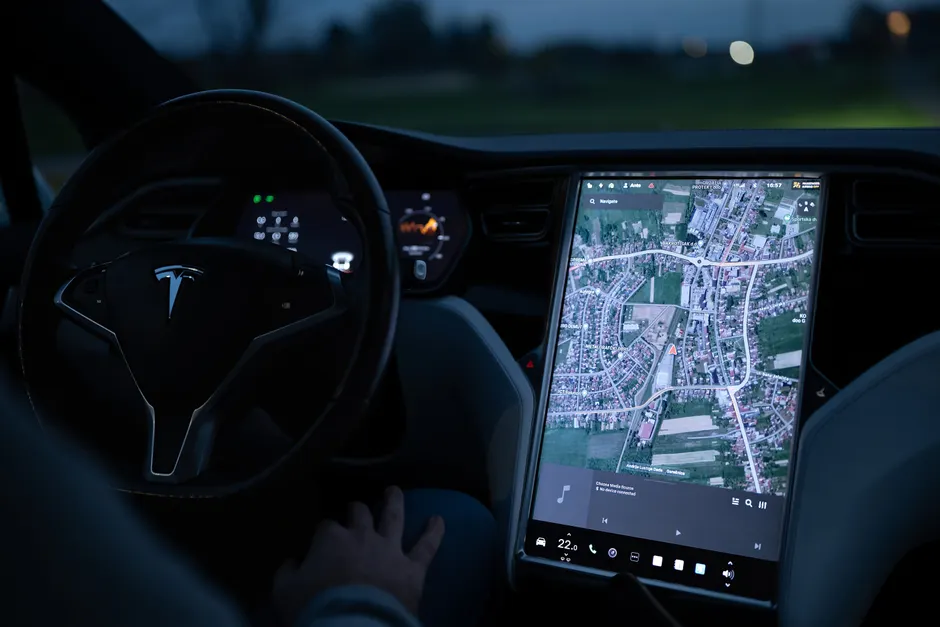
Tesla has begun rolling out Full Self-Driving (Supervised) v15, which the company describes as a ground-up overhaul of its end-to-end driver-assist system. In an end-to-end design, a single neural network maps camera input directly to driving decisions instead of passing it through separate hand-written modules. The release's centerpiece is Reality View, a real-time generative display that replaces the wireframe graphics of earlier builds with a live overhead camera view. According to The Verge, the display renders buildings, crosswalks, pedestrians and surrounding traffic.
Reality View also lets drivers see what the car plans to do next and tap the display to influence those plans. For drivers who prefer less visual density, Tesla includes a map-only option and a stripped-back quiet mode as alternatives to the live feed. Elon Musk posted "FSD is GTA irl" on X after the update dropped.
On the software side, v15 runs on an upgraded vision encoder, the network component that turns raw camera frames into features the planner can use. That encoder is shared across Tesla's FSD, Robotaxi and Optimus humanoid robot programs. Tesla claims that training on millions of online videos helped its AI prevent serious driving mistakes 25 times more often while using less computing power. The company has not published the methodology behind that figure.
Hardware eligibility is narrower than the software branding suggests. v15 is built for vehicles running Tesla's newer AI4 (HW4) hardware and upcoming Cybercab platforms. Owners of HW3-equipped cars are not included in that target.
The release also adds a handful of operational changes. Bike Rack Mode allows FSD to be engaged with hitch accessories attached, and it disables reversing, Summon and Autopark while active. FSD v15 can automatically reduce speed near traffic cameras. Drivers can override that behavior and permanently mute specific cameras after two cancellations. A cabin camera tracks driver attention, and according to Tesla's description it can do so through hats and sunglasses.
The rollout lands while regulators are scrutinizing the existing system. The National Highway Traffic Safety Administration (NHTSA) is actively investigating roughly 2.9 million FSD-equipped vehicles over reports that include running red lights, improper railroad-track crossings and driving into oncoming lanes. Those investigations concern the current fleet's behavior, and v15 is a new software generation layered on top of it.
In my view, the most consequential design question in this release is not the graphics. A live, tappable rendering of the scene asks a supervising driver to watch a representation of the car's world and to intervene in its plans, which is a different attention model from a wireframe overlay. The map-only and quiet-mode options suggest Tesla recognizes that some drivers will want less of that visual load. The camera-muting and attention-tracking features raise their own questions about how a supervised system should weigh driver input against the vehicle's judgment.
The broader context here is the shared encoder. If the same vision stack really serves passenger cars, a robotaxi fleet and a humanoid robot, then a gain in perception quality is a gain across all three programs at once. That is the optimistic reading, and it is a reasonable one. Whether the 25x reduction in serious mistakes holds up outside Tesla's own evaluation, and how NHTSA's open investigations interact with a software generation that changes both the interface and the perception stack, are the questions the next several months will answer.


