Gold Breaks $4,000 — What's Driving It and What Could Come Next

Spot gold broke through $4,000 per ounce in October 2025, a milestone confirmed by Reuters reporting from October 10, 2025 Reuters. Spot gold refers to the current market price for immediate delivery of the metal, as opposed to futures contracts for future settlement. The breach capped a multi-month rally driven by three converging forces: persistent central bank accumulation, especially from China; strong physical demand across Asian trading hubs; and a macroeconomic backdrop of Federal Reserve rate cuts combined with geopolitical uncertainty. ANZ Research, in its gold outlook published December 16, 2025, projects prices to reach USD 4,800 in 2026 ANZ Research.
China's central bank resumed gold purchases in October 2024 after a six-month pause, according to ANZ Research's December 12, 2024 note. That followed a Q1 2024 buying spree of roughly 290 tonnes, documented by ANZ in a June 2024 report ANZ Research. The Q1 figure alone placed the People's Bank of China among the world's most aggressive sovereign gold buyers. ANZ's February 2025 research subsequently reported China's gold imports at 100 tonnes for December 2024, indicating that the PBOC's official reserve purchases sit alongside substantial flows into private and institutional hands ANZ Research.
ANZ expects global central bank gold purchases to remain near 800–850 tonnes, a range consistent with the elevated pace observed since 2022. Their February 2025 research states explicitly that central bank buying will continue to anchor gold demand in 2025 and beyond. Sovereign accumulation at these run-rates absorbs roughly a fifth of annual mine supply and provides a structural floor independent of speculative positioning.
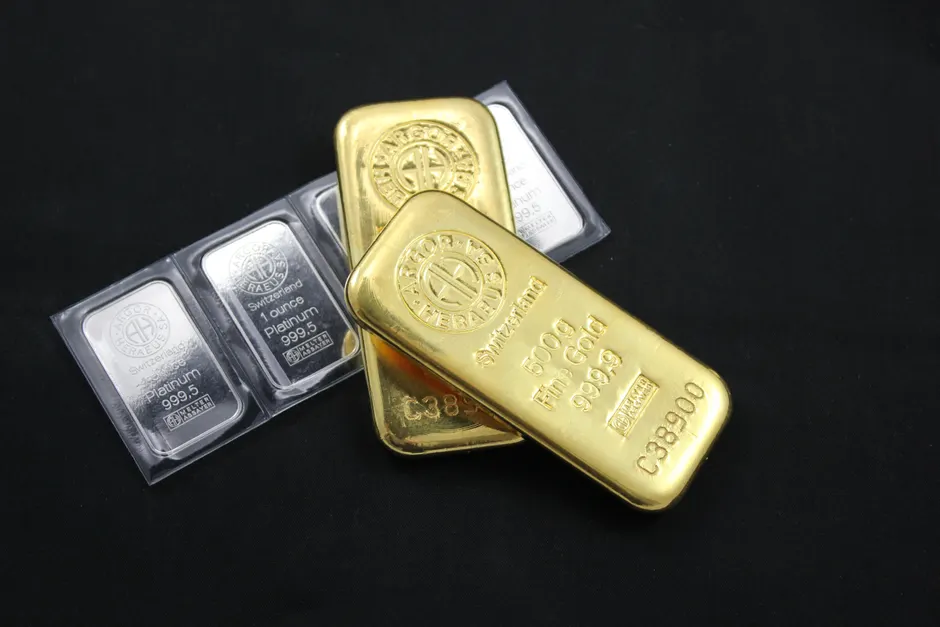
Physical demand across Asian retail channels has reinforced the price trajectory, though not without cyclical interruptions. Reuters reported on April 4, 2025 that Chinese physical gold demand rose as trade-war jitters spurred safe-haven buying Reuters. By August 1, 2025, Reuters noted that demand in key Asian hubs had improved slightly following a price pullback, though volatility persisted Reuters. The pattern is characteristic of Asian physical markets: price dips attract bargain-hunting, but sharp rallies temporarily suppress offtake. What changed materially is the composition of retail demand. Reuters reported on January 12, 2026 that investors in China and India have shifted toward purchasing bars and coins rather than jewellery, a structural change driven by surging spot prices that compressed jewellery fabrication margins and redirected consumer flows into investment-grade product Reuters.
ANZ attributes gold's rally to mounting geopolitical, economic, and financial uncertainties combined with the Fed's easing cycle. The bank's notes span from June 2024 through December 2025, with the most recent projection (USD 4,800 for 2026) representing an upward revision from earlier targets, though the specific prior figures are not detailed in the available research excerpts. The directional consistency across ANZ's published sequence is notable: each successive note has either maintained or raised the bullish thesis.
The interplay between physical and speculative demand warrants close attention. As Reuters has reported, while physical demand provides underlying support to gold prices, speculative trade is what largely drives prices. This distinction matters for positioning. Central bank and retail physical buying establishes a floor and absorbs supply, but the marginal price discovery occurs in paper markets: COMEX futures, over-the-counter derivatives, and exchange-traded product flows. COMEX is the primary U.S. futures exchange for commodities; over-the-counter derivatives are privately negotiated contracts traded directly between parties rather than on an exchange.
The risk for those anchored to physical-demand narratives is that speculative positioning can reverse sharply independent of structural buyers. The converse is also true: if sovereign accumulation continues at 800–850 tonnes annually and Asian retail flows remain tilted toward bullion over jewellery, any speculative drawdown would face a higher physical floor than in previous cycles.
The broader context here is that for anyone tracking gold, the relevant question is not whether gold rises from $4,000 but how much of the move to $4,800 is already priced in. ANZ's target implies roughly 20% upside from the October breach level. Whether that is achievable within 2026 depends on the pace of Fed cuts, the persistence of central bank buying at projected run-rates, and whether geopolitical risk premiums remain elevated or normalize. What is known: central banks are buying, Chinese imports remain substantial, and Asian retail has structurally shifted toward investment-grade product. What is priced: the market has already discounted a Fed easing cycle and sustained geopolitical risk. The gap between known fundamentals and market positioning is where the trade exists.