Alphabet's $35.7 Billion Quarter: Inside the AI Infrastructure Build-Out
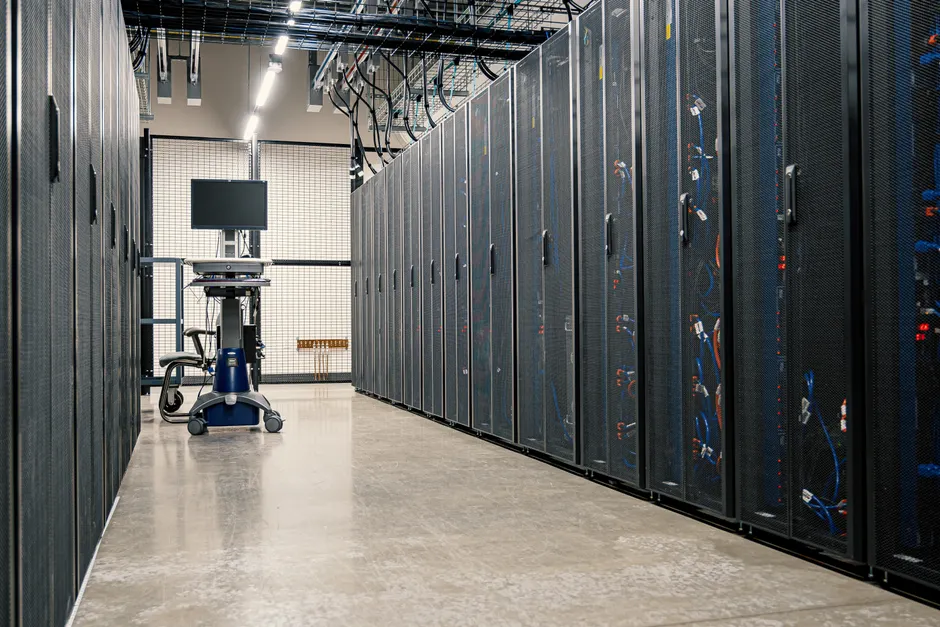
Alphabet spent $35.7 billion on capital expenditures in the three months ended March 31, 2026, more than double the $17.2 billion it spent in the same quarter a year earlier (SEC filing). Capital expenditures, or capex, are the funds a company spends on long-lived physical assets, think buildings, land, and equipment, rather than day-to-day operating costs. For Alphabet, this spending is almost entirely directed at what the company calls technical infrastructure: data center land, buildings and leasehold improvements, and servers and network equipment (Alphabet IR FAQ).
The nine-month figures tell the same story at a slower cadence. Alphabet spent $63.6 billion on capex in the nine months ended September 30, 2025, up from $38.3 billion in the comparable period of 2024 (SEC filing). Q3 2025 alone accounted for $24 billion of that nine-month total, per the company's October 2025 earnings call (Q3 2025 earnings call). To put the acceleration in perspective: the Q1 2026 single-quarter figure of $35.7 billion already exceeds 56% of the full nine-month capex total for 2025 through September.
CFO Anat Ashkenazi provided a granularity breakdown at the Morgan Stanley TMT Conference on March 3, 2026. She stated that approximately 60% of technical infrastructure spend is related to data center construction (Morgan Stanley TMT Conference). Applied to Q1 2026's $35.7 billion, that implies roughly $21.4 billion directed at data center buildout in a single quarter. The remainder would cover servers, network equipment, and leasehold improvements.
The build-out extends beyond organic capex. Alphabet announced its intent to acquire Intersect, a provider of data center and energy infrastructure solutions, in December, as disclosed during its Q4 2025 earnings call on February 4, 2026 (Q4 2025 earnings call). The company also priced an $84.75 billion equity capital raise to expand AI infrastructure (Alphabet IR). An equity raise means Alphabet sold new shares to investors, bringing in cash but diluting the ownership stake of existing shareholders. Layered on top of already-accelerating capex, that issuance signals a funding posture that treats infrastructure spending as a multi-year structural commitment rather than a cyclical peak.
In its FY 2025 10-K, Alphabet stated it expects to "significantly increase" its investment in technical infrastructure in 2026 relative to 2025 (SEC filing). Management subsequently updated its full-year 2026 capital expenditures guidance during the Q1 2026 earnings call on April 29, 2026 (Q1 2026 earnings call). The Q1 quarterly run rate of $35.7 billion, annualized, would approach $143 billion before any step-up through the year.
Alphabet has scheduled its Q2 2026 financial results conference, with the date announced on its investor relations page (Alphabet IR). Analysts forecast EPS (earnings per share, a common profitability metric) of approximately $2.87 on revenue near $116.9 billion, representing year-over-year growth of about 24% and 15% respectively (Tastylive). The revenue growth assumption, if realized, would mark a deceleration from the capex growth rate. Capex in the comparable quarter (Q1 2025) grew roughly 108% year over year, from $17.2 billion to $35.7 billion. Analysts are modeling revenue growth of 15% for Q2 2026.
The gap between capex growth and revenue growth is the tension investors will scrutinize. Alphabet is funding an infrastructure base with an equity raise, debt capacity, and operating cash flow on the premise that AI-driven services will eventually monetize at a scale that justifies the fixed-cost commitment. The $84.75 billion equity raise dilutes existing shareholders in the near term; the return on that capital depends on revenue trajectories that have not yet materialized at the growth rates the capex implies.
The broader context here is in the composition of the spending itself. Ashkenazi's 60% data center construction figure is worth parsing carefully. Data center construction has a multi-year payback profile: land acquisition, permitting, and shell construction precede server installation by quarters or years. Think of it like building a factory before you can install the assembly line. The 40% allocated to servers and network equipment is closer to productive assets, generating compute capacity on shorter timelines. If the 60/40 split holds through 2026, Alphabet is building ahead of demand by a meaningful margin, with the bulk of current spend converting to revenue-generating capacity on a lag.
The Intersect acquisition intent, disclosed in December and confirmed on the February earnings call, aligns with this construction-heavy profile. A provider of data center and energy infrastructure solutions would support the build-out phase, not the compute phase. The strategic logic is vertical integration of the construction pipeline at a time when data center supply chains, power procurement, and permitting are the binding constraints on AI infrastructure scaling.
For investors approaching the Q2 2026 print, the relevant questions are narrow. First, did the updated 2026 capex guidance from the Q1 call hold, or has management revised it again? Second, does the 60/40 construction-to-equipment split hold as Q1's $35.7 billion flows through, or did the mix shift? Third, do the analyst consensus figures of $2.87 EPS and $116.9 billion revenue leave room for the operating margin compression that capex depreciation will eventually impose? Depreciation is the accounting process of spreading the cost of a long-lived asset over its useful life; as Alphabet's massive capex starts depreciating, it eats into reported earnings. Alphabet's Q2 results will be the first full quarter reflecting both the updated guidance and the equity raise proceeds being deployed.


