Big Tech's AI Spending Spree Is Burning Cash — and Investors Are Taking Notice

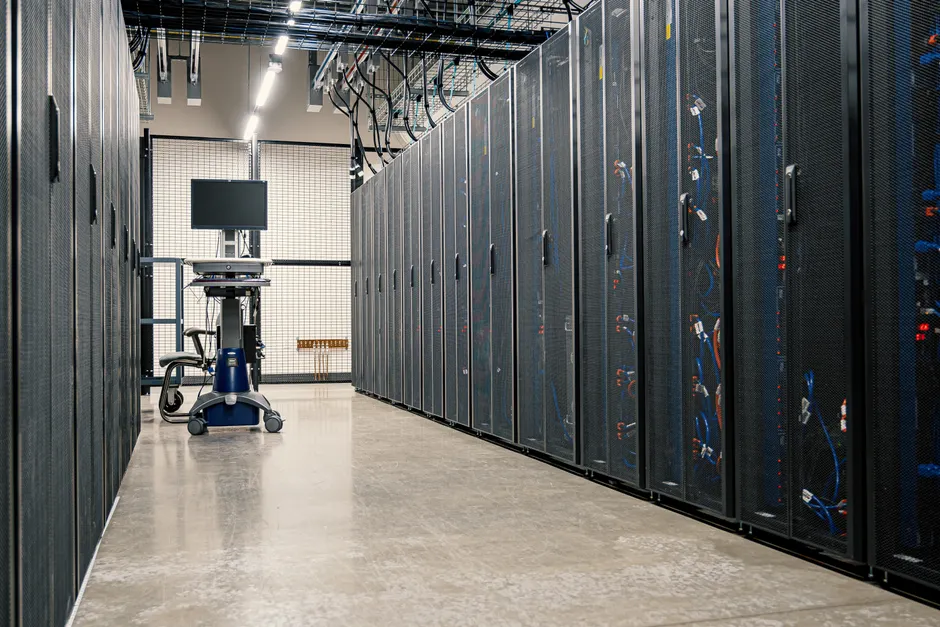
Alphabet reported Q2 2026 revenues of $119.8 billion, up 24% year-over-year (23% in constant currency, meaning adjusted for exchange-rate fluctuations). Despite that strong growth, shares fell 6.9% after the company raised its full-year 2026 capital expenditure guidance to a range of $195 billion to $205 billion — a $15 billion increase from the prior range of $180 billion to $190 billion (Alphabet Q2 2026 Earnings Release; S&P Global Market Intelligence). The earnings release cited capital expenditures — money spent on physical assets like data centers and servers — to scale AI infrastructure as a priority.
That spending acceleration has a direct cash flow consequence. Free cash flow is the cash a company has left after paying for its operating expenses and capital investments; think of it as the money available to shareholders, debt holders, or reinvestment. Alphabet burned $5.9 billion in free cash flow during Q2 2026, a sharp swing from Q1 2026's positive $10.1 billion (Reuters; Alphabet Q1 2026 Earnings Call). Trailing-12-month free cash flow stood at $53.3 billion as of Q2 2026, down from $64.4 billion at the end of Q1 (Alphabet Q2 2026 Earnings Call; Alphabet Q1 2026 Earnings Call). The company ended Q2 2026 with $242.5 billion in cash and marketable securities, a substantial cushion that provides ample runway but does not erase the trajectory.
Tesla reported a parallel cash deterioration. Q2 2026 operating cash flow came in at $4.7 billion, producing free cash flow of negative $1.1 billion — better than the analyst consensus average of negative $3.254 billion (median: negative $2.999 billion) but still a swing from Q1's positive $1.4 billion in free cash flow (WSJ; Tesla IR; Tesla Q1 2026 Update). Tesla's cash and cash equivalents fell by $1.2 billion during the quarter, and net income declined 5% year-over-year (Tesla Q2 2026 Update; WSJ). Analyst consensus had projected operating cash flow of $3.445 billion (median $3.469 billion) and capital expenditures of $6.698 billion (median $6.703 billion) (Tesla IR). Tesla shares tumbled nearly 10% amid a broader tech selloff during the earnings period (MarketWatch).
The selloff was compounded by macro pressure: oil prices hit $100 a barrel during the same window, pressuring equities broadly (MarketWatch). On April 29, 2026, Alphabet had declared a cash dividend of $0.22 per share, payable June 15 to stockholders of record as of June 8 — a modest return of capital that now sits alongside a sharply negative quarterly free cash flow result (Alphabet Investor FAQs).
The broader picture is one of escalating AI capital intensity across the investment-grade technology complex — meaning large, financially solid tech companies that hold credit ratings good enough to issue bonds at favorable rates. Aggregate capital expenditure among AI hyperscalers (the handful of companies with the scale to build massive AI infrastructure) could exceed $770 billion in 2026, roughly 23% above prior expectations (CNBC). Wall Street estimates project approximately $300 billion in AI-related investment-grade bond supply for the year (Advisor Perspectives). AI-related spending among investment-grade technology companies in 2026 is nearly six times the level seen in 2022 (Neuberger Berman).
The credit implications are becoming tangible. Aggregate free cash flow across investment-grade technology companies has materially deteriorated as a result of AI-driven capital expenditures, and projected capex for AI-related initiatives is expected to result in negative free cash flow for large technology companies (Neuberger Berman; Breckinridge). The debt markets are absorbing the funding gap: the bond supply pipeline is expanding to finance infrastructure buildouts that operating cash flow can no longer cover.
The key tension here is the disconnect between top-line growth and cash generation. Alphabet's 24% revenue growth is genuinely impressive, yet the market discounted shares by 6.9% because the marginal dollar of revenue is arriving alongside a rising marginal cost of capital expenditure — each new dollar of sales requires more spending on data centers, chips, and power than it used to. Alphabet's $242.5 billion cash position provides a wide margin of safety in absolute terms, but the direction of travel matters. A company generating negative quarterly free cash flow while simultaneously raising capex guidance by $15 billion is accelerating its cash deployment at a rate that warrants scrutiny, particularly if revenue growth slows from the 24% pace reported in Q2. Tesla's situation is more constrained: a smaller balance sheet, declining net income, and capex running at levels ($6.7 billion consensus) that produced negative free cash flow even with operating cash flow beating expectations.
For bondholders, the thesis is more straightforward. Investment-grade technology issuers are increasingly funding AI infrastructure through debt, and the scale of that issuance — $300 billion in projected supply — will test demand at a time when oil at $100 and concurrent bond market volatility are already tightening financial conditions.