Samsung's R95H Puts Red, Green and Blue LEDs Directly Behind the Panel
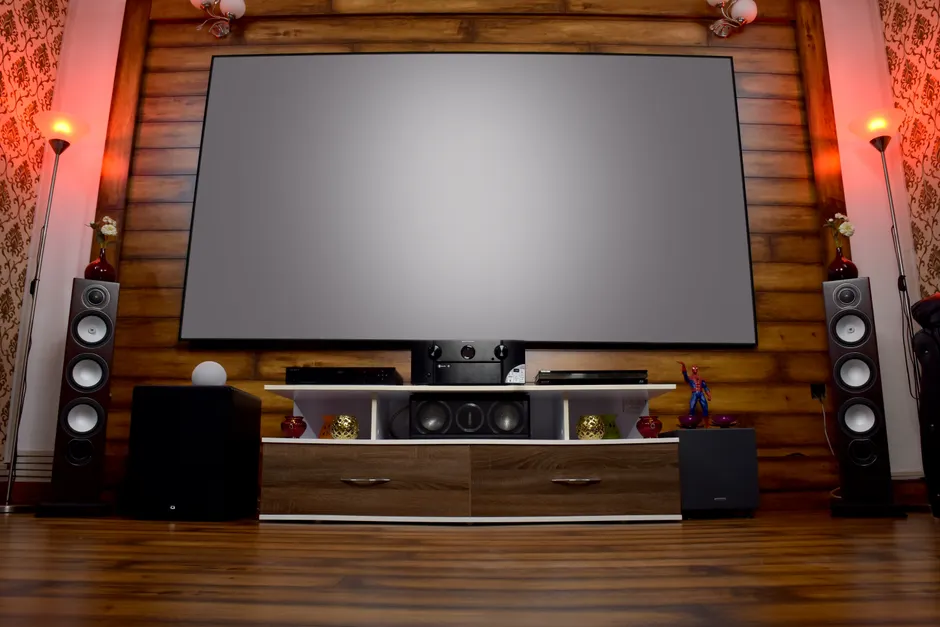
Samsung's R95H television uses individual red, green, and blue LEDs for its backlight instead of the white or blue LEDs common in current LCD sets. The Verge's review of the set, published on 26 November 2026, describes the design and the measurements taken during testing.
The review says the panel can fully display the P3 and BT.2020 color spaces, the wide gamut ranges used in cinema and HDR video production. The set supports HDR10 Plus, HDR10, and HLG HDR formats. Measured in Filmmaker mode, it reached 694 nits for full-field white and 2,206 nits for specular highlights. A nit is one candela per square meter, the standard unit of luminance.
The R95H has a matte, glare-free screen finish. It is offered in 65-inch, 75-inch, and 85-inch sizes.
On connectivity, the set has four HDMI 2.1 inputs, one of which supports eARC (enhanced audio return channel). Using the Wireless One Connect box, which is sold separately, the set supports up to eight HDMI inputs. Audio support covers Dolby Atmos, Dolby Digital, Auracast, and Q-Symphony.
For gaming, the R95H supports variable refresh rate (VRR) up to 165Hz, along with ALLM, Game Bar, and FreeSync Premium Pro. VRR lets the display match its refresh cycle to the frame rate the console or PC is producing, which reduces tearing.
The core difference is in the backlight. Most LCD sets start with a white or blue LED behind the panel, then pass that light through a filter stack, usually built around phosphor or quantum-dot layers, that splits it into red, green, and blue sub-pixel primaries. With discrete RGB emitters, the primaries come from the light source itself. That gives the local dimming system and the color pipeline a different set of variables to control, and it changes what the panel's gamut depends on.
In my view, the questions that matter for buyers are the ones the spec sheet cannot answer on its own: how uniform the color stays across the full panel at high brightness, how the local dimming zones behave with mixed content, and whether the calibration workflow is simple enough for professionals who grade against P3 or BT.2020 targets. The review's luminance figures suggest the set is designed for bright rooms, and the matte finish is a deliberate trade. A matte coating cuts specular reflections, which helps in rooms with windows, but it also softens the perceived contrast of fine highlights compared with glossy panels.
The broader context here is that RGB backlighting has been a recurring idea in display engineering for years, mostly confined to professional monitors and niche products. A consumer television with this architecture, sold in 65-, 75-, and 85-inch sizes, moves that approach into the mainstream television channel. Whether it changes the price-to-performance calculation for enthusiasts will depend on how the set performs across a wider range of content and on what competing sets offer at similar sizes.
For the software and integration side of the market, the R95H's HDMI 2.1 count, eARC, VRR to 165Hz, and expandable input count through the One Connect box read as a set aimed at users with multi-device home theater or gaming setups. Auracast alongside Dolby Atmos and Q-Symphony points to a set meant to sit at the center of a mixed audio ecosystem.
The R95H puts a different light architecture into a mainstream television, and the review's figures give expert readers concrete numbers to weigh against their own test criteria.