Peak Design's Field Bracket Brings Body-Specific L-Brackets and Built-In Tracking to Kickstarter
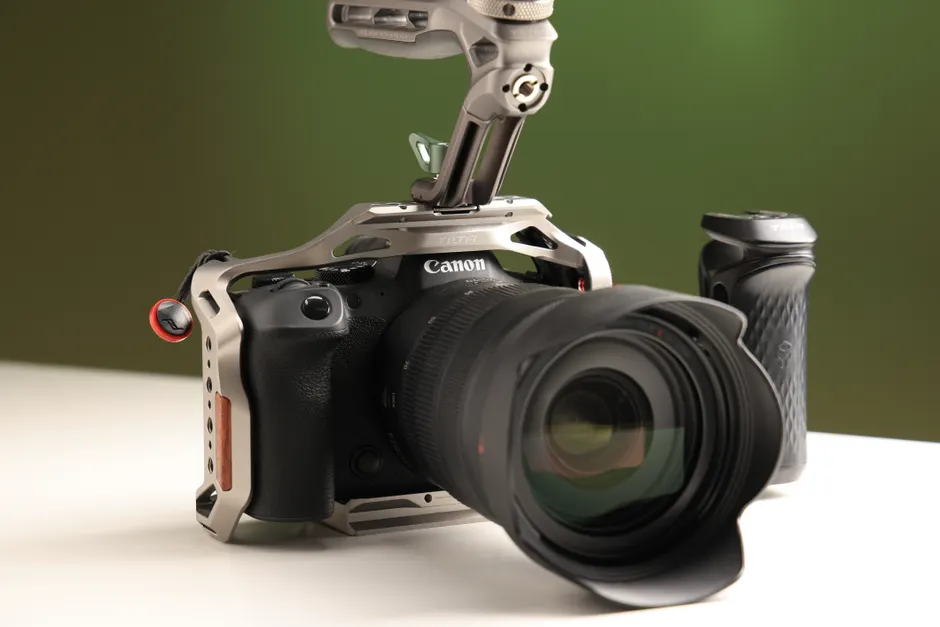
Peak Design has launched the Field Bracket, a camera-specific L-bracket system, on Kickstarter. The campaign is the company's 17th Kickstarter project Kickstarter. The Field Bracket works as an L-bracket, a hand grip, and a cheese plate — a flat mounting plate with threaded holes for attaching accessories — and is molded to fit individual camera bodies rather than offering a one-size-fits-all design The Verge.
At launch, the system supports mostly the newest or near-newest models in each camera manufacturer's lineup. Peak Design has also opened a dedicated feedback page where users can submit camera models they want supported in future production runs.
How It Works
The vertical component of the system, called the Field Latch, uses a new tool-free locking mechanism — meaning you can attach or remove it by hand, no hex key required. An optional cheese plate attaches via the Field Latch and slides out at adjustable stops, giving access to camera ports and cable routing without removing the whole bracket. The Field Bracket fits most ARCA-compatible tripods (ARCA being the industry-standard dovetail quick-release system used by the majority of quality tripod heads) and includes dedicated slots for Peak Design camera straps. The design does not interfere with Peak Design's existing Capture Clip system, the clip-on mount many photographers already use to carry a camera on a backpack strap or belt.
Peak Design is selling add-on accessories separately, including a hand grip, finger grip, and cheese plate. The Field Bracket carries an MSRP of $149.95, while a bundle including all accessories is priced at $269.80 MSRP. Kickstarter backers can purchase the Field Bracket at a discounted price of $125, with the full bundle available at $199. The Verge also reports early bird pricing starting at $150 The Verge.
Beacon Finder Tag Integration
Alongside the Field Bracket, Peak Design introduced the Beacon Finder Tag, a branded item tracker compatible with both Apple's Find My network and Google's Find My Device network. The Beacon tag runs on a CR2025 battery rated for up to six months and carries an IP67 water and dust resistance rating. It is designed to fit flush inside the base plate of the Field Bracket, and the L-bracket includes a dedicated slot for the tag, integrating location tracking directly into the camera's physical mounting system.
The integration of a finder tag slot into a camera bracket addresses a real pain point. Professional camera bodies are high-value, frequently transported items that move between bags, tripods, and mounting plates in fast-paced environments. Building tracking capability into the bracket itself means the tag stays with the camera body rather than being loosely attached or forgotten. The dual-network support is also pragmatic: Apple's Find My has broad coverage, but Google's Find My Device network has grown into a viable complement, and supporting both maximizes the pool of devices the tag can ping for location data.
The Tradeoffs of a Body-Specific Design
The decision to mold the bracket to individual camera bodies rather than produce a universal design carries notable tradeoffs. A camera-specific mold allows for precise port alignment, a tighter fit, and better thermal contact between the camera body and the bracket, which can matter during long video shoots where heat buildup affects recording limits. The cost is SKU proliferation: each supported camera body requires its own tooling, which constrains the range of launch models and puts the onus on the buyer to verify compatibility before purchasing. The feedback page suggests Peak Design is using the Kickstarter campaign to gauge demand for additional mounts, a reasonable approach given the tooling investment required per body.
For working photographers and videographers, the tool-free Field Latch and adjustable cheese plate reduce the friction of switching between horizontal and vertical orientation while keeping cable connections intact for external monitors, microphones, or power. ARCA compatibility means the bracket drops into existing tripod setups without requiring proprietary plates. The strap slots and Capture Clip compatibility mean users already invested in Peak Design's ecosystem do not need to reconfigure their existing workflow.
Pricing and Positioning
The pricing positions the Field Bracket as a premium accessory. At $149.95 for the bracket alone and $269.80 for the full bundle, it sits above generic universal L-brackets but in line with camera-specific brackets from established photography accessory makers. The Kickstarter discount of $125 for the bracket and $199 for the bundle offers meaningful savings for early adopters willing to commit before widespread retail availability.
In my view, what makes this system worth watching is the way it integrates asset tracking and rigging into a single piece of hardware. The combination of a body-specific bracket, modular grip options, and a flush-fitting finder tag reduces the number of separate accessories a photographer needs to manage. For professionals who travel with multiple bodies and lenses, tracking a camera's location through a bracket-integrated tag rather than a separate dongle clipped to a bag strap is a small but meaningful improvement in operational security.
Peak Design has built the Field Bracket for photographers who value a tight, purpose-fit system over the flexibility of universal mounts, and the Kickstarter campaign will serve as a real test of which camera bodies generate enough demand to justify the tooling investment.