Anker and Plaud Put AI Note-Taking in Your Earbuds
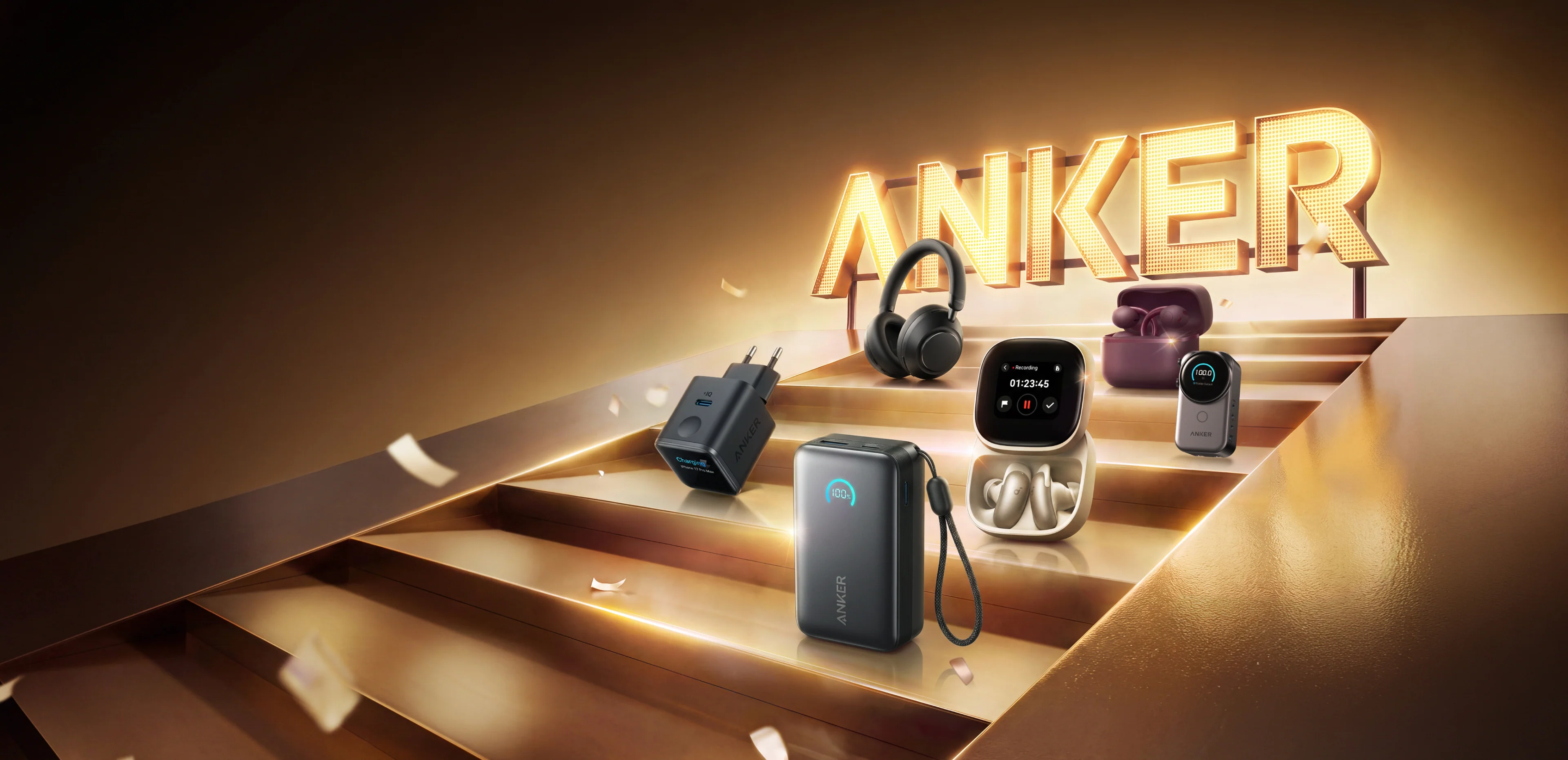
Anker's Soundcore Liberty 5 Pro Max includes an AI Note-Taker feature that records audio through a microphone in the earbuds' charging case, according to Engadget, which published its explainer on 29 November 2026. Recording can be started directly from the case, using its built-in 1.78-inch AMOLED touchscreen.
The feature relies only on the case microphone. The microphones in the earbuds themselves are not part of the process. Anker transcribes, summarizes and displays the recordings in the Soundcore app. Anker also states that the Liberty 5 Pro Max cannot capture audio from video calls or phone calls.
Recorded audio is first saved to local storage on the device. It is then uploaded to the cloud over the internet connection of the paired smartphone, where it is transcribed and shown in the companion app. Engadget describes the same store-then-upload pattern for Plaud's earbuds.
Plaud's entry is the Plaud One, which the company describes as its first pair of wireless earbuds. Unlike the Soundcore design, the Plaud One draws on two audio sources: microphones on the charging case and microphones built into the earbuds. Plaud designed it to capture a meeting with the case placed on a table, and to capture video-call audio when the wearer has the earbuds in.
The two products split the problem differently. Anker keeps the recording tied to the case, which sits on a table or desk during an in-person conversation. Plaud extends capture to the wearer's own ear, which is what makes remote meetings possible. Both send audio to a cloud service, so transcription quality and data handling depend on the companion app and the servers behind it as much as on the hardware.
Soundcore's homepage makes several company-level claims. It states that the company has sold more than 85 million units and has 52 million global users. The same page lists the Anker soundcore AeroClip 2 as a new launch and describes it as the "World's Clearest Open-Ear Clip-On Earbuds for Calls" certified by Guinness World Records. The page also advertises Black Friday deals of up to 52% off, ending Nov. 30th.
In my view, the more interesting question is one of consent rather than features. A case-mounted microphone captures everyone within range of the table, not only the person who pressed record. Transcription and summarization make that capture far more useful, because a summary is easier to search and share than a raw recording. Neither product's published description addresses how bystanders are informed or how recordings are retained after transfer. Those are the details a procurement team or a legal department will ask about first.
The broader context here is that the earbud form factor changes the social signal. A phone on the table announces a recording device. A small case that looks like a charging accessory does not, and that gap is where most of the friction is likely to sit.
The upside is more straightforward. A participant who does not have to take notes can listen more closely, and a searchable, summarized transcript can replace hours of rewatching. The engineering challenge is less about whether the feature works and more about whether the defaults, the consent prompts and the data handling keep pace with how quickly this capability is becoming ordinary.