Both Major Gulf Oil Shipping Routes Are Now Blocked — Here's How We Got Here

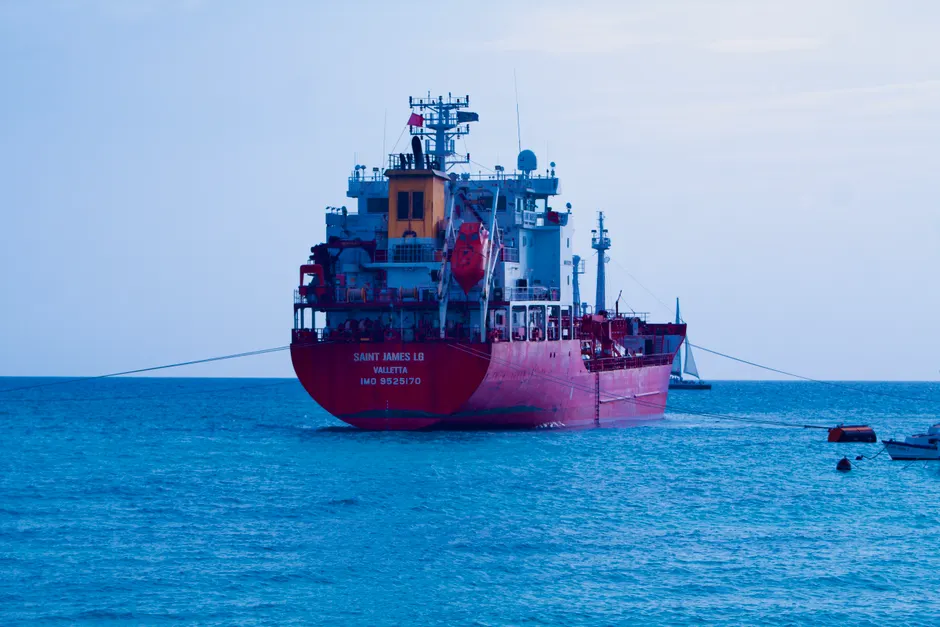
Two oil tankers carrying Saudi crude turned around in the Red Sea on July 22, 2026, after Yemen's Houthis declared a naval blockade targeting the Bab al-Mandeb strait. The vessels reversed course rather than risk passing through the narrow waterway connecting the Red Sea to the Indian Ocean, which Al Jazeera described as closed (Al Jazeera).
A chokepoint is a narrow maritime passage where ships have limited room to maneuver, making it relatively easy to block. The Houthi blockade announcement, first reported July 20, effectively shuts down a critical route that had become a lifeline for Saudi oil exports. Since Iran's effective closure of the Strait of Hormuz in April 2026, Saudi Arabia had been rerouting millions of barrels of crude per day through Bab al-Mandeb, according to AP News (AP News). With both straits now compromised, the kingdom's seaborne oil exports face simultaneous blockage on their two primary maritime corridors.
The Bab al-Mandeb closure compounds a crisis already underway at the Strait of Hormuz. Al Jazeera characterizes Hormuz as experiencing "ongoing disruptions" tied to the US-Israel war on Iran rather than a declared closure by a single party, though Iran's IRGC (Islamic Revolutionary Guard Corps) stated on July 15 that the strait would remain closed until "America's evil ends" (Middle East Monitor). In peacetime, roughly 20 percent of the world's oil and gas transits Hormuz. Traffic through the strait had already slowed to a two-month low by July 13 amid renewed US-Iran strikes (Reuters). Major carriers Maersk and Hapag-Lloyd suspended all Hormuz vessel crossings in early March.
CENTCOM (US Central Command, which oversees American military operations in the Middle East) concluded its 11th consecutive night of strikes against Iran at 00:15 GMT on July 22. The command stated the strikes targeted Iranian military operations centres, maritime capabilities, aircraft hangars, drone storage facilities, and military logistics infrastructure, with the stated objective of degrading "Iran's ability to threaten commercial shipping in the Strait of Hormuz." CENTCOM also claimed that over the three months prior, Iran had attacked more than 30 commercial vessels traversing Hormuz (Al Jazeera).
Iranian state media reported US strikes across a wide geographic swathe of the country on July 22. Fars news agency said US missile attacks targeted areas near Behbahan and Omidiyeh in Khuzestan province and a military site on the outskirts of Tabriz in the northwest. IRIB, the state broadcaster, confirmed US attacks on Chabahar and Konarak in Sistan and Baluchestan province, on Kabudarahang County in Hamadan province, and on Chavar and Abdanan regions in Ilam province, as well as strikes in Kurdistan province (Al Jazeera).
Iran's IRGC said the same day that "the operation to punish the aggressor continues." Iran's semi-official Tasnim news agency reported that Iran launched drones at US military facilities at Camp Doha in western Kuwait. Mehr News Agency reported that Iran's military targeted Jordan's Muwaffaq Salti Airbase in Azraq and Bahrain's Isa Airbase with drones. The US Department of Defense said a third American soldier, age 28, is believed killed in action during an Iranian strike on Muwaffaq Salti Airbase on July 17 (Al Jazeera).
The financial and political costs of the campaign are drawing scrutiny in Washington. US Defense Secretary Pete Hegseth told Congress the war has cost $37.5 billion. Senator Chris Murphy, a member of the Senate Appropriations Committee, pressed Hegseth on the administration's objectives for the Iran war and on taxpayer dollars spent on what he described as Trump's luxury jet (Sen. Murphy's office).
The broader context here is a maritime chokepoint crisis that has been building in layers. The Houthis paralysed Bab al-Mandeb traffic for nearly two years before calling a ceasefire earlier in 2026, and even as of June, crossings had not returned to pre-October 2023 levels, averaging 1,034 monthly sailings in March (Reuters. The ceasefire's collapse into a fresh blockade declaration removes the last viable alternative route for Gulf oil exports that had been rerouting around the Hormuz disruption. With both Hormuz and Bab al-Mandeb now degraded or closed, the redundancy that coastal states relied on has evaporated. The tankers turning back in the Red Sea on July 22 are an early indicator of the operational consequences: insurers, shippers, and refiners now confront an environment in which neither of the two principal Gulf-Indian Ocean transit corridors can be treated as reliably open.